
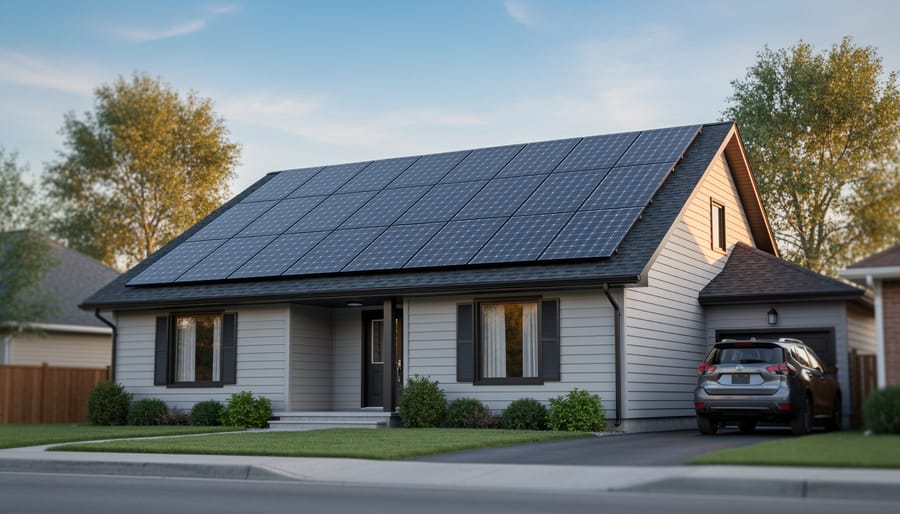
Solar panels for a typical Canadian home cost between $15,000 and $35,000 installed in 2026, depending primarily on system size and your province. Most households need a 6-kW to 10-kW system to cover their electricity needs. A 6-kW installation runs $15,000 to $20,000, while a 10-kW system costs $25,000 to $35,000 before incentives.
These numbers tell only part of the story. Provincial pricing varies considerably. Ontario installers charge $0.85 to $1.50 per watt, while British Columbia solar panels range from $2.50 to $3.50 per watt for equipment alone. Geography, roof complexity, panel quality, and installer experience all push costs up or down.
Federal support softens the blow. The Canada Greener Homes Grant provides up to $5,000 in direct funding, and the Greener Homes Loan offers zero-interest financing of up to $40,000 over ten years. These programs can cut your upfront expense nearly in half.
But cost alone doesn’t answer the central question: does solar make economic sense? That depends on efficiency. A 10-kW system in Ontario generates roughly 11,660 kWh annually, enough to power an average home. Whether that translates to savings depends on your current electricity rate, net metering policies, and how much power you use during peak production hours.
Understanding both the price tag and the performance equation helps you determine if solar fits your budget and your environmental goals. The following breakdown clarifies where your money goes, what variables matter most, and how to evaluate professional installation against DIY options.
What You’ll Pay: Solar Panel System Costs in Canada
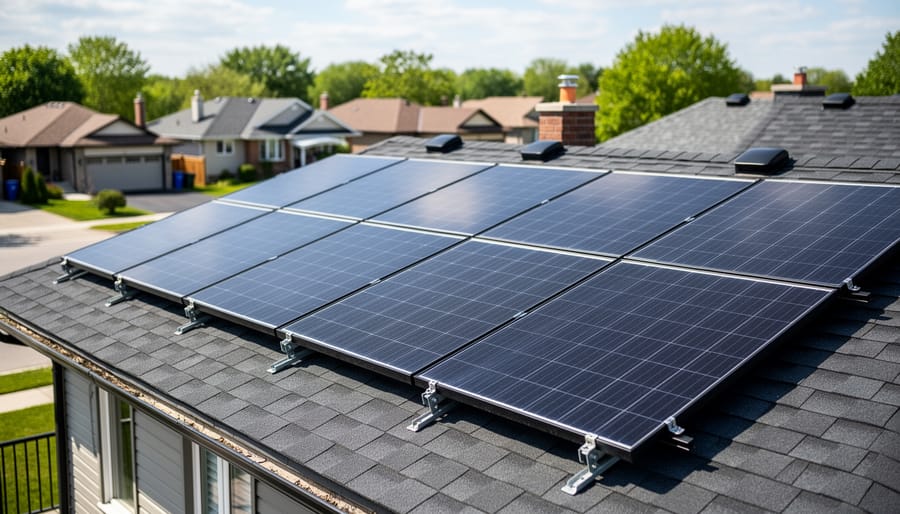
Most Canadian homeowners considering solar can expect to invest between $15,000 and $35,000 for a complete residential system in 2026. This wide range reflects the variety of system sizes needed to match different household energy demands and roof capacities.
A typical 6 kW system, suitable for smaller homes or those with moderate electricity usage, costs between $15,000 and $20,000 installed. For larger households with higher energy consumption, a 10 kW system runs from $25,000 to $35,000. The actual price you’ll pay depends on your specific energy needs, roof characteristics, and location across Canada.
| System Size | Typical Cost Range | Suitable For | Estimated Annual Production |
|---|---|---|---|
| 6 kW | $15,000, $20,000 | Small to medium homes | ~7,000 kWh |
| 8 kW | $20,000, $28,000 | Medium to large homes | ~9,300 kWh |
| 10 kW | $25,000, $35,000 | Large homes, high usage | ~11,660 kWh |
Provincial pricing shows meaningful variation. In Ontario, installation costs typically range from $0.85 to $1.50 per watt for the complete system. This means a 6 kW system (6,000 watts) would cost between $5,100 and $9,000 in installation alone, though the total system price includes equipment and other components beyond labor.
British Columbia residents face different pricing dynamics. Solar panels in BC cost between $2.50 and $3.50 per watt for equipment, before adding installation labor and associated costs. A 6 kW system’s panel equipment would run $15,000 to $21,000 in BC, placing the province at the higher end of the national cost spectrum.
These figures represent the full installed cost before any government incentives. The Canada Greener Homes Grant can reduce your upfront cost by up to $5,000, and the Greener Homes Loan offers up to $40,000 at 0% interest over 10 years to finance your system. When factoring in these federal programs, the effective cost for many Canadian homeowners drops significantly below the sticker price.
Where Your Money Goes: Solar Panel Cost Breakdown
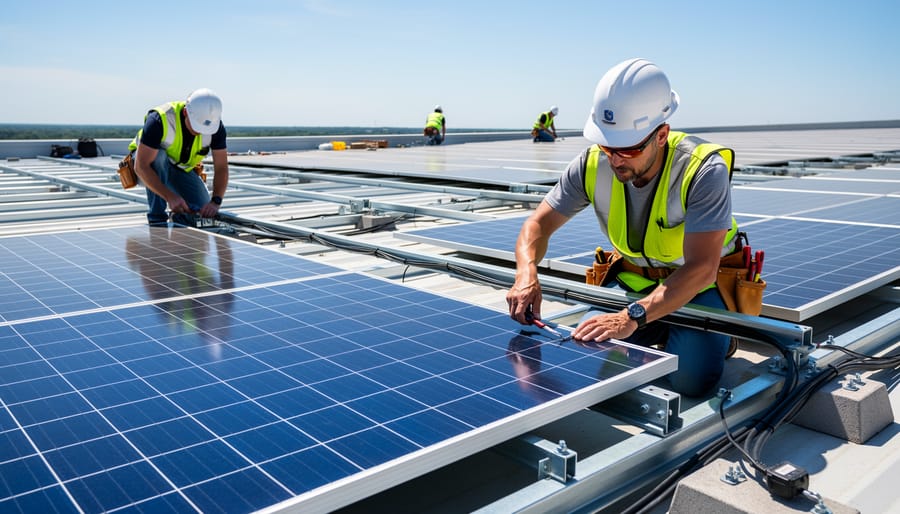
When you invest in a solar panel system, your money is divided across several categories, each playing a role in getting clean energy flowing to your home. Understanding this breakdown helps you evaluate quotes and spot where costs can vary between installers.
The largest chunk goes to equipment, which typically accounts for 50-60% of total system cost. This includes the solar panels themselves, the inverter that converts DC power to usable AC electricity, mounting hardware, and all the wiring and electrical components needed to connect everything safely. In British Columbia, solar panels range from $2.50 to $3.50 per watt for the equipment alone. For a 6 kW system, that’s $15,000 to $21,000 just for the panels before any other costs. If you’re planning off-grid energy you’ll add battery storage to this category, which can increase equipment costs by $10,000 to $15,000 or more depending on capacity.
Installation labor represents 20-30% of the total. Professional crews handle roof work, electrical connections, and system commissioning. These costs reflect skilled trades rates, which vary by province and between urban and rural markets.
The remaining expenses break down as follows:
- Permits and inspections: typically $500, $1,500, covering municipal permits and electrical safety authority approvals
- Mounting hardware and racking systems: $1,000, $2,500, ensuring panels are securely attached to your roof
- Electrical work and panel upgrades: $1,000, $3,000 if your existing electrical panel needs upgrading to handle the solar connection
- Design and engineering: $500, $1,000 for site assessment and system planning
Here’s why understanding the difference between equipment and installed costs matters. When you see Ontario’s installation costs quoted at $0.85 to $1.50 per watt, that’s the total installed price including everything: equipment, labor, permits, and profit margin. A 10 kW system at $1.20 per watt total installed cost would be $12,000, but that doesn’t mean panels cost $1.20 per watt. The equipment portion might be $0.60 per watt while the rest covers installation, permits, and overhead.
This distinction becomes important when comparing quotes. One installer might break costs down clearly while another provides only a total figure, making it harder to see whether you’re paying a premium for high-efficiency equipment or simply higher labor rates.
What Drives Solar Panel Prices Up or Down
Panel Type and Quality Variations
Panel type matters more than most buyers realize. Monocrystalline panels, the dark, uniform-looking ones, dominate the Canadian residential market because they squeeze the most power from limited roof space, typically hitting 18-22% efficiency. You’ll pay a premium for that density: monocrystalline accounts for roughly half of that $2.50, $3.50 per watt equipment cost in British Columbia, but fewer panels means lower installation labor and less mounting hardware.
Polycrystalline panels look blue and speckled, run about 15-17% efficient, and cost 10-15% less upfront. If your roof has room, they can deliver the same total output for less money. The catch is needing more square footage and more racking, which narrows the actual savings.
Thin-film panels rarely make sense for Canadian homes, they’re half as efficient, requiring double the area, but they handle partial shade better and suit specialized applications like offshore solar farms or curved surfaces. Most installers won’t even quote them for standard rooftop systems.
The quality gap within each technology affects longevity more than immediate cost. Tier 1 manufacturers back their panels with 25-year performance warranties and documented degradation rates under 0.5% annually; budget brands often fade faster. A $2,000 savings on cheaper panels can mean thousands less in lifetime energy production.
Installation Complexity and Site Conditions
Your roof’s characteristics can swing installation costs by several thousand dollars. A steep pitch means installers need more safety equipment, scaffolding, and time, factors that add $1,500 to $3,000 to the bill. Metal and asphalt shingle roofs are straightforward, but tile, slate, or cedar shake require specialized mounting techniques and careful handling to avoid damage, pushing labor hours up.
Shading presents a technical challenge. Trees, chimneys, or neighboring buildings that cast shadows may require microinverters or power optimizers instead of a single string inverter, adding $2,000 to $4,000 to equipment costs. Some installers will trim branches or adjust panel placement, but heavy shade often means fewer panels and higher per-watt installation complexity.
Most Canadian homes need electrical panel upgrades to handle solar backfeed safely. If your service panel is outdated or already near capacity, expect $1,200 to $3,000 for an upgrade to 200-amp service. Older homes may also need rewiring or trenching work to connect the inverter to the panel, particularly if the ideal panel location sits far from the electrical box.
Structural assessments matter too. Roofs older than fifteen years, weak framing, or questionable load capacity require engineering evaluations and potential reinforcement before installation begins. These fixes are uncommon but can add $2,000 to $5,000 when necessary.
Canadian Incentives and Financial Support
Federal programs can significantly reduce the upfront investment required for solar installation. The Canada Greener Homes Grant provides up to $5,000 toward eligible energy retrofits, including solar panel systems. This grant helps offset equipment and installation costs without requiring repayment, making it particularly valuable for homeowners facing the $15,000, $35,000 price tag typical for residential systems.
The Greener Homes Loan complements the grant by offering up to $40,000 at 0% interest over 10 years. This financing option spreads the remaining cost across a decade without adding interest charges, which can make monthly payments manageable while you start benefiting from reduced electricity bills immediately. For a $25,000 system after applying the grant, the loan would translate to roughly $208 per month, often less than the energy savings generated by the panels.
To access these federal programs, you typically need to complete an energy assessment before and after installation. The pre-retrofit evaluation determines your home’s current energy performance and eligible upgrades, while the post-retrofit assessment verifies the work was completed properly. Budget for these assessments as part of your planning, though the grant amount usually exceeds their cost.
Beyond federal support, provincial governments and local utilities often maintain their own incentive programs, rebates, or net metering policies. These vary significantly across Canada, with some regions offering additional thousands in support while others provide primarily regulatory benefits like favorable feed-in tariffs. Check with your provincial energy ministry and local utility before finalizing your budget, as stacking multiple incentives can dramatically improve your project economics.
DIY Installation vs. Professional Setup: Cost and Trade-offs
Pulling solar panels out of the box and mounting them yourself can slash equipment-only costs to roughly 40-60% of a full professional install. For a typical 6 kW system that might run $15,000, $20,000 turnkey, buying panels, inverters, racking and wire outright could land closer to $6,000, $10,000, assuming you handle all the labour. That tempting price gap explains why some handy homeowners consider a solar DIY installation especially when they already own ladders, drills and the nerve to work at height.
Pros
- Equipment-only costs can save 40-60% compared to professional installation.
- Complete control over component selection and installation timeline.
- Valuable hands-on learning about your system’s operation and maintenance.
Cons
- Roof work and electrical connections carry serious fall and shock hazards.
- Manufacturer warranties often exclude DIY installs, voiding equipment guarantees.
- Permitting, inspections and grid connection require licensed electrician sign-off in most jurisdictions.
- Mistakes in wiring or structural mounting can cause fires, leaks or code violations.
The reality is that permitting and electrical code compliance trip up most DIY ambitions before the first panel hits the roof. Canadian electrical codes demand that grid-tied inverters be installed and inspected by a licensed electrician, and utility interconnection agreements typically require professional certification before they’ll allow you to export power. You can mount the hardware yourself, but you’ll still pay an electrician to wire, test and stamp the final hookup, erasing much of the hoped-for savings. Insurance and liability present another headache: if a panel flies off in a windstorm or an improper connection starts a fire, your homeowner’s policy may deny the claim on a DIY system.
Safety alone steers most Canadians toward professional crews. Licensed installers carry liability coverage, know how to anchor arrays to withstand snow loads, and complete the job in days rather than weekends spread across months. The contractor handles permits, inspections, utility paperwork and warranty registration, leaving you with a functioning system and peace of mind. That convenience and risk transfer justify the higher price for the vast majority of homeowners, even when upfront costs stretch the budget.
Energy Production and Long-Term Efficiency
A 10 kW system in Ontario generates around 11,660 kWh annually under typical conditions, enough to cover most or all of a household’s electricity needs. Actual output varies with roof orientation, shading, and local weather patterns. South-facing roofs with minimal shading produce the most energy, while east or west orientations reduce output by 15 to 20 percent.
Panel efficiency decreases gradually over time, typically at 0.5 to 0.8 percent per year for quality monocrystalline modules. After 25 years, most panels still operate at 80 to 85 percent of their original capacity. Performance warranties guarantee this minimum output threshold, with manufacturers replacing panels that fall short.
Temperature affects daily performance more than long-term degradation. Panels work most efficiently in cool, sunny conditions common during Canadian spring and fall. Hot summer days reduce efficiency slightly, though annual production remains predictable because seasonal variations balance out.
Maintenance requirements are minimal. Rain clears most debris, and occasional inspections ensure connections stay secure. Snow slides off tilted panels naturally in most cases, and winter sunlight can still generate useful power on clear days.
The predictable energy output makes calculating renewable returns straightforward. Combine your system’s expected annual production with current electricity rates to estimate savings over the warranty period, adjusting for modest degradation after year 10.
Making the Numbers Work: Steps to Evaluate Solar Economics
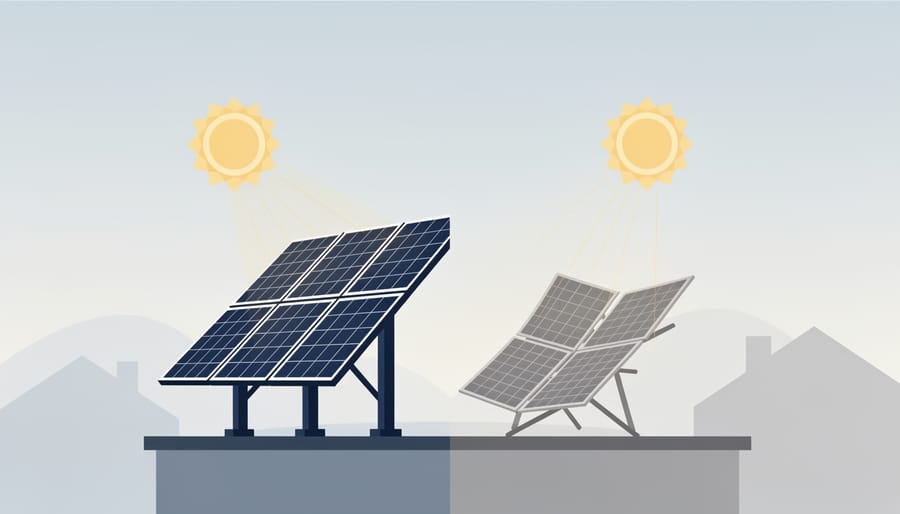
Evaluating whether solar panels make financial sense requires more than back-of-the-envelope math. Here’s a practical approach to assess the economics for your specific situation:
- Calculate your baseline energy costs. Pull 12 months of electricity bills to determine your annual consumption in kilowatt-hours and total spending. Look for seasonal patterns, high winter heating or summer cooling loads affect how much solar production you’ll actually use versus export to the grid.
- Obtain at least three detailed quotes. Request itemized proposals that break down equipment, installation labor, permits, and warranties separately. A 6 kW system should cost $15,000, $20,000, while a 10 kW system runs $25,000, $35,000. Quotes outside these ranges deserve scrutiny.
- Factor in available incentives upfront. Apply the Canada Greener Homes Grant (up to $5,000) and consider the Greener Homes Loan (up to $40,000 at 0% interest over 10 years) when calculating your net investment. These programs significantly reduce the effective cost and improve payback timelines.
- Estimate realistic energy production. In Ontario, expect approximately 11,660 kWh per year from a 10 kW system. Your installer should provide location-specific projections accounting for roof orientation, shading, and local climate, don’t accept generic national averages.
- Compare financing options against paying cash. The zero-interest federal loan makes financing attractive compared to liquidating investments. Run scenarios for different payment structures and calculate how monthly loan payments compare to current electricity bills.
This structured evaluation helps cut through marketing claims and aligns your investment with the trajectory of Canadian renewable tech adoption. Focus on verifiable numbers, your actual consumption, written quotes, confirmed incentives, rather than best-case projections.
Frequently Asked Questions About Solar Panel Costs
Solar panel investments raise practical questions beyond the upfront price tag. Here are the answers to what Canadian homeowners ask most often.
How long does it take to recoup the initial investment?
Most Canadian homeowners see payback periods between 10 and 20 years, depending on system size, local electricity rates, available incentives, and energy production. The Canada Greener Homes Grant can shorten this timeline by offsetting up to $5,000 of upfront costs.
What ongoing maintenance costs should I expect?
Solar panels require minimal maintenance, typically just occasional cleaning and annual inspections. Budget $100 to $300 per year for routine care, with potential inverter replacement costs of $1,500 to $3,000 after 10 to 15 years.
Will solar panels increase my home insurance premiums?
Most insurers add $50 to $100 annually to cover solar equipment, though some include it at no extra cost. Contact your provider before installation to understand coverage and any premium changes.
Can I finance a solar system instead of paying cash?
Yes. The Greener Homes Loan provides up to $40,000 at 0% interest over 10 years, making monthly payments more manageable than a lump sum. Some installers also offer private financing options.
Do solar panels add value when selling my home?
Studies consistently show solar installations increase property values, often by $15,000 to $20,000 for typical residential systems. The boost varies by region, with stronger effects in areas where electricity costs run high.
What happens if I move before the system pays for itself?
The panels transfer with the home and become a selling point, potentially attracting buyers who value lower energy bills. You likely won’t recoup the full cost if you sell within the first five years, but you’ll benefit from increased home value.
These financial considerations matter as much as the initial system cost. A 6 to 10 kW installation might range from $15,000 to $35,000, but long-term savings, property value gains, and available federal support shift the economic picture considerably. Request detailed projections from installers showing both costs and expected returns specific to your situation and electricity usage.
Solar panels represent a significant upfront investment for Canadian homeowners, typically ranging from $15,000 to $35,000 for most residential systems. However, the financial picture shifts considerably when you factor in federal support programs like the Canada Greener Homes Grant and zero-interest financing options, which can reduce your initial outlay and spread costs over time.
The economics of solar continue to improve as equipment costs decline and energy prices rise. While every property is different, Canadian homes with good solar exposure increasingly find that the long-term savings justify the initial expense. Your specific return depends on your energy consumption, roof suitability, local installation costs, and available incentives.
Start by gathering quotes from multiple installers to understand your actual costs rather than relying on averages. Research federal and provincial programs you qualify for, since these can substantially improve your payback timeline. Talk to your utility about net metering arrangements and examine your recent electricity bills to estimate potential savings.
Canada’s renewable energy transition is gaining momentum, and solar technology has matured to where it’s a practical option for many households. The combination of falling costs, government support, and proven technology means solar is no longer an experimental choice but an increasingly mainstream way to reduce both energy bills and carbon footprints.