
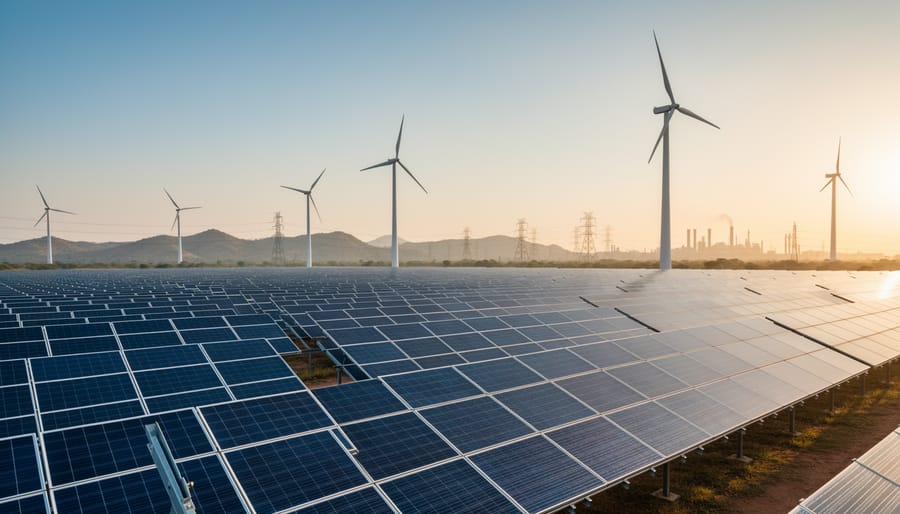
India has crossed a historic threshold in its clean energy transition: as of July 31, 2026, the country’s non-fossil fuel electricity generation capacity surpassed 300 gigawatts, representing a fourfold increase from just 75 GW in 2014. This milestone positions India ahead of schedule, already achieving more than 60% of its 2030 renewable energy target and marking one of the fastest clean energy buildouts by any major economy in recent history.
The 300.50 GW total spans solar power (164.59 GW), wind (58.14 GW), hydropower (57.24 GW), bioenergy (11.75 GW), and nuclear (8.78 GW). Together, these sources now account for over 54% of India’s total installed electricity generation capacity, a dramatic shift in a nation that relied overwhelmingly on coal just a decade ago. The achievement underscores how competitive solar costs and policy support have accelerated deployment across states with strong renewable resource potential.
For global climate markets, this development reinforces India’s role as a bellwether for the energy transition in developing economies. The country’s ability to scale renewables while meeting surging electricity demand offers a template for balancing growth and decarbonization. Investors tracking manufacturing capacity for solar panels, battery storage, and grid infrastructure will find India’s trajectory a key indicator of supply chain resilience and technology cost curves heading into the next phase of expansion.
What Changed: India Crosses the 300 GW Threshold
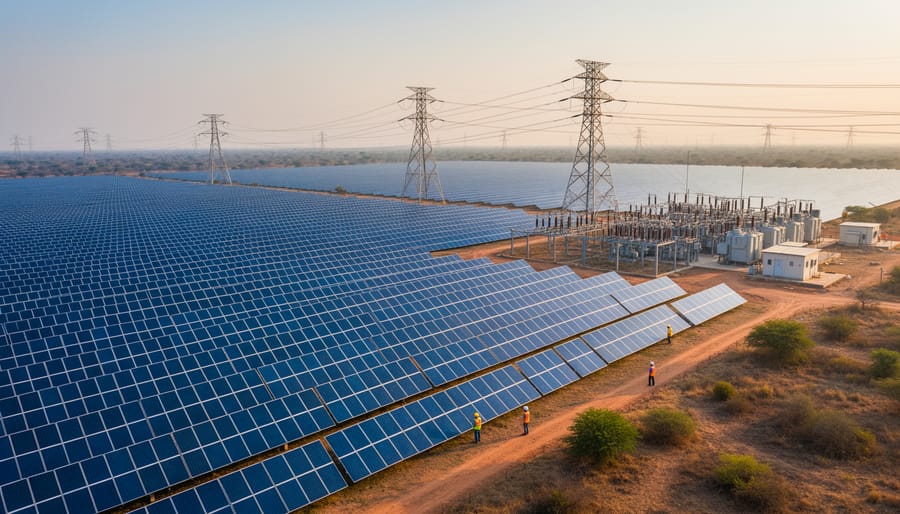
India officially surpassed 300 GW of non-fossil fuel electricity generation capacity on July 31, 2026, reaching precisely 300.50 GW as of July 31, 2026 according to the Ministry of New and Renewable Energy. This marks a fourfold expansion since 2014, when the country’s clean electricity infrastructure stood at just 75 GW. The achievement represents one of the fastest large-scale energy transitions ever recorded, compressing what typically takes decades of infrastructure development into twelve years.
The 300 GW threshold isn’t just a numerical milestone. It reflects sustained policy commitment through initiatives like competitive auctions that drove solar and wind costs down, streamlined land acquisition processes, and transmission infrastructure investments connecting remote renewable zones to demand centres. The transformation has attracted hundreds of billions in private capital, created domestic manufacturing ecosystems for solar modules and wind turbines, and repositioned India as a major player in global renewable energy markets. With non-fossil fuels now accounting for more than half of installed capacity, India has fundamentally altered its energy infrastructure in a timeframe that reshapes what’s considered achievable in energy transitions worldwide.
Breaking Down the 300 GW: Key Developments Across Energy Sources
1. Solar Power Leads at 164.59 GW
Solar power’s commanding 164.59 GW contribution accounts for more than half of India’s 300 GW non-fossil fuel capacity, cementing its position as the backbone of the country’s renewable transformation. This scale represents one of the world’s largest solar deployments and a dramatic acceleration from a nascent industry a decade ago.
Three forces drove this growth. Policy frameworks created long-term visibility for developers, from production-linked incentives to streamlined land acquisition processes that reduced project timelines. Technology advancement pushed module efficiency higher while manufacturing scale brought costs down by over 80% since 2014, making solar the cheapest new electricity source in India. Grid infrastructure investments allowed distributed solar farms across states from Rajasthan to Gujarat to feed power into the national network.
The global implications extend beyond installed capacity numbers. India’s massive procurement volumes pushed international panel manufacturers to innovate faster and price more competitively, benefiting markets worldwide including Canada. As Indian developers gained expertise managing large-scale solar projects in challenging conditions, extreme heat, dust, monsoons, they’ve exported knowledge and equipment to emerging markets, accelerating the worldwide energy transition while proving that renewable dominance is achievable at national scale.
2. Wind Power Contributes 58.14 GW
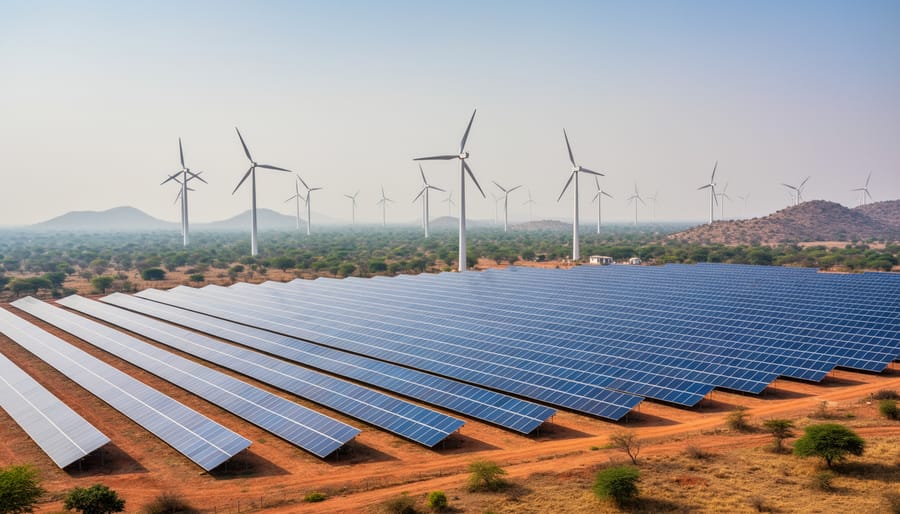
Wind energy stands as India’s second-largest renewable contributor at 58.14 GW, representing nearly one-fifth of the country’s non-fossil fuel capacity. This substantial footprint reflects decades of development since India began commissioning wind farms in the 1990s, making it one of the world’s earliest movers in commercial wind deployment.
The sector reached maturity earlier than solar, with concentrated installations across Gujarat, Tamil Nadu, Karnataka, and Maharashtra, regions offering consistent wind corridors and established transmission infrastructure. Unlike solar’s explosive recent growth, wind capacity has expanded steadily through a combination of utility-scale projects and smaller distributed installations, creating a diversified asset base less vulnerable to policy shifts.
Wind’s role extends beyond raw capacity numbers. It complements solar generation by producing stronger output during evening hours and monsoon seasons when solar radiation drops, smoothing India’s renewable supply curve. This natural pairing reduces grid stress and curtailment, making the combined solar-wind portfolio more reliable than either source alone. As India pushes toward its 2030 targets, wind remains essential for balanced renewable growth, particularly as offshore wind opportunities emerge along the country’s extensive coastline.
3. Hydropower, Bio-Power, and Nuclear Round Out the Mix
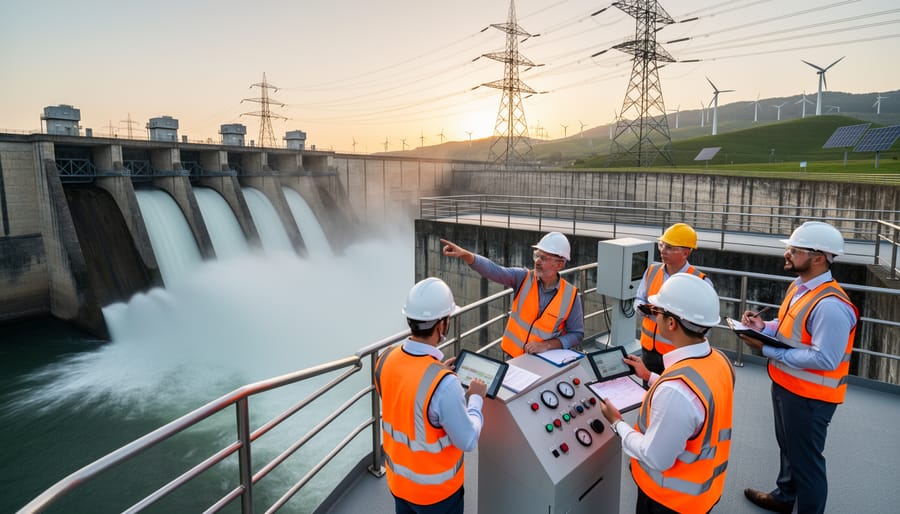
Beyond solar and wind, India’s 300 GW milestone draws on a diverse foundation of established and emerging baseload technologies that provide crucial grid stability. These three additional categories, hydropower, bio-power, and nuclear, collectively contribute over 77 GW to the mix, offering dispatchable power that complements the variability of solar and wind generation.
Hydropower remains India’s largest non-solar, non-wind renewable source at 57.24 GW, leveraging decades of infrastructure investment in dams and run-of-river projects across mountainous regions. This mature technology delivers reliable power during peak demand hours and monsoon seasons, though expansion faces environmental constraints and community displacement concerns. Bio-power, at 11.75 GW, taps agricultural waste, municipal refuse, and dedicated energy crops to generate electricity while addressing waste management challenges in rural and urban areas. Nuclear power rounds out the portfolio at 8.78 GW, providing carbon-free baseload capacity with high capacity factors, though its growth trajectory remains modest compared to renewables due to longer construction timelines and capital intensity.
The complete non-fossil fuel capacity breakdown illustrates how India balances intermittency:
- Solar power: 164.59 GW, variable generation peaking midday
- Wind power: 58.14 GW, variable generation with seasonal and diurnal patterns
- Hydropower: 57.24 GW, dispatchable for peak demand and seasonal flexibility
- Bio-power: 11.75 GW, dispatchable baseload from waste and biomass
- Nuclear: 8.78 GW, steady baseload with minimal emissions
Together, these dispatchable sources mitigate the grid integration challenges posed by solar and wind’s weather dependence. Hydropower’s reservoir storage acts as natural battery capacity, bio-power converts waste streams into consistent electricity, and nuclear facilities run continuously to anchor grid frequency. This mix positions India to maintain reliability as it scales renewables toward 2030 targets, demonstrating that clean energy transitions require both variable and firm generation working in concert.
Why This Milestone Matters
India’s leap past 300 GW of non-fossil fuel capacity represents far more than a technical benchmark. With clean energy now accounting for over 54% of total electricity generation capacity, the country has fundamentally reoriented its power infrastructure away from fossil fuels in just over a decade. This shift directly supports India’s Paris Agreement commitments while simultaneously strengthening energy security by reducing dependence on imported coal and natural gas. The economic implications ripple through domestic job creation in manufacturing, installation, and grid modernization sectors.
For global renewable markets, India’s achievement signals sustained demand that continues to drive down technology costs and attract capital. The country’s success in scaling solar to 164.59 GW offers tangible solar growth lessons for nations like Canada pursuing ambitious clean energy transitions: aggressive policy frameworks combined with competitive procurement mechanisms can accelerate deployment while reducing costs for consumers and businesses.
Beyond climate benefits, this milestone delivers measurable improvements in air quality across Indian cities and expands electricity access in rural communities where decentralized renewable systems provide reliable power for the first time. The capacity expansion also positions India as a manufacturing hub for solar panels, wind turbines, and emerging technologies like green hydrogen, creating export opportunities and technological leadership that reshape global energy supply chains. For investors and policymakers worldwide, India’s trajectory demonstrates that rapid decarbonization at scale is achievable when political will aligns with market forces and technological maturity.
What to Watch: India’s Path Beyond 300 GW
India’s 300 GW achievement represents more than 60% progress toward its 2030 renewable energy targets, but the remaining runway presents both substantial challenges and lucrative opportunities for investors and technology providers worldwide.
Grid integration stands as the most pressing technical hurdle. Variable solar and wind generation now dominate the non-fossil capacity mix, demanding sophisticated forecasting, transmission upgrades, and flexible backup resources to maintain a reliable grid. India will need to accelerate deployment of battery storage systems and pump-hydro facilities to balance intermittent generation, creating a multi-billion dollar market for energy storage technologies over the next four years.
Financing remains another critical constraint. While solar and wind costs have plummeted, India must mobilize an estimated $150 billion to reach its 2030 capacity goals. International climate finance, green bonds, and public-private partnerships will play essential roles in closing this funding gap, presenting opportunities for Canadian pension funds and infrastructure investors seeking exposure to high-growth renewable markets.
Emerging sectors offer the most compelling growth stories. Green hydrogen production, powered by surplus renewable electricity, could transform India’s industrial emissions profile while creating export opportunities. Offshore wind development, still in early stages, holds promise for coastal states where land constraints limit onshore expansion. Energy storage deployment will accelerate dramatically as costs decline and grid operators recognize its necessity.
For Canadian companies, India’s trajectory signals robust demand for grid management software, storage technology, and project development expertise. Technology transfer partnerships and joint ventures could accelerate India’s buildout while positioning Canadian firms in the world’s fastest-growing major renewable market. Monitor policy announcements around manufacturing incentives, storage mandates, and hydrogen infrastructure, as these will define commercial opportunities through 2030.
Common Questions About India’s 300 GW Renewable Energy Milestone
What counts as non-fossil fuel capacity in India’s 300 GW milestone?
The 300.50 GW figure includes all electricity generation capacity from renewable and low-carbon sources: solar (164.59 GW), wind (58.14 GW), hydropower (57.24 GW), bio-power (11.75 GW), and nuclear (8.78 GW). It excludes coal, natural gas, and other fossil fuel plants.
How does India’s renewable capacity compare to other major economies?
India now ranks among the world’s top renewable energy producers, with non-fossil fuel sources representing over 54% of its total electricity generation capacity. This achievement positions India as a global leader in clean energy deployment, though direct comparisons vary based on how countries categorize and report renewable capacity.
What policies drove India’s growth from 75 GW in 2014 to 300 GW in 2026?
India’s rapid expansion resulted from coordinated policy support including ambitious national targets, auction mechanisms that drove down costs, production-linked incentives for domestic manufacturing, and streamlined approval processes. These frameworks created investment certainty that attracted both domestic and international capital to the sector.
What are the investment implications of this milestone?
Crossing 300 GW demonstrates that India’s renewable sector offers proven scale and momentum, making investing in renewables increasingly attractive for institutional and retail investors. The achievement signals continued opportunities in solar manufacturing, grid infrastructure, energy storage, and emerging areas like green hydrogen as India pursues its 2030 targets.
The milestone’s ripple effects extend beyond India’s borders. As the world’s most populous nation scales renewable deployment, technology costs continue falling globally, creating favorable conditions for clean energy adoption in markets like Canada. India’s procurement volumes drive manufacturing innovation and supply chain development that benefit renewable projects worldwide, while demonstrating that large-scale transitions from fossil fuels to clean electricity are achievable within compressed timeframes.
India’s achievement of 300 GW in non-fossil fuel capacity marks a turning point in global clean energy deployment. The country has demonstrated that rapid, large-scale renewable expansion is both technically feasible and economically viable, proving a model that accelerates climate action worldwide. With non-fossil fuels now comprising over 54% of its electricity infrastructure, India has fundamentally reshaped its energy system in just over a decade.
This momentum carries lessons for nations everywhere. Canada and other countries pursuing ambitious decarbonization targets can learn from India’s policy frameworks, financing mechanisms, and grid integration strategies. The technologies and supply chains developed through India’s buildout are driving down costs globally, making clean energy more accessible for all markets. As India pushes toward its 2030 goals and explores frontiers like green hydrogen and offshore wind, following these developments offers valuable insights into the future of renewable energy deployment at scale.