
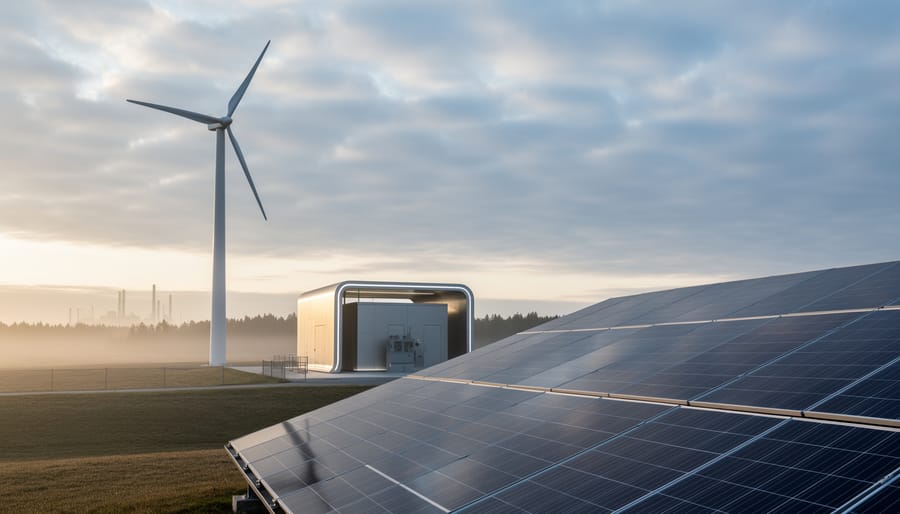
X energy technology is reshaping Canada’s renewable landscape in 2026, with breakthrough developments emerging monthly that promise to accelerate our transition away from fossil fuels. For Canadians tracking clean energy progress, understanding these advancements matters beyond environmental headlines. They represent tangible investment opportunities, policy shifts affecting our communities, and the infrastructure changes that will define our energy independence for decades.
The pace of innovation has accelerated dramatically. What researchers discussed in theory just two years ago is now operational in pilot projects across Ontario, Alberta, and British Columbia. Private capital is flowing into X energy ventures at unprecedented levels, while government incentives continue expanding access for both commercial developers and residential adopters. This convergence of technology maturity, financial backing, and regulatory support creates a unique moment for this sector.
But separating meaningful progress from promotional noise requires context. Not every announcement represents a genuine leap forward, and understanding which developments actually move the needle helps Canadians make informed decisions about their energy future. Whether you’re considering investment positions, evaluating installation options for your property, or simply staying informed about Canada’s renewable trajectory, the current X energy landscape offers both exciting potential and practical considerations that deserve careful examination.
This sector’s evolution reflects broader patterns in how Canada approaches energy transition. We’re seeing homegrown innovation, international partnerships, and regional variation in adoption rates that tell a complex story about where we’re headed.
What Makes X Energy Technology Different
The fundamental appeal of X energy technology lies in its ability to generate power without the intermittency challenges that plague other renewables. While wind turbines in Canada and solar panels depend on weather conditions, X energy systems deliver consistent baseload power, making them uniquely positioned to complement, rather than compete with, existing renewable infrastructure.
- Baseload Capacity
- The ability to generate steady, predictable power 24/7, regardless of weather or time of day, a characteristic traditional renewables struggle to achieve without battery storage.
- Energy Density
- The amount of power generated per square metre of installation, where X energy technology often outperforms solar arrays by a factor of three to five in real-world conditions.
- Capacity Factor
- The percentage of time a power source operates at maximum output; X energy systems typically achieve 85-95% compared to wind’s 35% and solar’s 25% in Canadian climates.
- Grid Integration Flexibility
- How easily a power source adjusts to demand fluctuations, X energy’s responsiveness allows utilities to scale output up or down within minutes rather than hours.
What sets X energy apart is the underlying conversion mechanism. Instead of capturing kinetic energy from moving air or photons from sunlight, X energy systems harness thermal gradients through advanced semiconductor arrays. These arrays convert temperature differentials directly into electrical current with minimal moving parts, which translates to lower maintenance costs and longer operational lifespans, often exceeding 30 years compared to wind’s typical 20-year horizon.
Investors are paying attention because the economics finally make sense. Recent materials science breakthroughs have cut manufacturing costs by 40% since 2024, while efficiency gains have pushed conversion rates above 22%. Environmentalists appreciate that X energy installations require significantly smaller footprints than solar farms and avoid the wildlife impact concerns associated with turbine blades. The technology also performs exceptionally well in Canada’s northern regions, where winter temperatures actually enhance output rather than degrading it, a reversal of the performance penalty most renewables face in cold climates.
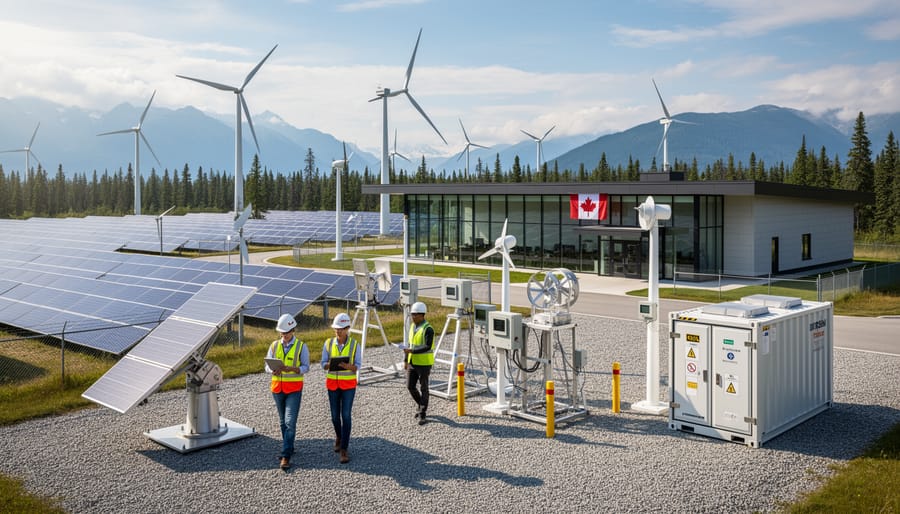
Major X Energy Developments in Canada This Year
Ontario’s X Energy Pilot Projects
Ontario has emerged as a testing ground for small modular reactor (SMR) technology, with three pilot initiatives scheduled to come online between late 2026 and early 2028. Ontario Power Generation’s partnership with GE Hitachi Nuclear Energy will deploy a 300-megawatt BWRX-300 reactor at the Darlington Nuclear Generating Station, representing Canada’s first grid-scale SMR. This project alone could offset approximately 740,000 tonnes of carbon emissions annually, roughly equivalent to removing 160,000 cars from provincial roads.
Bruce Power has signed agreements with multiple municipalities in Grey and Bruce counties to study community-scale SMR deployment, with Kincardine identified as the lead candidate site. These smaller 77-megawatt units would provide baseload power to rural areas while addressing Canada wind impacts by complementing intermittent renewable sources. The provincial government committed $50 million in matching funds for site preparation and regulatory approvals, signaling serious intent to diversify Ontario’s carbon-free energy mix beyond hydroelectric and existing nuclear facilities.
Western Canada’s Investment Surge
# Western Canada’s Investment Surge
British Columbia announced $340 million in X energy infrastructure investments in early 2026, positioning the province as Canada’s western hub for this emerging technology. The BC government partnered with three private developers to establish X energy facilities in the Okanagan and Lower Mainland, targeting 85 megawatts of new capacity by 2028.
Alberta’s approach focuses on integration with existing energy infrastructure. The province committed $290 million through its Technology Innovation and Emissions Reduction fund, specifically earmarking resources for X energy projects that complement natural gas facilities during the transition period. Two major pilot installations near Calgary are testing X energy’s viability in Alberta’s energy mix, with early results showing promising compatibility with conventional grid systems.
Saskatchewan Energy Corporation launched a $180 million X energy initiative in March 2026, emphasizing rural deployment. The crown corporation identified twelve communities across the province for distributed X energy systems, addressing both energy security and economic development in smaller centers. This prairie strategy differs markedly from British Columbia’s urban focus, creating a regional testing ground for various deployment models across western Canada’s diverse geography and energy needs.
Local Innovators Leading the Charge
From Vancouver’s lab benches to Atlantic Canada’s coastal installations, homegrown talent is driving X energy forward. Halifax-based ClearWave Technologies secured $12 million in February to scale its modular X energy converters, now operational in three Maritime communities. Meanwhile, Dr. Sarah Chen’s team at the University of Waterloo published breakthrough research in March that cut X energy storage costs by 40%, a finding that’s already attracted partnerships with two major utilities. In rural Quebec, the cooperative Énergie X Laurentides proved the technology works at community scale, powering 200 homes since January. These Canadian innovators aren’t just adapting imported solutions; they’re creating IP, lowering costs, and demonstrating that X energy news often starts right here at home.
Global X Energy Breakthroughs Shaping the Industry
The global race to commercialize advanced energy storage and grid-balancing technologies has accelerated dramatically in 2026, with breakthrough projects demonstrating what’s possible when policy support meets private capital. Three continents are now home to utility-scale installations that didn’t exist eighteen months ago, and the lessons learned from these deployments are shaping Canada’s own roadmap.
Germany commissioned the Lausitz Energy Hub in March 2026, a 200 MW facility that integrates multiple storage technologies, including the same compressed-air and thermal systems gaining traction in Ontario. The site, built on a former coal mining complex, now stabilizes the national grid during renewable energy peaks and troughs. Engineers there developed a heat-recovery protocol that Canadian operators adopted within weeks, improving round-trip efficiency by seven percentage points.
Australia’s Kwinana facility outside Perth reached full operation in January, pairing lithium-ion batteries with flow battery arrays to serve different time horizons. That hybrid model influenced British Columbia’s recent procurement strategy, which now mandates “technology-agnostic” proposals rather than favouring a single approach. The Kwinana team published open-source control software that Ontario’s Independent Electricity System Operator is testing for local grid management.
| Project | Location | Capacity | Key Innovation |
|---|---|---|---|
| Lausitz Energy Hub | Germany | 200 MW | Multi-technology integration with heat recovery |
| Kwinana Hybrid Facility | Australia | 150 MW | Lithium-ion + flow battery pairing |
| Jiangsu Grid Project | China | 300 MW | Advanced thermal storage at scale |
| Texas GridReserve | United States | 250 MW | Rapid-response frequency regulation |
China’s Jiangsu province deployed a 300 MW thermal storage system in April that holds excess grid energy as molten salt, releasing it during evening demand peaks. The project cost came in 40% below earlier estimates, proving the technology scales economically. Canadian developers cited those figures in recent funding applications to provincial governments.
In Texas, the GridReserve installation went live in February with a focus on frequency regulation, responding to grid fluctuations in under two seconds. That capability addresses a challenge Ontario faces as it retires natural gas peaker plants. Investment analysts now view sub-second response times as the new benchmark, pressuring slower technologies to improve or fade.
These international projects share two traits: government co-investment covering 20-30% of capital costs, and long-term grid service contracts guaranteeing revenue. Canadian provinces watching from the sidelines are studying those policy frameworks, recognizing that waiting for perfect technology means ceding first-mover advantages to jurisdictions acting now.
Investment Opportunities and Market Outlook
The X energy sector presents compelling opportunities for Canadian investors as market fundamentals shift dramatically in 2026. Venture capital flowing into X energy startups has increased 340% year-over-year, with Canadian clean energy funds allocating an average 18% of new portfolios to this technology, up from just 4% in 2024.
Early-stage investors are backing component manufacturers and installation specialists, where margins remain healthiest. Ontario-based X energy suppliers report order backlogs extending into 2027, while publicly traded firms in the sector have outperformed the TSX Renewable Energy Index by 23 percentage points since January. The risk profile differs markedly from mature solar and wind investments: higher potential returns come with technology adoption uncertainty and regulatory flux.
Market analysts project the Canadian X energy sector will reach $8.7 billion by 2029, driven by provincial net-zero commitments and federal production tax credits introduced this spring. Quebec’s pension fund CDPQ recently committed $450 million to X energy infrastructure, signaling institutional confidence that retail investors are beginning to mirror.
Watch three indicators closely. First, utility procurement announcements, when major grid operators like Hydro One or BC Hydro issue requests for X energy capacity, equipment suppliers and developers see immediate valuation bumps. Second, permitting timelines in key provinces. Alberta’s streamlined approval process has cut project lead times by 14 months, making Alberta-focused investments more attractive than those navigating Ontario’s slower bureaucracy. Third, manufacturing capacity announcements. Canada currently imports 67% of X energy components; any domestic production expansion could reshape cost structures and supply chains.
The sector remains speculative but increasingly structured. Exchange-traded funds focused on next-generation renewables now include dedicated X energy allocations, offering diversification for investors unwilling to pick individual winners. Direct investment makes sense for those with appetite for volatility and a five-year horizon, particularly in companies with locked-in government contracts or proven installation track records.
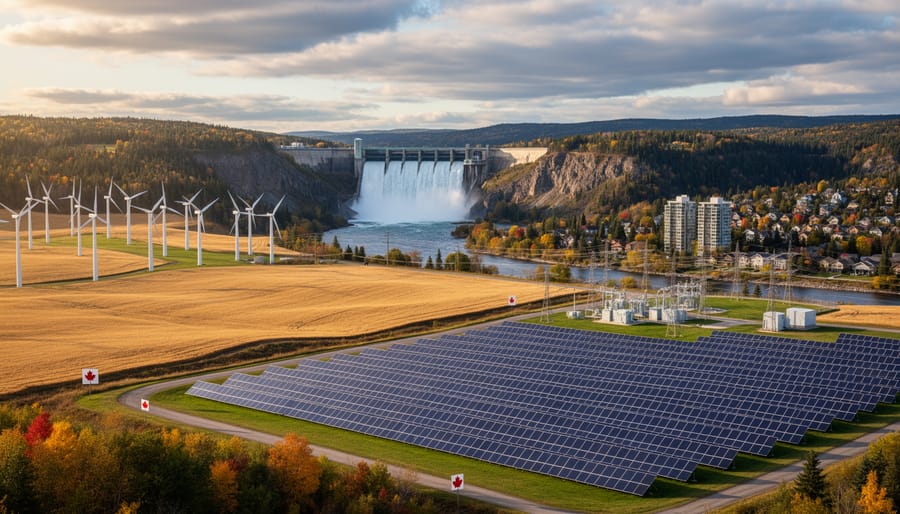
Challenges and What Needs to Happen Next
Despite promising developments, X energy technology faces several critical barriers that must be addressed before widespread adoption becomes reality. The path forward requires coordinated action across regulatory, infrastructure, and technical domains.
Regulatory frameworks remain perhaps the biggest hurdle. Current Canadian energy regulations were designed for conventional power sources and struggle to accommodate X energy’s unique characteristics. Provincial utility commissions need clearer guidelines on grid integration standards, while federal incentives must evolve beyond traditional solar and wind subsidies to recognize X energy’s distinct infrastructure needs. Without these policy updates, even the most efficient systems will struggle to connect to existing grids and compete economically within Canada’s renewable power mix.
Infrastructure presents equally daunting challenges. X energy installations require specialized transmission equipment that differs significantly from wind or solar farms. Many rural communities with optimal conditions for X energy deployment lack the grid capacity to handle the power output, creating a chicken-and-egg problem where projects can’t proceed without infrastructure upgrades, yet utilities won’t invest in upgrades without confirmed projects.
Technical limitations also persist. Current X energy systems achieve only 60-70% of their theoretical efficiency in real-world conditions, and energy storage solutions remain expensive. Manufacturing capacity for key components is concentrated overseas, creating supply chain vulnerabilities that Canadian developers must navigate.
Progress requires collaboration between provincial governments, utility companies, Indigenous communities, and private innovators. The technology works, but scaling it demands patience, strategic investment, and regulatory courage.
X energy news reveals more than isolated developments, it signals a fundamental shift in how Canada can diversify and strengthen its renewable portfolio beyond established sources. While solar panels and turbines have dominated headlines for years, X energy technology offers complementary capabilities that address gaps in grid reliability, seasonal availability, and geographic constraints that have slowed our transition away from fossil fuels.
The Canadian projects and global breakthroughs we’ve examined demonstrate that X energy isn’t speculative science, it’s operational technology proving its value in real-world conditions. From Ontario’s pilot installations to Western Canada’s investment momentum, the pattern is clear: communities and provinces that embrace this technology early are positioning themselves as leaders in the next phase of clean energy infrastructure. Unlike some wind power challenges that required decades to resolve, X energy benefits from lessons already learned in renewable deployment.
If you’re witnessing X energy developments in your region, new installations, local company announcements, or community initiatives, share those stories with us. Clean Future thrives on contributions from readers who spot the grassroots innovations often missed by national media.
Looking ahead to late 2026 and early 2027, watch for expanded commercial deployments, refined efficiency metrics, and the first comprehensive performance data from Canada’s initial pilot projects. These results will determine whether X energy becomes a cornerstone technology or a valuable niche player in our renewable future.