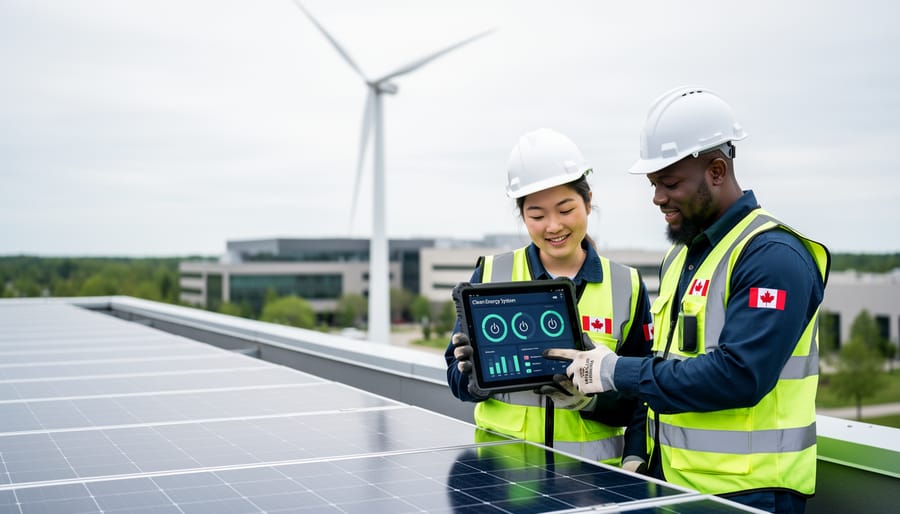
Canada’s renewable energy workforce is projected to grow by 38,000 positions between 2025 and 2030, yet a critical skills gap threatens to slow this expansion. Online certification programs have emerged as the fastest route for professionals to pivot into solar, wind, and emerging clean tech roles without abandoning current employment or relocating for traditional campus programs.
These digital credentials aren’t glorified webinars. Accredited institutions like Dalhousie University and the British Columbia Institute of Technology now offer fully online programs covering photovoltaic system design, wind resource assessment, and energy storage integration. Completion times range from eight weeks for foundational certificates to twelve months for advanced diplomas, with most requiring 6-10 hours of weekly study.
The quality divide is real. Top-tier programs include hands-on simulation software, virtual lab environments, and industry mentorship components that mirror on-site learning. They’re built by institutions with actual renewable energy research departments and faculty who consult on live projects. Budget options often recycle dated content and lack practical application components.
Who benefits most? Career changers from electrical trades, engineering disciplines, or energy sectors find the technical baseline familiar. But programs increasingly accommodate complete newcomers through prerequisite modules covering electrical fundamentals and energy systems basics. Project managers, policy advisors, and financial analysts also pursue specialized tracks focused on renewable energy economics and regulatory frameworks rather than technical design.
The investment pays off quickly. Canadian certification holders report salary increases averaging 18-24% within two years of completion, according to 2025 Clean Energy Canada data. More importantly, these credentials provide the specific, current knowledge that hiring managers actually screen for in a sector evolving too rapidly for traditional degrees to keep pace.
Why Online Renewable Energy Certifications Matter Now
The renewable energy sector is no longer a niche industry, it has become a cornerstone of economic strategy across Canada and much of the developed world. In 2026, governments at federal and provincial levels continue to roll out ambitious decarbonization targets, grid modernization projects, and incentives for solar, wind, and battery storage installations. This policy momentum translates directly into workforce pressure: utilities, installation firms, engineering consultancies, and municipal authorities need trained professionals who understand both the technical fundamentals of clean energy systems and how to implement them at scale.
Online certification programs have emerged as the most practical answer to this skills gap. Unlike traditional university degrees that require years of full-time study, credential programs in clean energy are structured for working adults who need recognized credentials quickly. A certificate can be completed in months rather than years, often while maintaining a current job, and the online delivery model removes geographic barriers that once limited access to major urban centres. Someone in rural Saskatchewan can now access the same quality instruction as a professional in Toronto, levelling the playing field for regional participation in Canada’s energy transition.
The urgency is compounded by demographic realities. Many experienced workers in Canada’s traditional energy sectors are approaching retirement age, and those roles are being reshaped or replaced by positions requiring renewable energy literacy. Simultaneously, younger entrants to the workforce are seeking careers aligned with climate action. Online renewable energy certifications bridge both groups, offering upskilling pathways for mid-career professionals and foundational credentials for newcomers alike.
Who Benefits from These Programs
Online renewable energy certification programs attract a surprisingly wide audience, each bringing different experiences and motivations to the sector. Career changers top that list, people in marketing, finance, or administrative roles who want to pivot into work with tangible environmental impact. These programs offer a structured entry point without requiring a complete return to university.
Trades professionals see these certifications as natural upgrades. Electricians, HVAC technicians, and construction workers already possess hands-on skills that translate directly to solar installation or geothermal system maintenance. A 126-hour certificate adds renewable energy credentials to existing expertise, opening doors to projects across Canada’s expanding clean energy landscape.
Recent graduates use these programs strategically. Someone with an environmental science degree but no technical training can gain practical knowledge in solar PV systems or wind technology, making themselves more competitive for entry-level positions in energy consulting or project coordination.
Traditional energy sector professionals represent another significant group. Workers in Alberta’s oil and gas industry or Ontario’s nuclear sector recognize the transition underway and seek credentials that position them for roles in emerging renewable projects. Their existing understanding of energy systems and regulatory frameworks gives them a foundation to build on.
Regional opportunities shape these decisions. Coastal provinces see demand for offshore wind expertise, while Prairie provinces need solar specialists. Ontario’s smart grid initiatives create openings for professionals who understand clean technology integration. These certifications help people align their skills with their region’s specific energy future.
What Online Renewable Energy Certification Programs Cover
Core Technology Topics
Online renewable energy certification programs systematically cover the technologies reshaping Canada’s energy landscape. Solar photovoltaics typically anchor these curricula, examining panel types, efficiency metrics, system sizing calculations, and grid integration challenges. Wind energy modules explore turbine mechanics, site assessment methodologies, and capacity factor considerations that determine project viability. Geothermal systems receive attention for their heating and cooling applications, particularly relevant in Canadian climates where ground-source heat pumps offer year-round efficiency gains.
- Solar Photovoltaic (PV) Systems
- Technology that converts sunlight directly into electricity using semiconductor materials, forming the foundation of residential and commercial renewable installations. Programs cover panel specifications, inverter selection, and array design for various applications.
- Wind Energy Systems
- Turbines that capture kinetic energy from moving air and convert it to electrical power, with coursework addressing both utility-scale and distributed generation models. Students learn site assessment, turbine sizing, and integration with existing grids.
- Geothermal Energy
- Systems that harness stable underground temperatures for heating, cooling, and electricity generation. Certification programs examine heat pump technology, closed-loop systems, and the thermal properties that make geothermal viable across climate zones.
- Biomass Energy
- Organic material converted into heat, electricity, or biofuels through combustion or biochemical processes. Curricula explore feedstock options, conversion technologies, and sustainability considerations for waste-to-energy applications.
What distinguishes quality programs is their comparative approach. Dalhousie’s Certificate in Sustainable Energy Technologies, for instance, contextualizes renewables against conventional coal, gas, and nuclear systems. This framework helps students understand integration challenges, intermittency solutions, and why hybrid approaches often bridge the transition. Rather than treating renewable technologies in isolation, strong programs position them within existing energy infrastructure, preparing graduates to work in real-world scenarios where multiple generation sources coexist.
Practical Skills and Applications
Online renewable energy certification programs equip students with competencies that bridge theoretical knowledge and real-world implementation. System design forms a foundational skill: learners analyze site conditions, calculate energy loads, and select appropriate technologies for specific contexts. Installation considerations teach students to evaluate structural requirements, electrical integration, and regulatory compliance before equipment ever arrives on site.
Programs increasingly incorporate smart city integration, training participants to connect renewable installations with broader urban energy systems. This includes understanding grid integration, energy storage coordination, and how distributed generation fits into municipal infrastructure planning. Students explore how solar arrays communicate with building management systems and how wind data feeds into predictive maintenance protocols.
Clean technology implementation extends beyond hardware. Certification coursework develops assessment skills for evaluating project feasibility, conducting energy audits, and recommending efficiency improvements alongside renewable installations. Students learn to navigate permitting processes, utility interconnection requirements, and Canadian building codes that govern renewable energy systems. Many programs use case studies from actual Canadian projects, giving learners exposure to regional climate considerations, equipment performance in cold weather conditions, and local incentive structures that shape project economics.
Canadian Programs Leading the Way
Canada has quietly built a network of renewable energy education programs that reflect the country’s commitment to a cleaner grid and the workforce it will require. While institutions across the nation offer related coursework, certain programs have emerged as benchmarks for accessibility and rigour.
Dalhousie University’s Certificate in Sustainable Energy Technologies stands out as a model for online professional development in this field. The 126-hour, three-course program covers wind, solar, geothermal, and biomass systems alongside conventional energy sources like coal, gas, and nuclear power. This comparative approach gives students the context they need to understand how renewables fit within existing infrastructure rather than treating clean energy as an isolated topic.
| Program | Institution | Duration | Structure | Coverage Areas |
|---|---|---|---|---|
| Certificate in Sustainable Energy Technologies | Dalhousie University | 126 hours | 3 courses | Wind, solar, geothermal, biomass, smart cities, clean tech |
What distinguishes Canadian programs is their alignment with domestic policy objectives. As provinces set ambitious decarbonization targets and federal incentives accelerate renewable installations, these certifications prepare students for projects happening in their own communities. The curriculum reflects Canadian realities: grid integration challenges in remote regions, cold-climate considerations for solar and wind systems, and the role of hydroelectric baseload in provincial energy mixes.
Beyond Dalhousie, technical colleges and continuing education divisions at universities nationwide have developed specialized offerings that serve regional needs. A student in Alberta might pursue wind turbine technician training aligned with prairie installations, while someone in British Columbia could focus on tidal or run-of-river hydro applications. This regional specificity gives Canadian programs practical relevance that generic international courses can’t match.
The accessibility of online delivery has democratized this education. Professionals in smaller cities no longer need to relocate or commute to urban centres for credentialing, removing a barrier that once limited clean energy careers to those with geographic flexibility or financial cushion.
How Online Delivery Actually Works
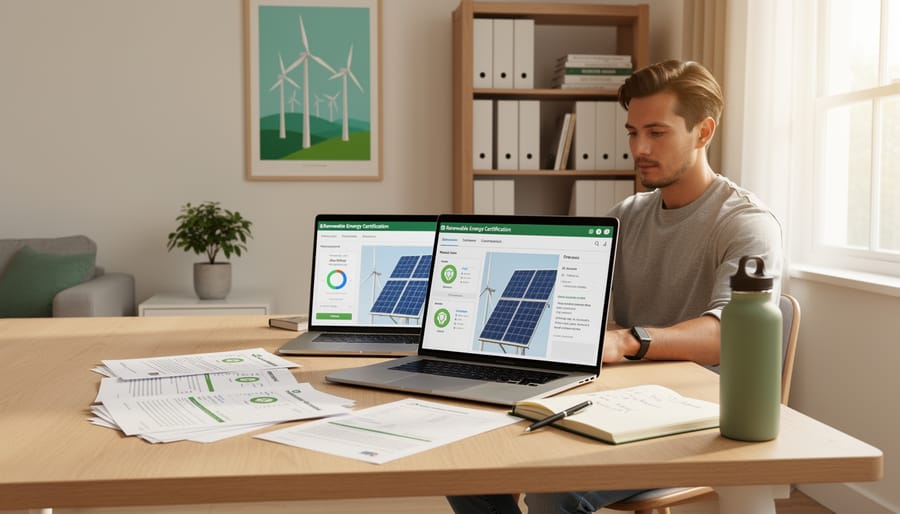
Online renewable energy certification programs blend structured curriculum with self-directed flexibility. Most platforms grant immediate access to course materials after enrollment, letting you start learning the day you register rather than waiting for semester schedules. This instant-access model suits professionals juggling work commitments or those eager to pivot careers quickly.
The learning environment typically centers on video lectures, interactive modules, and digital resources. You’ll watch demonstrations of installation techniques, analyze case studies of real renewable energy projects, and complete assessments that test your grasp of system design principles. Programs often include downloadable guides and calculators that reinforce concepts like solar storage trends or how renewable sources integrate with a reliable power grid. Many courses provide instructor support through forums or scheduled office hours, creating connection despite physical distance.
The hands-on concern is legitimate but addressable. Quality programs incorporate virtual simulations that walk you through equipment selection, site evaluation, and troubleshooting scenarios. Some organizations like the Midwest Renewable Energy Association offer online and in-person options letting you complete theory modules remotely before attending optional practical workshops for certification components that require physical installation practice.
Pacing flexibility stands out as a major advantage. You can advance through material during evenings or weekends, pausing when work intensifies and accelerating when you have more time. This rhythm suits career changers who can’t abandon their current income stream but want to build renewable energy credentials systematically. The asynchronous format means you’re never rushing to keep up with a rigid class schedule, though most programs still impose completion deadlines to maintain momentum.
Choosing the Right Program for Your Goals
Selecting an online renewable energy certification isn’t a one-size-fits-all decision. Your choice should reflect where you are now and where you want to go in Canada’s clean energy sector.
Start with time commitment. Programs vary widely, but many substantial certifications follow a 126-hour certificate structure spread across several courses. That typically translates to three to six months of part-time study if you’re working full-time. Be honest about your schedule. A rushed program won’t serve you as well as one you can complete thoughtfully while balancing other responsibilities.
Accreditation matters, though it looks different in renewable energy than in traditional fields. Look for programs offered by recognized universities, technical colleges, or established industry organizations. Credentials like PV Associate Training carry weight with employers because they signal standardized competency. If you’re planning to work in solar installation or project management, these recognized certifications often open doors faster than general courses.
Cost varies considerably, from a few hundred dollars for focused short courses to several thousand for comprehensive certificates. Factor in whether materials, software access, or exam fees are included. Some Canadian programs offer payment plans or qualify for provincial training subsidies, worth investigating before you enroll.
Most importantly, match the program to your actual career goal. A trades professional aiming to add solar installation to their skillset needs different training than an engineer transitioning into renewable energy project management. Read course descriptions carefully. Does the curriculum emphasize hands-on system design, policy and planning, or business applications? The right program builds directly on what you already know and fills the specific gaps between your current position and your target role in clean energy.
Beyond the Certificate: Career Applications
Earning a renewable energy certification opens diverse pathways within Canada’s expanding clean energy sector. Graduates find immediate applications in solar installation companies, where technical knowledge of PV systems translates directly into installer, technician, or site supervisor roles. The combination of certification with existing electrical, HVAC, or construction trades creates particularly valuable credentials, positioning professionals as specialized renewable energy contractors capable of designing and implementing residential and commercial systems.
Project management represents another substantial opportunity. Energy developers across provinces need coordinators who understand both the technical and regulatory dimensions of renewable installations. Certification holders often move into roles overseeing solar farm construction, community energy projects, or building retrofit initiatives, where their foundational knowledge bridges engineering teams and stakeholders.
Policy and consulting positions increasingly value renewable energy credentials. Municipal governments developing climate action plans, utilities integrating distributed generation, and engineering firms advising on sustainability strategies seek professionals who combine sector knowledge with analytical or communication skills. Someone with a planning background and renewable energy certification becomes equipped to shape local energy policy, while former fossil fuel industry professionals leverage their operational experience alongside new clean energy competencies to guide corporate transitions.
Energy auditing and efficiency consulting also absorb certificate holders, particularly those interested in building science. These roles involve assessing properties for renewable integration potential, recommending system upgrades, and helping property owners access provincial incentive programs. The certification establishes credibility with clients while providing the technical foundation to evaluate feasibility and estimate performance outcomes across different renewable technologies.
Online renewable energy certification programs have opened doors that simply didn’t exist a decade ago. Whether you’re a trades professional looking to expand into solar installation, a recent graduate charting a green career path, or someone ready to pivot from a traditional energy role, these programs offer a concrete starting point without the barriers of relocation or full-time enrollment. The 126-hour certificate structures and instant-access online models prove that professional development in this sector can fit around your current life, not replace it.
Canada’s clean energy transition needs more than policy and infrastructure. It needs people with the right skills and credentials working in communities across the country. If you’ve been considering how you might contribute to local renewable energy projects, exploring green energy basics through an accredited certification is a practical first step. These programs equip you with knowledge that translates directly into real-world applications, from understanding system design to navigating the technologies reshaping our energy landscape.
At Clean Future, we believe grassroots engagement drives meaningful change. These certifications represent exactly that: accessible pathways for Canadians to become active participants in the clean energy economy, not just observers of it.