
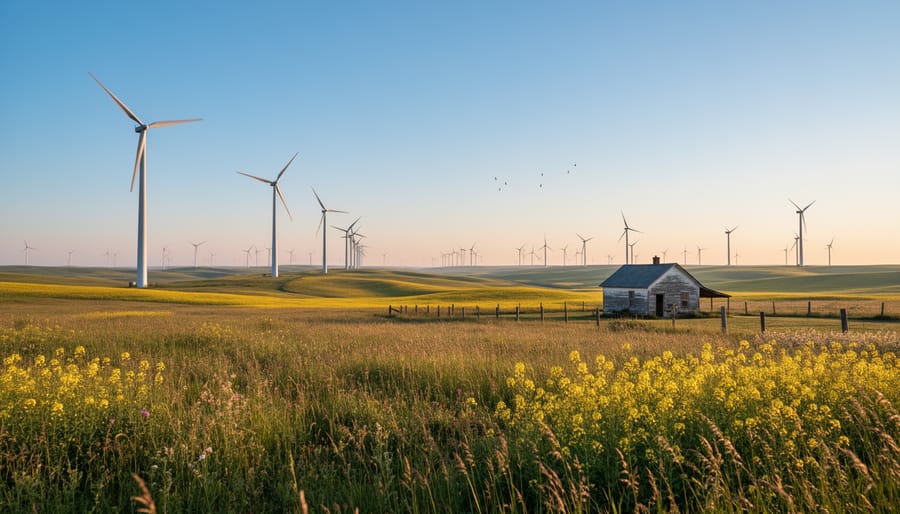
Across Canada’s prairies and coastlines, wind turbines now generate enough electricity to power millions of homes while producing zero direct emissions. This transformation represents one of our most visible commitments to combating climate change, yet the massive structures spinning against our skies carry consequences that extend beyond their carbon-cutting credentials.
Wind energy’s environmental impact presents a complex equation. On one side sits an undeniable climate benefit: every megawatt-hour generated by wind displaces fossil fuel combustion, reducing greenhouse gas emissions that drive global warming. Canadian wind farms currently offset approximately 30 million tonnes of carbon dioxide annually, equivalent to removing 6 million cars from our roads. These installations require no water for cooling, produce no air pollutants, and generate electricity from an endlessly renewable resource.
The other side of this equation demands equal attention. Wind turbines alter landscapes, create noise that affects nearby communities, and pose documented risks to birds and bats. In regions like Southern Alberta’s grasslands or Ontario’s forested ridges, turbine installations have sparked legitimate concerns about habitat disruption and wildlife mortality. Indigenous communities have raised questions about impacts on traditional territories, while rural residents navigate the tension between clean energy goals and quality of life.
Understanding wind energy’s true environmental footprint requires examining both its climate solutions and its ecological costs. This balanced assessment reveals where Canadian wind development succeeds, where it struggles, and how emerging technologies and improved planning can maximize benefits while minimizing harm to the natural systems we’re ultimately trying to protect.
The Positive Environmental Footprint of Wind Energy
Carbon Emissions and Climate Benefits
Wind energy stands as one of Canada’s most powerful tools in the fight against climate change, displacing millions of tonnes of carbon dioxide that would otherwise enter our atmosphere from fossil fuel combustion. Unlike coal or natural gas plants that release greenhouse gases with every kilowatt-hour produced, wind turbines generate electricity without direct emissions, creating a substantial climate advantage over their 20-30 year operational lifetime.
The numbers tell a compelling story. Ontario’s wind farms alone prevent approximately 6 million tonnes of carbon emissions annually, equivalent to removing over 1.3 million cars from Canadian roads each year. This shift away from coal-fired generation, accelerated by wind energy expansion, helped Ontario phase out coal entirely by 2014, making it the first jurisdiction in North America to achieve this milestone. Similarly, Alberta’s growing wind capacity is offsetting emissions from the province’s energy-intensive economy, with projects like the Rattlesnake Ridge Wind Farm in Drumheller reducing approximately 440,000 tonnes of CO2 annually.
When compared directly to traditional energy sources, wind energy’s climate benefits become even more apparent. Coal plants emit roughly 1,000 grams of CO2 per kilowatt-hour, while natural gas produces about 450 grams. Wind energy, accounting for manufacturing and installation, generates fewer than 15 grams per kilowatt-hour throughout its entire lifecycle. This dramatic reduction positions wind as an essential component of Canada’s climate commitments, supporting the nation’s goal to achieve net-zero emissions by 2050.
Reduced Air and Water Pollution
Wind energy’s environmental advantage becomes strikingly clear when examining air and water quality. Unlike fossil fuel power plants, wind turbines operate without combustion, meaning they release zero sulfur dioxide, nitrogen oxides, or particulate matter into the atmosphere. This fundamental difference eliminates the respiratory irritants and smog-forming compounds that plague communities near coal or natural gas facilities.
The water savings are equally impressive. Conventional power plants consume enormous quantities of water for cooling systems and steam generation, while wind turbines require virtually none during operation. This preservation of water resources proves particularly valuable in regions experiencing drought or competing demands on freshwater supplies.
Communities across Canada have witnessed tangible improvements in local air quality following wind farm development. In southern Alberta, where wind installations now dot the prairie landscape, residents living near these facilities breathe cleaner air compared to those in areas dependent on thermal generation. The turbines also avoid thermal pollution, the heating of rivers and lakes that occurs when power plants discharge warm water, disrupting aquatic ecosystems.
For investors and environmentally conscious citizens, these pollution reductions represent measurable health benefits. Studies indicate that transitioning to wind energy can decrease emergency room visits for asthma and other respiratory conditions in surrounding areas, creating healthier communities alongside cleaner energy production.
Land Use Efficiency
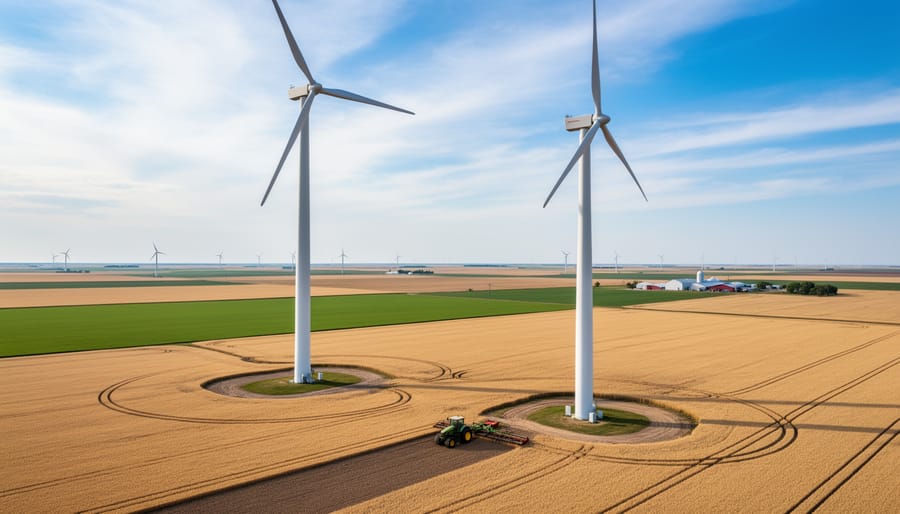
One of wind energy’s often-overlooked advantages is its remarkable land use efficiency. Unlike fossil fuel extraction or even solar farms, wind turbines occupy only a small physical footprint—typically just the tower base and access roads. This design allows landowners to continue farming, ranching, or maintaining natural ecosystems around and between turbines.
Across Canadian prairies, farmers in Alberta and Saskatchewan routinely plant crops right up to turbine foundations, maintaining agricultural productivity while generating clean energy income. In Ontario’s Huron County, cattle graze peacefully beneath spinning blades, demonstrating how wind farms and livestock operations coexist seamlessly. This dual-purpose approach means a single hectare can simultaneously produce food and renewable electricity.
Indigenous communities in Quebec have also embraced this model, installing turbines on traditional lands while preserving hunting grounds and natural habitats. The compact infrastructure allows approximately 95-99% of a wind farm’s total area to remain available for its original purpose, making wind energy one of the most land-efficient power generation methods available today.
Wildlife and Ecosystem Challenges
Bird and Bat Mortality Concerns
Wind turbines do pose collision risks for birds and bats, a concern that deserves honest examination. When flying through rotor-swept zones, wildlife can strike turbine blades, particularly during migration periods or in low-visibility conditions. However, understanding the actual scale of this impact provides important context for evaluating wind energy’s environmental footprint.
Canadian studies estimate that wind turbines cause between 8,000 to 47,000 bird deaths annually nationwide. While every loss matters from a conservation perspective, researchers emphasize comparing this figure to other human-caused mortality sources. Domestic cats kill an estimated 100 to 350 million birds each year in Canada, while building collisions account for roughly 25 million deaths. Power lines claim another 8 million birds annually. These comparisons aren’t meant to dismiss turbine impacts, but rather to provide perspective on where conservation efforts can achieve the greatest effect.
Certain species face elevated vulnerability. Raptors like golden eagles hunt in open areas where turbines are often located, making them particularly susceptible. Bats, especially migratory species such as hoary bats and eastern red bats, experience disproportionately high mortality rates. Scientists believe bats may be attracted to turbines as potential roosting sites, or that rapid pressure changes near blades cause fatal internal injuries even without direct strikes.
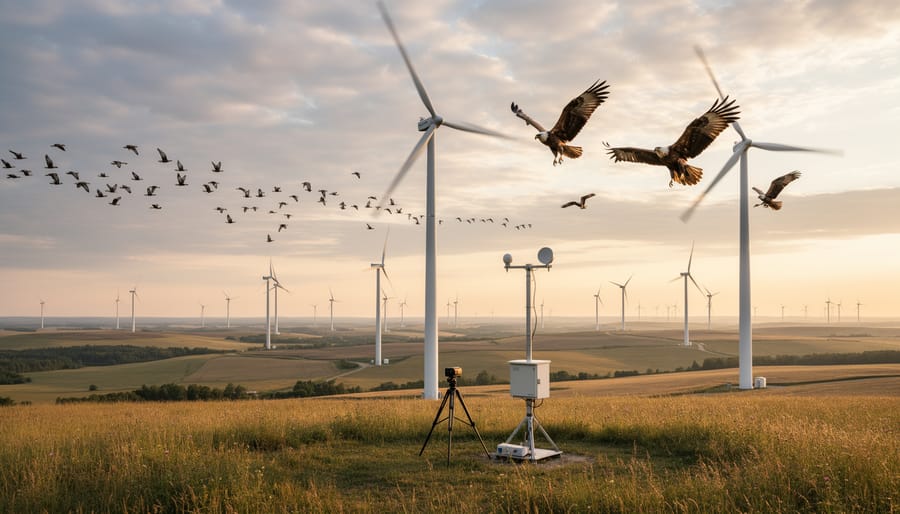
The Canadian wind industry has responded by implementing mitigation strategies. These include seasonal shutdowns during peak migration periods, radar systems that detect approaching flocks and temporarily halt turbines, and careful site selection that avoids critical habitats and migration corridors. Ongoing monitoring programs at operational facilities help identify high-risk locations and species, allowing operators to adjust operations accordingly. This adaptive management approach continues improving as researchers develop better understanding of wildlife interactions with wind infrastructure.
Habitat Disruption and Migration Patterns
Wind turbine placement in Canadian ecosystems presents a complex challenge for wildlife conservation, particularly during both construction and operational phases. The initial development phase can temporarily disrupt nesting sites and breeding grounds, especially in sensitive areas like the Prairie Pothole Region where migratory waterfowl congregate. However, Canadian developers have increasingly adopted seasonal construction schedules that avoid critical breeding periods, demonstrating how proactive planning can minimize these impacts.
Migration routes pose ongoing considerations, particularly along the Great Lakes corridor where thousands of birds and bats travel annually. While early wind farms in Ontario experienced higher collision rates, modern projects now incorporate pre-construction wildlife surveys and radar monitoring systems to identify high-traffic areas. These assessments have led to strategic turbine spacing and seasonal shutdowns during peak migration periods.
The caribou populations in northern regions face habitat fragmentation concerns, though studies from Quebec’s wind installations suggest that with proper setback distances—typically 500 meters from known caribou ranges—these impacts can be substantially reduced. Marine environments also require attention, as offshore wind development along Atlantic Canada’s coastlines must account for fish spawning areas and marine mammal movements, leading to innovative foundation designs that minimize underwater noise during construction.
Mitigation Strategies in Action
Canada is pioneering practical solutions to minimize wind energy’s impact on wildlife. In Alberta, curtailment programs temporarily shut down turbines during peak bat migration periods, reducing fatalities by up to 50% with minimal energy loss. Ontario’s Wolfe Island project employs IdentiFlight radar technology that detects approaching birds and halts turbine blades within seconds, protecting species like golden eagles.
Strategic turbine placement makes a significant difference. Before construction, developers conduct thorough environmental assessments mapping migration corridors and sensitive habitats. Nova Scotia’s requirements now mandate two-year pre-construction bird and bat studies, ensuring projects avoid critical wildlife areas. Quebec’s Rivière-du-Moulin wind farm demonstrates this approach, positioning turbines away from identified raptor flight paths.
These Canadian innovations prove that wind energy development can coexist with wildlife protection. By combining technology, data-driven planning, and adaptive management, operators are setting global standards for responsible renewable energy deployment while maintaining clean electricity generation.
Landscape and Community Environmental Impacts
Visual and Aesthetic Considerations
Wind turbines fundamentally alter the visual landscape of rural and coastal regions across Canada, creating what planners call viewshed impacts. In provinces like Ontario, Nova Scotia, and Alberta, towering turbines stretching up to 150 meters have become prominent features on previously uninterrupted horizons. Community responses vary considerably, with some residents embracing these structures as symbols of progress while others express concern about their effect on scenic vistas and property values.
Canadian developers have responded to visual impact concerns through increasingly sophisticated planning approaches. Shadow flicker studies now form standard components of environmental assessments, analyzing how rotating blades cast moving shadows on nearby homes. Setback distances, typically ranging from 550 to 1,500 meters from residences depending on provincial regulations, help minimize visual dominance. In sensitive areas like Prince Edward Island’s coastal communities, projects incorporate viewshed modeling that simulates turbine visibility from multiple vantage points, allowing residents to preview changes before construction begins.
Progressive consultation processes have proven essential. Alberta’s Castle Rock Ridge project, for example, held multiple community sessions where residents provided input on turbine placement to preserve key sightlines. This collaborative approach acknowledges that visual preferences remain subjective, while working toward solutions that balance renewable energy goals with community character preservation.
Noise and Shadow Flicker Effects
Wind turbines generate two community-level concerns: noise and shadow flicker. Noise consists of mechanical sounds from the turbine’s gearbox and the aerodynamic whoosh of blades cutting through air. Shadow flicker occurs when rotating blades cast moving shadows that pass over nearby properties, creating a strobe-like effect during certain times of day.
Health Canada established guidelines limiting noise levels to 40 decibels at the nearest residence, roughly equivalent to a quiet library. Provinces like Ontario require turbines to sit at least 550 meters from homes, effectively addressing both concerns for most residents. Modern turbine designs featuring aerodynamic blade modifications and sound-dampening technologies have dramatically reduced operational noise compared to earlier models.
The experience in communities like Chatham-Kent, Ontario demonstrates successful mitigation. While initial installations in the mid-2000s sparked complaints, newer projects incorporating improved setback distances and advanced turbine technology have seen significantly fewer concerns. Developers now use computer modeling to predict shadow flicker patterns before construction, allowing them to adjust turbine placement or implement automatic shut-off systems during problematic periods. These proactive measures have transformed what were once contentious issues into manageable aspects of responsible wind farm development across Canadian landscapes.
Soil and Water Resource Management
Wind farm construction temporarily disrupts soil and water systems, though Canadian regulations require comprehensive mitigation. During development, heavy machinery and road building can compact soil and increase erosion risk, particularly on hilly terrain where turbines often perform best. Changed drainage patterns may redirect surface water flow, potentially affecting nearby wetlands or agricultural lands. However, provincial environmental assessments mandate erosion control measures like silt fencing, sediment ponds, and revegetation programs.
In Ontario’s wind farms, developers must restore topsoil layers after construction and implement stormwater management plans that prevent contamination of local watersheds. These protective measures, combined with the relatively small footprint of turbine foundations (typically less than one acre per turbine), mean long-term impacts remain minimal. Most agricultural activities resume between turbines within months of installation. Canadian developers also conduct pre-construction water quality testing and ongoing monitoring to ensure aquatic ecosystems remain protected throughout a project’s operational life, demonstrating that responsible site management can safeguard soil and water resources while advancing clean energy goals.
Marine and Offshore Wind Considerations
Ocean Ecosystem Impacts
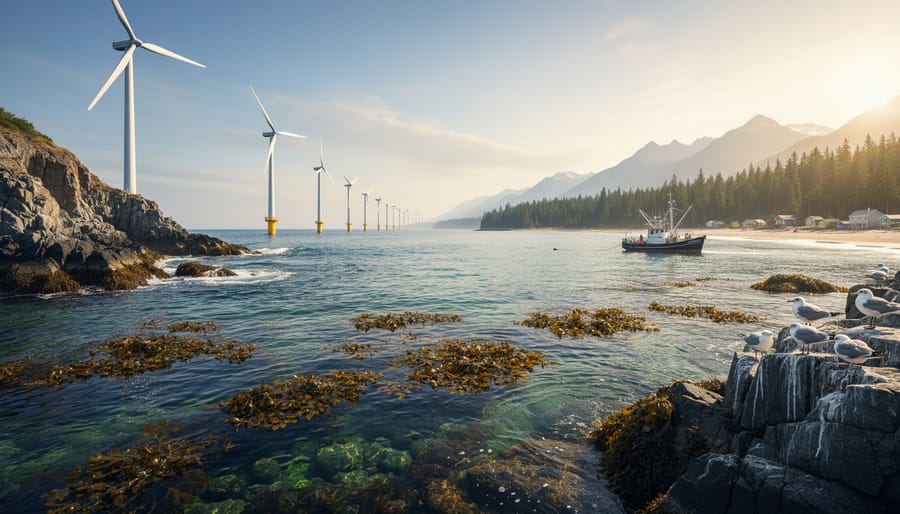
Offshore wind development in Canadian waters, particularly along the Atlantic coast and the Great Lakes, introduces both challenges and unexpected benefits for marine ecosystems. During construction, underwater noise from pile-driving can temporarily disrupt marine mammals and fish, with studies from Nova Scotia’s planned offshore projects indicating noise levels that may affect whale communication patterns within a several-kilometer radius. However, developers are implementing quieter installation techniques, including bubble curtains that reduce sound transmission by up to 90 percent, and scheduling construction around sensitive breeding seasons.
Once operational, offshore turbines generate minimal underwater noise compared to vessel traffic. Interestingly, turbine foundations create artificial reef effects, attracting diverse marine life. Research from Europe’s older installations shows increased biodiversity around turbine bases, as they provide hard surfaces for mussels, barnacles, and kelp, which in turn support fish populations. Canadian scientists monitoring early offshore wind sites are documenting similar patterns, with lobster and cod showing particular affinity for these structures. The fishing exclusion zones around turbines may even serve as de facto marine protected areas, allowing depleted fish stocks to recover while still generating clean energy above.
Canada’s Offshore Wind Development Plans
Canada is poised to join the global offshore wind movement with ambitious plans along both its Atlantic and Pacific coasts. The federal government has identified offshore wind as a crucial component of achieving net-zero emissions by 2050, with particular focus on Nova Scotia’s waters, where projects could generate up to 5 gigawatts of clean electricity. British Columbia is also exploring floating offshore wind technology, which would be necessary given the deeper waters along the West Coast.
Canadian regulators are taking a measured approach informed by two decades of European experience. The Impact Assessment Agency of Canada now requires comprehensive environmental studies before project approval, examining effects on marine mammals, seabirds, fish populations, and migratory patterns. These assessments incorporate advanced monitoring technologies like acoustic sensors and radar systems that European projects have used successfully to minimize wildlife impacts.
Nova Scotia’s regulatory framework specifically addresses lessons learned from Scotland and Denmark, including seasonal construction restrictions to protect critical breeding periods and mandatory marine spatial planning to avoid sensitive habitats. This thoughtful approach aims to balance Canada’s renewable energy ambitions with protection of our unique marine ecosystems, ensuring offshore wind development proceeds responsibly while creating thousands of jobs in coastal communities.
The Path Forward: Balancing Energy Needs with Environmental Stewardship
Canada is charting an innovative course in wind energy development, one that prioritizes both environmental protection and clean energy expansion. The approach combines cutting-edge technology, thoughtful regulation, and meaningful collaboration with communities across the country.
On the technology front, Canadian researchers and wind operators are implementing advanced radar and camera systems at wind farms to detect approaching birds and bats. When wildlife is detected, turbines can temporarily reduce speed or shut down, significantly lowering collision risks. These smart turbine systems represent a practical middle ground between energy production and species protection. Companies like TransAlta are already testing artificial intelligence solutions that distinguish between different bird species, allowing for targeted responses to protect threatened populations.
Policy frameworks are evolving alongside technology. Environment and Climate Change Canada has established guidelines for pre-construction wildlife assessments and ongoing monitoring at wind facilities. Provincial governments are incorporating habitat corridors and buffer zones into wind farm approvals, ensuring installations avoid critical migration pathways and sensitive ecosystems.
Community engagement has become equally essential to Canada’s wind energy strategy. Indigenous communities, in particular, are becoming partners rather than bystanders in wind development. Projects like the Cowessess First Nation’s involvement in Saskatchewan wind farms demonstrate how local communities can share in both decision-making and economic benefits. Public consultation processes now begin earlier in project planning, addressing concerns about noise, visual impact, and land use before construction starts.
This balanced approach acknowledges that perfect solutions don’t exist, but continuous improvement does. By remaining committed to innovation, transparency, and collaboration, Canada is demonstrating that wind energy can power our future while respecting the natural world that sustains us all.
When evaluated comprehensively, wind energy represents a clear net positive for Canada’s environment, particularly when development follows responsible planning and community-centered principles. While challenges exist—from bird mortality to visual landscape changes—the climate benefits of displacing fossil fuel emissions far outweigh the localized environmental impacts. The key lies not in minimizing legitimate concerns, but in addressing them through continued innovation and transparent practices.
Canada stands at a pivotal moment in its energy transition. The country’s vast landscapes, robust regulatory frameworks, and growing expertise in cold-climate turbine technology position it uniquely to demonstrate that renewable energy development and ecosystem protection can advance together. Recent improvements in turbine placement algorithms, wildlife monitoring systems, and community benefit-sharing models show that the industry is learning and adapting.
Moving forward, success depends on maintaining rigorous environmental monitoring throughout project lifecycles, investing in research that addresses knowledge gaps around cumulative impacts, and ensuring Indigenous communities and local residents have meaningful input in development decisions. When wind farms are sited thoughtfully—avoiding critical wildlife corridors, incorporating seasonal shutdowns during migration peaks, and designed with decommissioning plans in place—they become powerful tools in Canada’s climate action toolkit.
The path ahead is promising. As technology advances and best practices evolve, Canada has the opportunity to lead globally in sustainable wind energy development that honours both our climate commitments and our responsibility to protect the diverse ecosystems that define this nation’s natural heritage.