

If you’re living near a wind turbine and feeling off, the most likely culprit is sound, specifically the low, rhythmic swish that can carry further than you’d expect, especially at night. The quickest check is to keep a simple log for two weeks. Note the time, the symptom, which way the wind is blowing, and whether the turbines are turning. Patterns show up fast, and they’re what regulators and doctors can actually work with.
Reported complaints tend to fall into a few familiar groups: disturbed sleep, headaches, irritability, and a general sense of unease. Whether turbines directly cause these symptoms is still debated, and the research doesn’t point to one tidy answer. Annoyance from noise and flicker, stress, and sleep disruption are the better-documented pathways, and each one has a practical fix.
This article walks through the problem in the order you’ll need it. We’ll sort symptoms by how urgent they are, explain the likely causes in plain language, then lay out a step-by-step process for documenting your experience and getting it addressed. We’ll finish with ways to prevent trouble before it starts, whether you’re a current resident or considering a move. For wider context on wind energy in Canada, that guide is a good companion read.
One safety note: if symptoms are severe or sudden, see a doctor first. For noise limits and complaint procedures, Health Canada and your provincial regulator set the rules.
Sorting Symptoms: What Residents Near Wind Turbines Actually Report
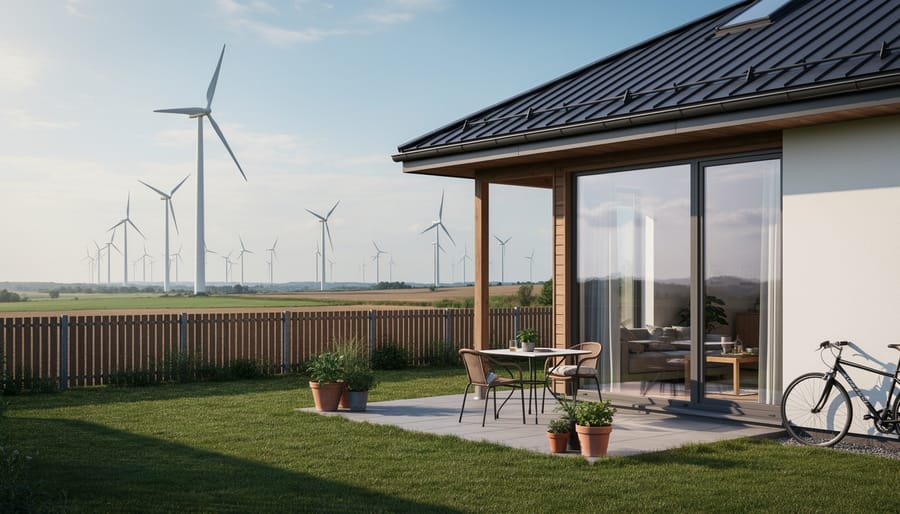
Keeping a Symptom and Sound Log

A simple diary is one of the most useful tools you have. Memory is a poor judge of cause and effect, and a log turns a vague sense that “it’s been worse lately” into something a doctor or regulator can actually work with. Over a few weeks, it shows whether symptoms line up with specific wind conditions or turbine activity, or whether they track something else entirely, like a stressful workweek or a change in medication.
Keep each entry short so you’ll stick with it. A phone notes app or a notebook by the bed works fine. Aim to record:
- Date and time of the symptom or disturbance
- Wind direction and approximate speed, from a local weather report or your own observation
- Where you were, indoors or outdoors, and which room
- The symptom and how severe it felt, on a simple scale of one to five
- Sleep quality the night before, including any waking
- Other stressors that day, such as noise from traffic, illness or work pressure
That last item matters more than it might seem. Noting other possible influences isn’t a way of dismissing your experience. It makes your record more credible and helps everyone involved spot genuine patterns rather than coincidence.
If you can, add a quick note on whether the turbines were turning and how audible they were. Entries made at the time, rather than reconstructed later, carry the most weight. Bring the log to your doctor, and keep it handy in case you later need to raise a concern with the operator.
When to Skip the Log and See a Doctor
Some symptoms shouldn’t wait for a diary entry. Chest pain, sudden or severe headaches, fainting, shortness of breath, confusion, new vision or hearing changes, or thoughts of self-harm call for prompt medical care, whether or not a turbine is anywhere in the picture. The same goes for sleep trouble or low mood that lingers for weeks, or keeps getting worse.
Seeing a doctor early doesn’t mean abandoning your log. Bring it along. A clear record of timing, wind conditions and symptoms gives your physician useful context, and it helps rule out other causes so you can focus on what’s actually going on.
Likely Causes Behind Wind Turbine Health Concerns
Noise and Sleep: The Best-Documented Concern
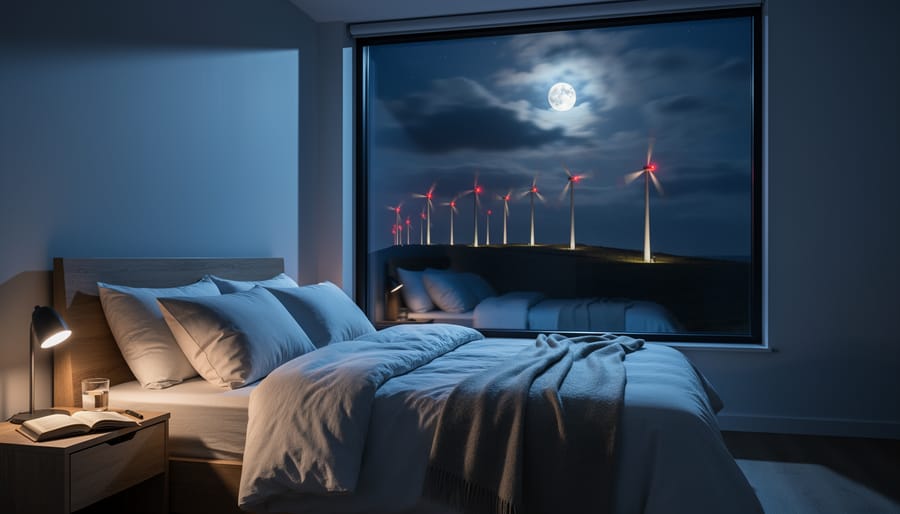
Of all the concerns raised about turbines, noise is the one with the strongest evidence behind it. For some people, the swishing or thumping sound of rotating blades is simply irritating, and that irritation can build over time. Canadian research on turbines and nearby residents found that annoyance rose as sound levels rose, and Health Canada’s annoyance and sleep findings are a good place to read the details for yourself.
Perceived loudness is slippery, though. Distance matters, but so do hills, tree cover, and wind direction. Turbine sound can carry farther on calm nights, when the air near your home is still while the blades turn in faster wind aloft. That is why a neighbour a few hundred metres away may hear very little while you hear plenty.
Because the sound is rhythmic, it can be harder to tune out than steady background noise, especially at bedtime. The table below shows how common complaints might connect to possible causes.
| Symptom or complaint | Possible turbine-related trigger | Other common causes | Suggested first step |
|---|---|---|---|
| Trouble falling asleep | Rhythmic blade noise at night | Stress, caffeine, shift work | Self-monitor with a sleep log |
| Waking during the night | Noise changes with wind shifts | Sleep apnea, pain, bedroom light | See a doctor if it persists |
| Ongoing irritation or annoyance | Audible sound inside or outside the home | Other local noise, life stress | Self-monitor, note the conditions |
| Morning headaches | Disrupted sleep from noise | Dehydration, tension, eyesight | See a doctor if frequent |
Poor sleep rarely stays in the bedroom. Tired people tend to feel more stressed, and ongoing annoyance can feed that stress in a loop. That is why noise sits at the centre of most wellbeing concerns near turbines, and why it deserves a calm, practical response rather than dismissal.
Infrasound, Shadow Flicker and the Role of Stress
Infrasound is sound below the range of normal hearing, and it comes from many everyday sources, including traffic, ocean waves and household appliances. Turbines produce some, but measurements near wind farms generally show levels well under the threshold where people can perceive it. Reviews of the evidence, including work supported by Health Canada, have not established that turbine infrasound directly causes illness. Researchers still say longer-term studies would help close the remaining gaps.
Shadow flicker is a different matter. When the sun sits low behind a rotating blade, it can cast a pulsing shadow across a window or yard. It is annoying for some residents, and it is also predictable, because it depends on sun angle, season and turbine position. Developers can model it before construction and, if needed, pause specific turbines during the affected hours.
Stress deserves just as much attention. Feeling shut out of planning decisions, or losing trust in a project, can wear on wellbeing, and worry about health can itself disturb sleep. That does not make anyone’s experience imaginary. It points to consultation and clear communication as real health measures.
Because the research is still developing, a careful, open-minded approach serves everyone best.
A Step-by-Step Fix: What to Do If Turbines Are Affecting Your Well-Being
Practical Mitigation at Home and at the Turbine
Living near turbines doesn’t mean you have to simply put up with disturbance. Inside the home, the biggest wins are usually in the bedroom. Heavy curtains, weatherstripping and secondary glazing cut outside sound, and moving a bed to a quieter wall can help too. A steady background sound, such as a fan, softens the intrusion of a rhythmic swish. Good sleep hygiene matters as well: a consistent bedtime, a cool dark room and limited screens before bed.
On the operator side, there are tools designed to reduce problems at the source. Many turbines can run in a noise-reduced mode that slows the blades or adjusts their pitch during sensitive hours, usually at some cost to output. Operators can also curtail turbines during the short windows when the sun is at an angle that casts flickering shadows onto nearby homes, using software that predicts when this will happen. These measures work best when residents report specific times and conditions, which is where your log pays off.
A few terms come up often in these conversations:
- Infrasound
- Very low-pitched sound below the range of normal human hearing, produced by sources such as wind, waves and traffic as well as turbines.
- Decibel (dBA)
- A unit that measures sound level, adjusted to reflect how the human ear responds to different pitches.
- Shadow flicker
- A pulsing pattern of light and shadow caused by rotating blades passing between the sun and a window.
- Setback distance
- The minimum distance regulators require between a turbine and nearby homes.
If these measures fall short, it’s also worth looking at alternatives to turbines when your community is planning future clean energy projects.
Preventing Problems: How Communities and Developers Are Getting It Right

The best way to solve a problem is to stop it before it starts, and that’s where much of the wind industry’s progress is happening. Across Canada, communities and developers are finding that good planning heads off most of the concerns residents raise later.
It begins early. When developers invest in genuine community consultation before a project is finalized, neighbours get a chance to ask questions, flag local concerns and see how siting decisions are made. That openness builds trust, which matters more than many people expect, since uncertainty and feeling ignored can themselves add to stress.
Regulators then set the guardrails. Provincial authorities establish setback distances and noise limits, and developers typically use computer modelling before construction to estimate how much sound and shadow flicker nearby homes might experience. If the model shows a problem, the layout can change before a single foundation is poured. (Shadow flicker, for context, is the flickering effect created when rotating blades pass between the sun and a window.)
Here’s a snapshot of what good practice tends to look like:
- Early consultation that gives residents a real voice in the project.
- Modelled noise and flicker limits checked against regulator standards.
- Clear setback rules that are easy for neighbours to understand.
- Independent monitoring once turbines are operating.
- An accessible complaint process with timely, documented responses.
- Regular community updates so no one is left guessing.
Monitoring after construction closes the loop. Measuring real-world sound levels and responding transparently to complaints lets operators confirm that projects perform as modelled and fix issues quickly when they don’t. Combined with quieter blade designs and smarter siting, these habits point toward a future where wind projects fit more comfortably into the communities that host them.
Your experience can add to this picture. If you’ve been part of a consultation process, or seen a project handle community concerns well, we’d like to hear about it. Share your local story with Clean Future so other communities can learn from what’s working.
Common Questions About Wind Turbines and Health
Most people searching these questions want a straight answer, so here are the ones that come up most often. Standards differ by province, so Health Canada and your provincial environment or energy ministry are the places to confirm current limits. Those same regulatory standards shape how projects are sited, monitored and approved.
Can wind turbines make you sick?
Some people living nearby report poor sleep, headaches and annoyance, and those experiences are real. Reviews of the research have mostly pointed to noise, flicker and stress as the likely drivers rather than a direct physical illness, but anyone with persistent symptoms should see a doctor to rule out other causes.
How far away is far enough?
There’s no single distance that works everywhere, because perceived sound depends on terrain, wind and turbine design. Setbacks and noise limits are set by regulators, so check the conditions attached to your local project with your provincial authority.
Is infrasound dangerous?
Infrasound is very low-frequency sound that’s also produced by wind, traffic and the ocean. Health Canada’s work on wind turbine noise is the best place to see what current evidence shows and where uncertainty remains.
Who regulates turbine noise in Canada?
Responsibility sits mainly with provincial environment ministries and energy regulators, often alongside municipalities. Health Canada provides health-related research and guidance, but it doesn’t set a single national noise limit.
Can shadow flicker be reduced?
Yes. Operators can curtail or pause specific turbines during the short windows when flicker reaches a home, and pre-construction modelling helps avoid the problem in the first place. Window coverings can also help at the household level.
Questions like these matter beyond individual households. Communities that get clear, honest answers early tend to trust a project more, and that trust is part of what makes wind energy workable over the long term. It’s also a practical consideration for anyone weighing renewable investment, since projects built with community consultation are generally better placed to succeed.
If your question isn’t covered here, your provincial regulator or the project operator’s community liaison is the right next call, and Clean Future readers are welcome to share what they’ve learned locally.
Living near wind turbines can raise real questions, and they deserve to be taken seriously. The most useful approach is a calm, orderly one: sort your symptoms, look for the likely cause, and work up through the proper channels.
- Log your symptoms, noting the date, time, wind conditions and sleep quality.
- See a doctor to rule out causes unrelated to turbines.
- Review the project’s approval and noise conditions.
- Contact the operator’s complaint line with your records.
- Escalate to the provincial regulator or municipality if the issue stays unresolved.
- Explore mitigation, such as bedroom sound insulation or operator-side noise-reduced modes.
- Follow up and keep records of every contact and response.
Prevention matters most. Early consultation, thoughtful siting and transparent monitoring help wind energy grow with the trust of the communities that host it. If you have a local experience or a community report to share, send it to Clean Future. Your story helps others see what good practice looks like across Canada.