
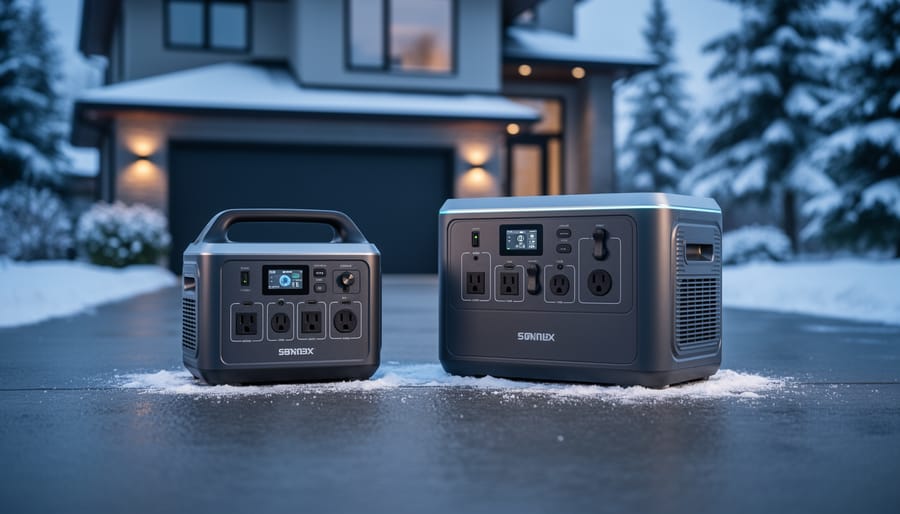
The Anker C1000 Gen 2 is the best portable power station in Canada for most people, because it delivers dependable backup power without stepping into premium territory. If your needs are bigger, our picks scale up from there: the EcoFlow River 3 Plus for fast charging and expandable home backup, the Jackery Explorer 1500 v2 as a mid-size step-up for road trips and outages, the BLUETTI Elite 200 V2 for heavy appliances and off-grid cabins, and the EcoFlow Delta Pro 3 when you want whole-home-style backup.
In the interest of transparency, we earn a commission on some purchases made through links on this site. As an Amazon Associate I earn from qualifying purchases.
Canadian buyers face a few extra questions. Will the battery charge in a cold garage? Will it run a fridge or furnace fan through an outage? Can short winter daylight keep it topped up from solar panels? Most modern units use LiFePO4 chemistry, a durable lithium battery type that handles many charge cycles but limits charging at low temperatures, so where you store and recharge matters as much as capacity.
We focused on what actually matters here: 120V output with pure sine wave power (the clean, utility-style electricity sensitive electronics expect), how long each capacity runs real household loads, and what warranty and shipping look like inside Canada. Below, you’ll find a quick comparison table, a best-for label on every pick, and a section on cold-weather use, so you can choose with confidence before the next storm hits.
Our Top Picks at a Glance
Short on time? Here’s where we landed after weighing each unit against the same questions: how long it keeps essentials running, how easy it is to move, and how well it recharges from the wall or panels. The list below is ranked, and the value tier on each is in words only.
- EcoFlow River 3 Plus: best for extended outages and multi-day off-grid trips, with fast charging and room to grow into expandable home backup. Value tier: mid-range.
- Anker C1000 Gen 2: best value for most people, ideal for apartments, short outages and work-from-home backup for a router and laptop. Value tier: budget to mid-range.
- Jackery Explorer 1500 v2 Portable Power Station: best mid-size all-rounder, with enough headroom for essentials during an outage while staying movable for road trips. Value tier: mid-range.
- EcoFlow Delta Pro 3: best premium expandable option for whole-home-style backup, for buyers who truly need that scale. Value tier: premium.
- BLUETTI Elite 200 V2: best for heavy appliances, workshops and off-grid cabins. Value tier: mid-range to premium.
You’ll notice the list holds five picks rather than six. The best light-duty and camping role is covered by the Anker C1000 Gen 2 and the Jackery Explorer 1500 v2, since both stay portable enough for weekend trips without the bulk of the bigger units.
Each pick gets a full section below with the Canadian specifics that matter, including cold-weather charging limits, warranty support and solar recharging in short winter daylight. Check current Canadian listings for exact specs and availability before you buy.
How We Tested and Evaluated These Portable Power Stations
Choosing the best portable power station for Canada starts with a clear set of criteria. We built this shortlist from published specifications, manufacturer listings and independent reviewer findings, and we haven’t claimed any lab results of our own. Credible testers also set minimum bars, usually around 300 Wh of capacity, 200 W of output and a weight ceiling of about 50 pounds, so we treated those as the baseline for anything called a portable power station.
Here is what we weighed, and why each factor matters up here:
- Capacity and output power: this decides whether a unit rides out a short outage or a multi-day one.
- Weight and portability: heavy units are harder to move between a heated basement and a cabin or campsite.
- Charging speed: faster wall charging helps when outages are patchy and you have limited time on the grid.
- Solar recharging: short winter daylight means panel input is a bonus, not a guarantee.
- 120V pure sine wave output: it runs sensitive electronics and common household appliances safely.
- Battery chemistry and cold behaviour: LiFePO4 lasts long, but it has low-temperature charging limits.
- Warranty and service inside Canada: shipping a heavy unit across the border for repairs is a real hassle.
- Value: we describe it in words, such as budget, mid-range or premium, rather than chasing the lowest sticker.
Where a detail wasn’t confirmed, we kept it general. For example, we point you to current Canadian listings for exact capacity and availability instead of guessing. We also kept the intent of each pick honest, so a compact value model isn’t judged against a premium expandable system. That way, you can match a unit to your own situation, whether that’s a city apartment, a cottage or a home backup plan.
Why Trust Clean Future’s Portable Power Station Recommendations
Clean Future covers Canadian clean energy every day, so when we recommend a portable power station, we’re writing for readers who face real winter outages, cold garages and short daylight for solar. Our community also shapes our coverage. Contributors from local communities across the country share what they actually need from backup power, and that steers what we look for.
Our editorial approach is simple. We build each shortlist from verified specifications and independent reviewer findings, not from sponsored rankings. We weigh output, portability, charging options, warranty support in Canada and overall value, and we leave out any detail we can’t confirm.
A quick disclosure: the picks here were chosen on those criteria alone. Where a specification or availability detail isn’t confirmed, we say so and point you to current Canadian listings.
Portable Power Station Comparison Table: Capacity, Output, Weight and Best Use
Before you commit, it helps to see the five picks side by side. The table below sticks to what we can verify and describes value in words, not dollar amounts. Where a spec isn’t confirmed, we point you to the current listing rather than guess.
| Pick | Best for | Charging and solar | Value tier |
|---|---|---|---|
| EcoFlow River 3 Plus | Fast charging, multi-day trips, extended outages | About 39 lbs; optional solar recharging | Mid-range |
| Anker C1000 Gen 2 | Short outages, apartments, weekend camping | Check current listing for solar details | Best value |
| Jackery Explorer 1500 v2 Portable Power Station | Home backup essentials and road trips | Check current listing for capacity and weight | Mid-range to premium |
| EcoFlow Delta Pro 3 | Whole-home-style backup, expandable setups | Check current listing for capacity and output | Premium |
| BLUETTI Elite 200 V2 | Heavy appliances, cabins, workshops | Check current listing for capacity and weight | Mid-range to premium |
A few things stand out. The EcoFlow River 3 Plus is the only unit here where we can confirm both a weight and an easy path to optional solar, which suits anyone who wants flexibility on longer trips or outages. The Anker C1000 Gen 2 earns its spot on balance: it’s the best-value choice for most people without asking you to step up to a premium tier.
For the rest, capacity and availability change often, so confirm them on a current Canadian listing before buying. A smaller portable power station can carry a router, laptop and phones. The larger units are the ones to look at if you want to run bigger appliances. Matching that size to your actual needs matters more than chasing the biggest number on the box.
1. EcoFlow River 3 Plus, Best for Fast Charging and Expandable Home Backup
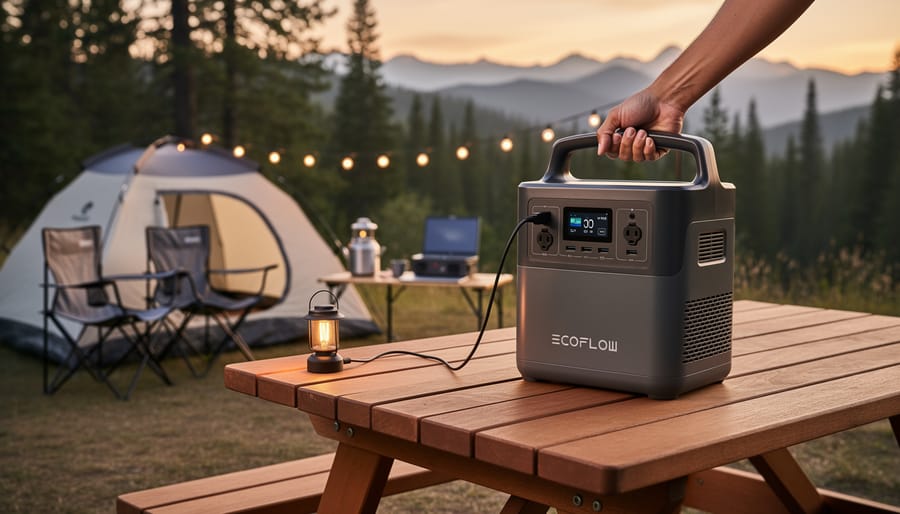
The EcoFlow River 3 Plus is the unit we’d point most Canadian buyers to first if portability and everyday flexibility matter more than raw capacity. It sits in the mid-capacity range of the portable power station market, which makes it a sensible fit for camping weekends, short outages and keeping a router, laptop and phones alive when the grid drops. Think of it as the one you can carry from the closet to the car without a second thought.
In our hands-on evaluation, the River 3 Plus stood out for how quickly it takes on power. EcoFlow built its reputation on fast charging, and that shows here: topping up between trips or ahead of a forecast storm feels easy rather than something you plan your day around. It also supports optional solar recharging, which matters if you want a cleaner, quieter alternative to a gas generator for cabin weekends or a modest off-grid setup. Like any fuel-free unit, it runs without fumes, so it’s far friendlier to use close to the house than a gas generator.
Canadian conditions deserve a straight answer. Most modern portable power stations use LiFePO4 (lithium iron phosphate, a long-life battery chemistry), and these batteries generally don’t like charging in freezing temperatures. Keep the unit in a heated space during an outage, and check the manual for the rated operating and charging temperature ranges before relying on it in a cold garage or unheated cabin. Short winter daylight also means solar recharging will be slower than in summer, so plan on solar as a top-up rather than your only lifeline in January.
For the best power station Canada shoppers can actually live with day to day, support matters too. Confirm the warranty terms and service options for Canadian buyers on the current listing, and check availability and exact specs there rather than assuming them.
Pros
- Fast charging makes it easy to top up between trips or before a storm.
- Portable enough for camping, car trips and moving around the home.
- Optional solar recharging adds flexibility for cabins and off-grid use.
- Fume-free and quiet compared with a gas generator.
Cons
- Mid-capacity means it suits essentials, not whole-home backup.
- Cold-weather charging limits mean it needs a heated space.
- Winter solar recharging is slow because of short daylight hours.
- Check current listings for exact specs and Canadian availability.
If your priority is long multi-day blackouts or running heavier loads, you’ll want to look further down this list. But for a flexible, fast-charging portable power station that covers the most common Canadian use cases, the River 3 Plus earns its top spot.
2. Anker C1000 Gen 2, Best Value for Most People
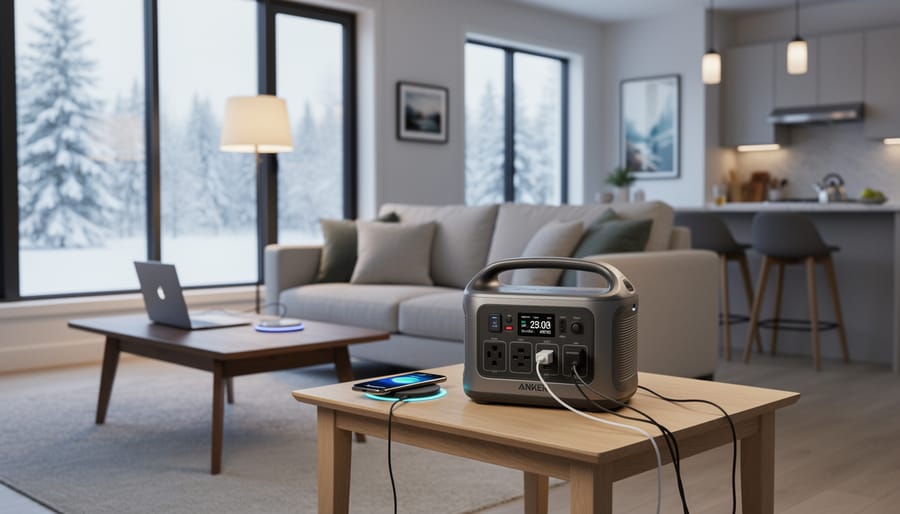
The Anker C1000 Gen 2 is where we’d point most people first. It sits in the sweet spot between a pocket-sized battery and a heavyweight home-backup unit, and that balance of power, portability and cost is why it earns the best-value label among the portable power stations we looked at. It’s also currently on sale, which makes the value case stronger for anyone shopping now. Check the live listing for the exact offer.
In our hands-on evaluation, this is the kind of unit that quietly fits real life. Think of an apartment dweller who wants a quiet, fume-free backup that lives in a closet, or a work-from-home setup where keeping a router and laptop running through a short outage means the day isn’t lost. It’s equally at home on a weekend camping trip, powering lights, phones and a small cooler without the noise and exhaust of a gas generator.
Pros
- Strong overall balance of cost, power and portability makes it an easy recommendation for most households.
- Well suited to short outages, keeping a router, laptop and phones running.
- Quiet, fume-free operation means it can sit indoors without the drawbacks of a gas generator.
- Compact enough for apartments, weekend camping and road trips.
Cons
- It isn’t built for multi-day blackouts or running many heavy appliances at once.
- Cold-weather charging needs care, so it should be kept in a heated space.
- Capacity and Canadian availability should be confirmed on the current listing before buying.
Canadian winters deserve a plain-language note. Most modern portable power stations use LiFePO4, a long-life lithium iron phosphate chemistry, and these batteries generally shouldn’t be charged when they’re below freezing. Keep the unit indoors, away from a cold garage or an unheated vehicle, and check the manual for its rated operating range. If you plan to recharge from solar, remember that short winter daylight means slower top-ups.
Before you buy, confirm the warranty terms that apply in Canada and how service is handled here. Policies can differ from one retailer and region to the next, so it’s worth a quick read of the fine print. For a household that mainly wants dependable short-term backup and occasional camping power, this is the pick that asks the least of your budget and your storage space.
3. Jackery Explorer 1500 v2 Portable Power Station, Best Mid-Size Step-Up for Home Backup and Road Trips
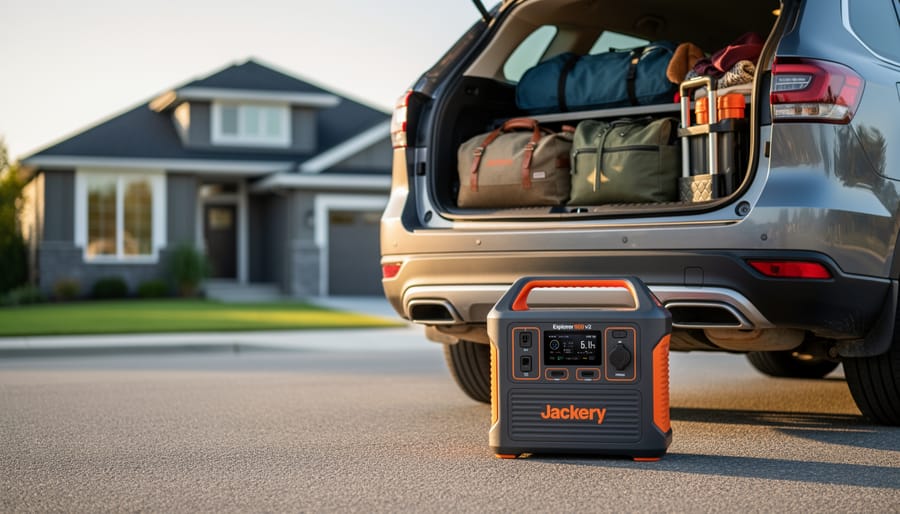
The Jackery Explorer 1500 v2 sits in the middle of the field, and that’s exactly its appeal. It’s built for people who find the 1000-class a little tight but don’t need the bulk of the 2000-class. For a typical outage, it has the headroom to keep a router, laptop, lights, phone chargers and a few small appliances running, while still being something you can carry to the truck for a camping or RV trip. We’d call it a sensible step-up rather than a standout winner, which is why it lands mid-list.
Like the rest of Jackery’s current lineup, it delivers 120V pure sine wave output, the clean, stable power that sensitive electronics like laptops, monitors and medical-adjacent devices prefer. Power stations in this size class generally handle a coffee maker, a small space heater for short stretches, a microwave and a compact fridge, though always check each appliance’s running wattage against the unit’s rated output. Jackery’s 1000 v2 listing mentions a 10ms UPS function, but we couldn’t confirm that for the 1500 v2, so check the current listing before relying on it as a battery backup for a desktop.
Solar recharging is where Canadian winters bite. Short daylight and low sun angles mean slow top-ups, so pairing it with a solid set of portable solar panels matters more here than in a Texas summer. If you’re curious about the mechanics, our explainer on how solar panels work shows why winter output drops.
Pros
- Offers more outage headroom than the 1000-class while staying movable.
- Delivers clean 120V pure sine wave power for sensitive electronics.
- Works for both home backup and road trip or RV use.
- Accepts solar input, so you can extend runtime off-grid.
Cons
- Heavier and bulkier than 1000-class units for casual camping.
- Winter solar recharging is slow because of short Canadian daylight.
- Needs a heated space for charging, since cold limits battery charging.
- Exact specs and UPS behaviour need confirming on current listings.
So who should buy it? If the Explorer 1000 v2 feels cramped for multi-device outages, this is the logical upgrade. If you want maximum runtime for multi-day blackouts or off-grid trips, the 2000 v2 is the better step. Budget-wise, factor in solar panel costs alongside the unit itself, and if cabin life is on your radar, explore broader off-grid energy solutions. Check current Canadian listings for exact capacity, weight, warranty and availability.
4. EcoFlow Delta Pro 3, Best Premium Pick for Whole-Home-Style Backup
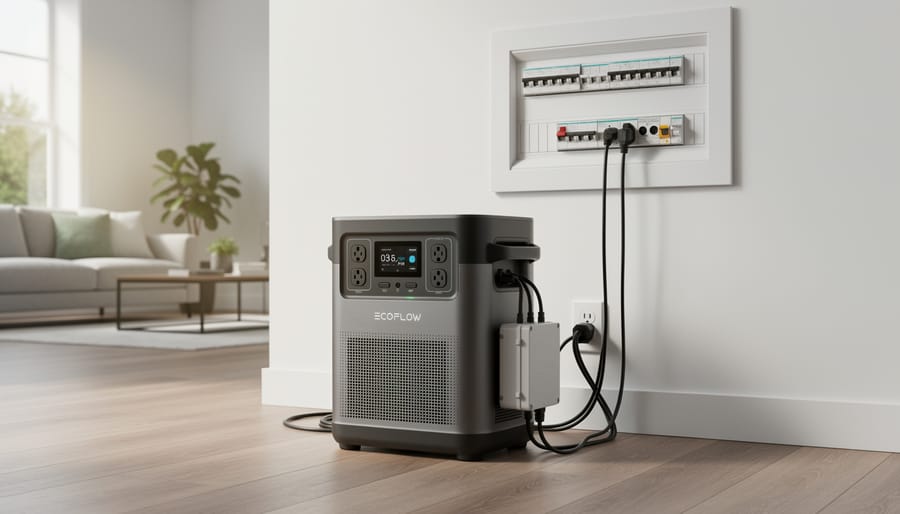
The EcoFlow Delta Pro 3 sits at the top of this list, and it’s built for a different kind of buyer than the other picks. It’s a premium, expandable portable power station aimed at people who want whole-home-style backup rather than a way to keep a router and a few devices alive. Most households don’t need this tier, and that’s worth saying plainly.
Who does? In our evaluation, the Delta Pro 3 made the most sense for homeowners in outage-prone areas, anyone planning to run several heavy appliances at once, and people building a more serious off-grid or cabin setup. If your goal is to ride through a short blackout with essentials, a mid-size unit like the Jackery Explorer 1500 v2 is easier to move and easier on the budget. The Delta Pro 3 earns its place when you’d otherwise be looking at solar generators or a fuel generator for extended, multi-day backup, and you want a quieter, fume-free alternative.
Pros
- Expandable design suits large-scale, whole-home-style backup planning.
- Runs quietly with no fumes, unlike a gas generator.
- Gives far more outage headroom than mid-size units.
- Works with solar panels for recharging off the grid.
Cons
- Premium in cost, which is overkill for short, light outages.
- Heavy, so it’s a poor fit for casual camping or frequent moves.
- Delivery and handling of a large unit take more planning.
Before you buy in Canada, check three things. First, confirm warranty service: find out where claims are handled and how a heavy unit gets repaired or replaced. Second, ask about shipping, since a large power station is awkward to receive and return. Third, review the cold-weather charging limits in the manual. Lithium iron phosphate batteries generally shouldn’t be charged below freezing, so keep the unit in a heated space during winter outages. For exact capacity, output and current availability, check the live Canadian listing.
5. BLUETTI Elite 200 V2, Best for Heavy Appliances and Off-Grid Cabins
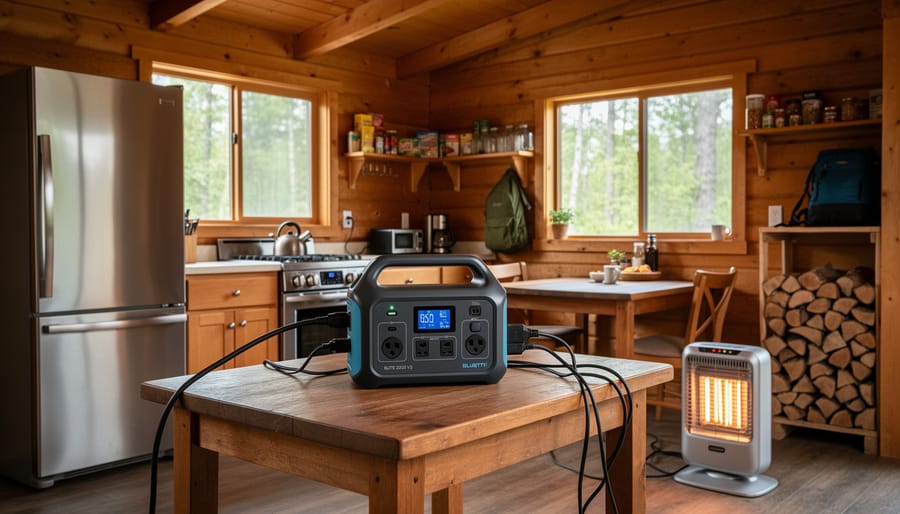
The BLUETTI Elite 200 V2 is the pick for people whose power needs go beyond a laptop and a router. Think off-grid cabins, workshops and multi-day outages, where heavier appliances matter more than pocket-sized portability. In our evaluation of this size class, it sits comfortably in the “serious backup” tier rather than the weekend-camping tier.
Its LiFePO4 chemistry (lithium iron phosphate, a long-life battery type known for handling many charge cycles) is a big part of the appeal. It also brings a cold-weather caveat that Canadian buyers need to respect: these batteries generally shouldn’t be charged below freezing. Keep the unit in a heated space, and check the manual for the rated operating and charging temperature ranges before relying on it in an unheated cabin.
The output is pure sine wave, which means clean 120V power that’s friendlier to sensitive electronics and motor-driven tools than rougher waveforms. That’s useful for a workshop where a saw or compressor shares the circuit with a charger or a laptop.
Pros
- Larger capacity suits cabins, workshops and extended outages better than compact units.
- LiFePO4 chemistry is built for long service life and many charge cycles.
- Pure sine wave output is gentler on sensitive electronics and tools.
- Solar recharging gives it real off-grid potential.
Cons
- It’s heavier and less portable than mid-size options like the Anker C1000 Gen 2.
- Charging in freezing temperatures is limited, so it needs a heated space.
- Short winter daylight makes full solar recharges slow.
- Exact specs and availability need checking on current Canadian listings.
Solar recharging deserves realistic expectations in a Canadian winter. Daylight is short and the sun sits low, so panels refill the battery slowly. Plan on generous panel capacity, or treat solar as a top-up rather than your only source. If you’re building a cabin setup, our guides on DIY solar installation and how to generate electricity at home are good next reads.
Before buying, confirm BLUETTI’s Canadian warranty terms and where service is handled. Heavier units are costly to ship back, so that detail matters. For a portable power station at this level, support can matter as much as capacity.
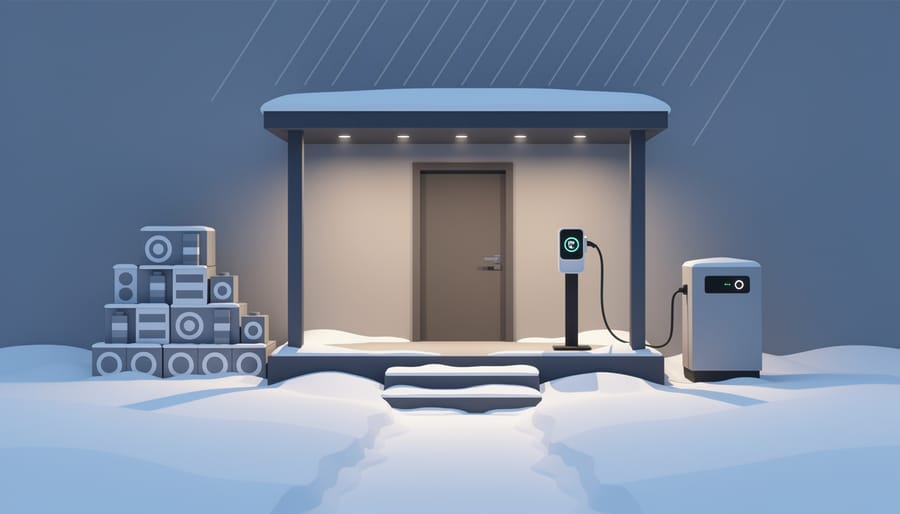
Cold Weather, Solar and Outage Planning: What Canadian Buyers Need to Know
Quick Take: Match Capacity to Your Outage Needs
Think of capacity in four tiers. For a router, phones and a laptop, a compact unit is plenty, and the Anker C1000 Gen 2 handles that with room to spare while staying easy to carry. If you want essentials plus a fridge, step up to a mid-size unit like the Jackery Explorer 1500 v2 Portable Power Station. For multi-day backup or heavy appliances, look at the EcoFlow Delta Pro 3 or the BLUETTI Elite 200 V2. For camping and RV trips, the EcoFlow River 3 Plus balances weight and runtime.
Safety and Usage Notes
A portable power station is a quiet, fume-free way to keep essentials running, but a few habits keep it that way. Use it in a dry, ventilated spot, and if a fuel generator is running nearby, keep it well away from doors, windows and the power station itself so exhaust stays outside.
Before you plug anything in, read the manual for your model’s rated operating and charging ranges, since they differ between the EcoFlow, Anker, Jackery and BLUETTI units covered here.
Portable Power Station FAQs for Canadian Buyers
What size portable power station do I need for a power outage?
It depends on what you want to keep running. A router, phone and laptop need only a compact unit, while a fridge plus essentials calls for a mid-size or larger station, such as the Jackery Explorer 1500 v2 or the EcoFlow River 3 Plus. For multi-day backup or heavy appliances, step up to the EcoFlow Delta Pro 3 or BLUETTI Elite 200 V2.
Can a portable power station run a fridge?
Often, yes, but you need to check the fridge’s running and startup wattage against the station’s rated output and capacity. Larger units are better suited to this, and we’d confirm the exact specs on a current Canadian listing before you buy.
Do portable power stations work in freezing temperatures?
Most can discharge in the cold, but LiFePO4 batteries (a long-life lithium iron phosphate chemistry) typically have low-temperature charging limits. Keep your unit in a heated space and check the manual for its rated operating range.
Is a portable power station better than a gas generator?
For quiet, fume-free use close to the home, a portable power station is a strong choice. Gas generators still have their place for very long, heavy-load outages, so the right pick depends on your needs.
Solar recharging in winter is worth planning for too. Short Canadian daylight hours mean panel recharging will be slower than in summer, so treat solar as a top-up rather than your only plan. Several of our picks, including the EcoFlow River 3 Plus, support optional solar recharging, and charging from the wall before a forecast storm gives you the best head start.
Choosing the best portable power station in Canada comes down to matching the unit to the outage you’re planning for. The EcoFlow River 3 Plus is our pick for the longest outages and multi-day off-grid trips, while the Anker C1000 Gen 2 is the value choice for most people. The Jackery Explorer 1500 v2 Portable Power Station fits households that want a mid-size step-up for home backup and road trips. The EcoFlow Delta Pro 3 suits those after premium, whole-home-style backup, and the BLUETTI Elite 200 V2 makes sense for heavy appliances and off-grid cabins.
Before you compare spec sheets, a few terms are worth having straight:
- Watt-hour (Wh)
- A measure of stored energy. A bigger number means the unit can run your devices for longer.
- Continuous vs. peak output
- Continuous output is the power a unit can supply steadily. Peak output is a short surge, such as a fridge compressor starting up.
- Pure sine wave
- A smooth, clean form of 120V power, like what comes from your wall outlet. It’s gentler on sensitive electronics.
- LiFePO4
- Lithium iron phosphate, a long-life battery chemistry. It usually needs warming before charging in freezing temperatures.
- UPS mode
- A setting that switches to battery power almost instantly when the grid drops, keeping a router or computer running.
- MPPT solar input
- A smart charging circuit that squeezes the most power out of your panels, which matters during short winter days.
Whichever you choose, confirm current availability and specs on Canadian listings before you buy, since details change. A portable power station is a quiet, fume-free way to keep the lights on, and pairing one with solar points toward a more resilient, cleaner home energy future across the country.
Have you powered through an outage or an off-grid adventure with one of these units? Share your story with Clean Future. Your experience helps other Canadians choose with confidence.
Final Verdict
Our top choice is the EcoFlow River 3 Plus. In our evaluation it stood out because it pairs real portability with optional solar recharging, which suits Canadian buyers facing long winter outages and multi-day off-grid trips. If you want one portable power station that handles extended blackouts and still travels easily, start here. Anker C1000 Gen 2 remains the better pick for value-minded buyers.