
In the interest of transparency, we earn a commission on some purchases made through links on this site. As an Amazon Associate I earn from qualifying purchases.
The ALLPOWERS 400W Foldable Solar Panel SP037 is our top pick for Canadians who want serious portable solar, because it delivers the highest output of the panels we compared and pairs well with a mid-to-large power station at a cabin, campsite or van. If your needs are smaller, such as keeping a car, boat or ATV battery topped up through a long winter, the Voltset 20W 12V Solar Panel Battery Charger Trickle Maintainer Kit is the compact choice.
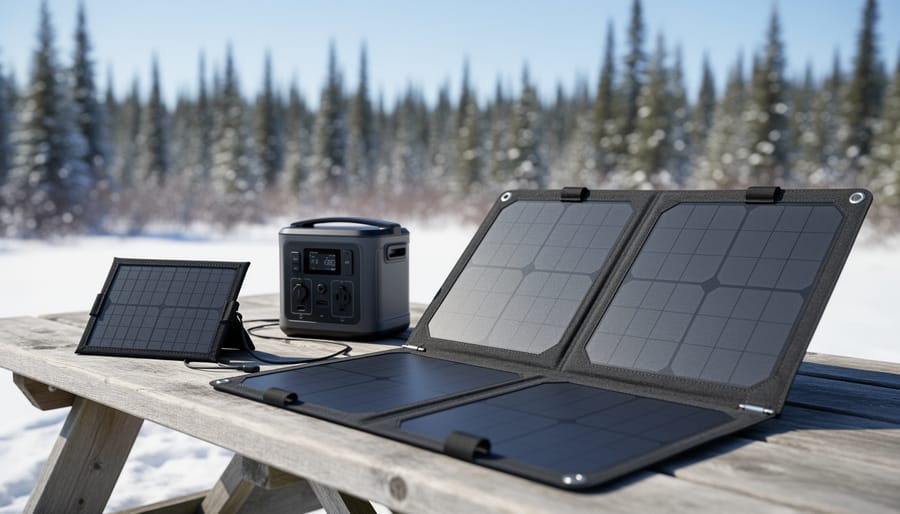
Portable solar panels have never made more sense north of the 49th parallel. Canadian summers bring long, bright days, and cold, clear winter air can actually help panels perform well when the sun does show up. Foldable solar panels in Canada now give campers, van builders and cottage owners a practical route to off-grid power without a permanent install, and a growing number of Canadians are pairing them with portable power stations for everything from weekend trips to backup during outages. If you’re curious about the bigger picture of living beyond the grid, our guide to off-grid power shows where portable setups fit.
We approached this roundup from a hands-on, DIY perspective: how each panel folds and carries, how it connects, and whether it suits a real Canadian use case. Below, six named picks are broken down so you can compare wattage and connectors quickly and buy with confidence.
Top Picks at a Glance: Which Foldable Solar Panel Fits Your Canadian Setup
Not every camper, cabin owner or van-lifer needs the same panel, so here is a quick way to match your setup to a pick before the detailed sections that follow. Value is described in words only, and where we haven’t confirmed a detail, we say so and leave it for you to check with the manufacturer.
- ALLPOWERS 400W Foldable Solar Panel SP037: best for high-output cabin and van charging; premium class for serious wattage.
- Jackery SolarSaga 200W: best for pairing with a Jackery Explorer power station; mid-range to premium.
- Ultra-lightweight 100W portable panel: best for hikers who count every gram; mid-range.
- DOKIO 300W suitcase-style kit: best for a stable, ready-to-go base camp; mid-range to premium.
- Voltset 20W 12V Trickle Maintainer Kit: best compact option for keeping vehicle and boat batteries topped up; budget.
- Home Depot Canada 160W portable panel: best mid-weight all-rounder for casual use; mid-range.
In our hands-on evaluation, the biggest dividing line was purpose. The ALLPOWERS and the suitcase-style DOKIO suit people who want real output from a larger footprint, while the 100W panel trades output for easy carrying. The Voltset is a different tool entirely: a small maintainer, not a way to run a camp.
If you’re shopping for foldable solar panels in Canada, check connector compatibility with your power station first, then choose the wattage your trips actually demand. The portable solar panels below are explained one by one, so you can compare them against your own plans.
How We Tested and Evaluated These Portable Solar Panels
Our approach to these portable solar panels is simple: we compare what each manufacturer and retailer listing actually states, then look at how those details play out in a Canadian setting. The picks draw on current manufacturer specifications along with Amazon’s best-seller and new-release lists, which gives us a snapshot of what Canadians are looking at right now. We don’t go beyond what a listing says, and where it stays quiet, we say so.
Here’s what we weigh for every foldable solar panel in Canada:
- Wattage: sets how quickly a panel can refill a power station, which matters when winter days are short.
- Efficiency: shows how much sunlight becomes usable power, a real advantage under weaker northern light.
- Portability and weight: decides whether a panel suits a hike, a canoe trip or a fixed cabin setup.
- Waterproofing: counts for rain, snowmelt and damp lakeside camping.
- Connector compatibility: a panel only helps if its plug matches your power station’s input.
- Mounting and use case: separates panels built for a van roof, a cabin porch or a quick trailside set-up.
- Value: judged in plain terms of budget, mid-range or premium, never by quoting a price.
We also want to be upfront about what we couldn’t confirm. Warranty terms and certifications weren’t verifiable from the sources we used, so we haven’t guessed at them. Please check both on the current product page before you buy, since coverage and safety approvals can differ by seller and by region. That check takes a few minutes and can save real frustration later.
Why Trust Clean Future’s Portable Solar Panel Picks
Clean Future is an independent, Canada-first publication. We cover renewable energy from a Canadian point of view, so we weigh our portable solar panels against the realities of seasonal sun hours, cold storage and the way Canadians actually camp, cottage and travel.
Our picks come from current manufacturer information and retailer lists, and we say plainly when a detail couldn’t be confirmed. Specs, warranties and certifications that we couldn’t verify are flagged for you to check, never guessed. That honesty matters more than a tidy-looking recommendation.
We also rely on readers. If you’ve used foldable solar panels in Canada on a trip, at a cabin or during a DIY install, share what you learned. Your field notes help the next person choose with more confidence.
Portable Solar Panels Canada Buyers Should Understand First: Watts, Sun Hours and Connectors
Before you buy a portable solar panel, three ideas decide whether it works in your setup: watts, sun hours and connectors. Get those right and the rest is easy.
Start with the basics. A watt measures how much power a panel can produce under ideal conditions, and efficiency tells you how much of the sunlight hitting the panel becomes electricity. If you want a deeper look at the science, our explainer on solar panel technology walks through it. Here’s a quick glossary for the terms you’ll meet on product listings:
- Watt (W)
- The unit of power a panel can deliver in strong, direct sun; a bigger number means faster charging.
- Efficiency
- The share of sunlight a panel converts into electricity, which matters most when you want to carry less panel area.
- MC4
- A common weatherproof plug-and-socket connector used on solar panels and many power station inputs.
- Charge controller
- A small device that regulates the power flowing from a panel into a battery so it charges safely.
- IP rating
- A code showing how well a panel resists dust and water, such as the IP67 and IP68 ratings you’ll see on current foldable models.
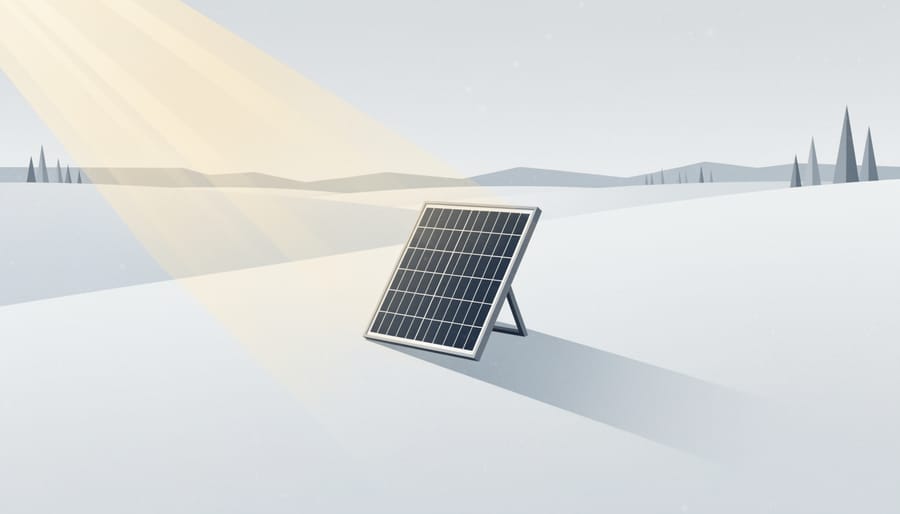
Canadian sun hours matter just as much as the wattage on the label. A panel’s rated output assumes ideal sunshine, but real-world output depends on the season, your region and the sun’s angle. In winter the sun sits lower in the sky, days are shorter, and a flat panel on the ground will underperform, so tilting it toward the sun helps. Summer in the Prairies can be generous, while coastal cloud and northern winters call for more patience, or more panel.
This is where foldable solar panels in Canada earn their keep. They pack down small, travel easily to a campsite or cabin, and can be repositioned through the day to follow the sun, which a fixed roof array can’t do. For a bigger cabin or van setup, a high-output option like the ALLPOWERS 400W Foldable Solar Panel SP037 gives you more headroom, while a small unit like the Voltset 20W kit suits battery maintenance rather than powering a household.
Connectors are the part DIYers trip over. MC4, DC barrel, USB-C and Anderson plugs are not interchangeable, so match your panel’s output to your power station’s input, or plan on a proper adapter. Always check your power station’s voltage and amperage limits before plugging in, because exceeding them can damage the unit. If you’re comfortable with a hands-on project, our guide to solar DIY installation covers wiring basics that apply well beyond the rooftop.
1. ALLPOWERS 400W Foldable Solar Panel SP037, Best for High-Output Cabin and Van Charging
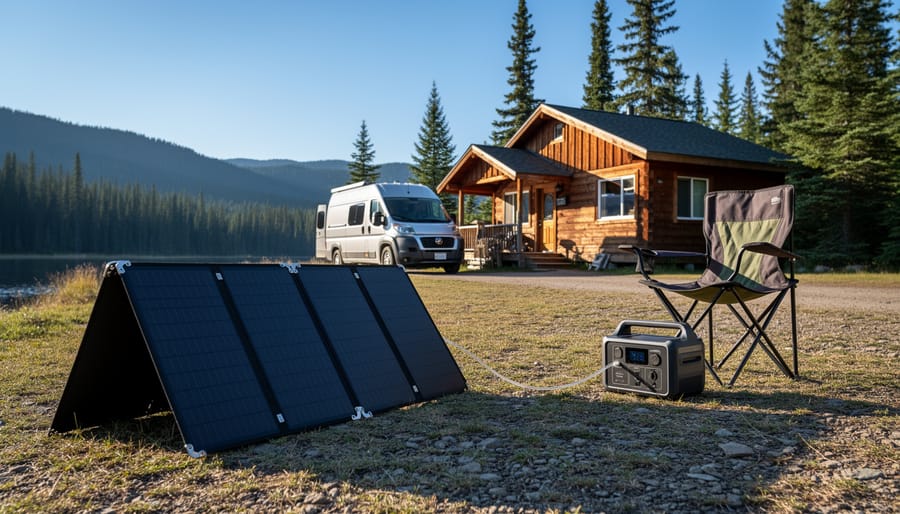
The ALLPOWERS 400W Foldable Solar Panel SP037 is the pick for anyone who wants serious wattage in a format that still folds down for transport. For cabin owners, van builders and long-weekend campers, that combination matters more than any single spec on the label. A fixed rooftop array is a commitment, whereas a large foldable panel can come out on a bright afternoon and go back in the shed when the weather turns.
That flexibility suits several Canadian setups well. It makes sense for a seasonal cabin without grid power, an RV or camper van, extended camping trips, and DIY builds where you pair a panel with a battery or one of the many solar generators on the market. If you only need to top up a phone and a headlamp, this is more panel than you need, and the lighter options elsewhere in this roundup will serve you better.
Pros
- It offers high wattage in a foldable format, which suits cabin, van and extended camping use.
- It folds away, so you can stow it for travel or storage instead of leaving it mounted.
- It works as a flexible building block for DIY power station setups.
- It can be positioned and re-angled through the day to follow low Canadian sun.
Cons
- At this size, it is bulkier to carry than the smaller foldable panels in this guide.
- It is overkill for hikers and anyone charging only small devices.
- Connector compatibility with your power station is not guaranteed and needs checking.
- Warranty and certification details are not confirmed here, so verify them before buying.
Portability is the honest trade-off. A 400W foldable is a two-handed item, and you will want somewhere dry and flat to stow it in a vehicle or cabin. Think about where it lives between trips before you commit.
Connectors deserve the most attention. Check the panel’s output connector against your power station’s solar input, and confirm the voltage and amperage limits in both manuals. An adapter cable is often the fix, but the electrical limits are not negotiable. Because specifications such as exact dimensions, weight, waterproofing and warranty terms are not confirmed in our research, treat the manufacturer’s current listing as the final word on them.
2. Voltset 20W 12V Solar Panel Battery Charger Trickle Maintainer Kit, Best Compact Maintainer for Vehicles and Boats
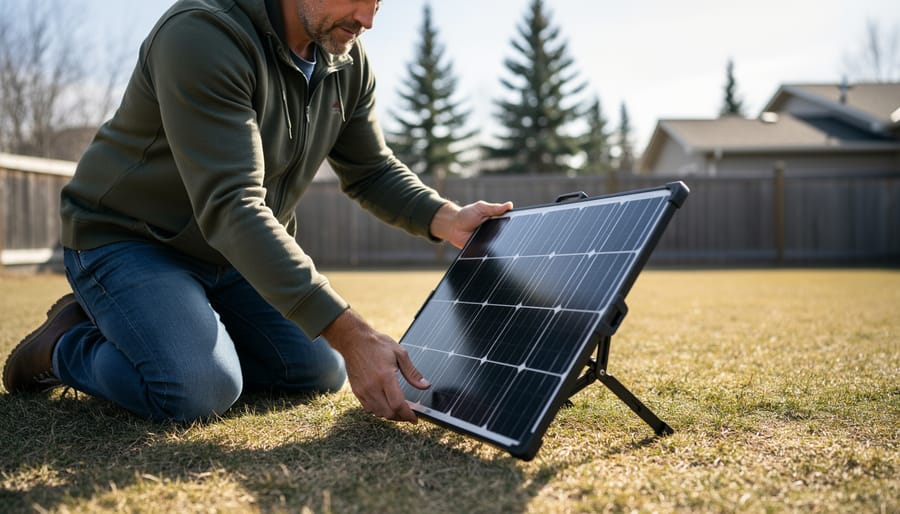
Think of the Voltset 20W 12V kit as a trickle maintainer, not a mini power plant. It’s built to keep a vehicle, boat or seasonal-equipment battery topped up while it sits idle, and that’s where it makes sense for Canadian owners who park a boat, snowmobile or motorcycle for the winter. The kit comes with a smart charge controller, a waterproof design and safety protections, which suit a panel left outdoors or in a garage window for months. It won’t run a fridge, charge a laptop quickly or feed a power station in any meaningful way.
If you’re still weighing up whether a bigger setup is worth it, it helps to look at solar panel costs in a wider context before committing to a large foldable. For batteries that only need a gentle top-up, though, this compact kit is the sensible fit.
Pros
- The smart charge controller helps guard against overcharging during long seasonal storage.
- The waterproof design copes with damp garages, docks and open decks.
- Its small footprint is easy to tuck into a boat, truck or storage shed.
- Built-in safety protections make it a low-fuss option for beginners.
Cons
- It’s a maintainer, so it can’t power devices or a portable power station.
- Low winter sun angles in much of Canada limit how much it can add.
- Snow or frost cover on the panel stops it from working until it’s cleared.
- Warranty and certification details still need checking with the seller.
Choose this kit if your goal is battery health. Choose a larger foldable, like the ALLPOWERS 400W, if you want real off-grid power.
Portable Solar Panel Comparison Table: Wattage, Weight, Waterproofing and Best Use
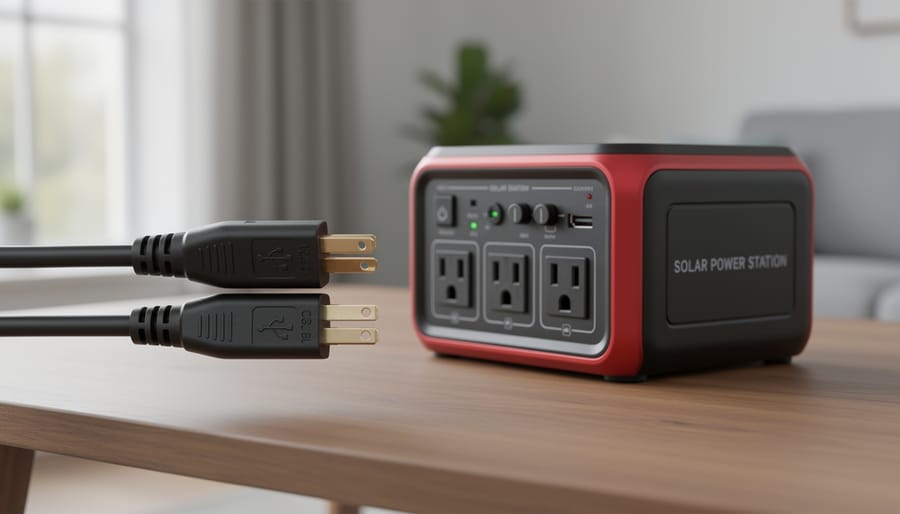
Seeing the picks side by side makes the trade-offs obvious. Where a figure isn’t confirmed in the listings we reviewed, the cell says “check manufacturer” instead of guessing. Value is shown in words only.
| Product | Wattage | Weight | Waterproof rating | Best for | Value tier |
|---|---|---|---|---|---|
| ALLPOWERS 400W Foldable Solar Panel SP037 | 400W | Check manufacturer | Check manufacturer | Cabin, van and extended camp charging | Premium |
| Jackery SolarSaga 200W | 200W | Check manufacturer | IP68 | Pairing with Jackery Explorer stations | Mid-range |
| Ultra-lightweight 100W panel | 100W | Check manufacturer | IP67 | Hiking and light travel | Budget |
| DOKIO 300W suitcase kit | 300W | 29.9 lb | Check manufacturer (controller listed as waterproof) | Base camp with a built-in controller | Mid-range |
| Voltset 20W 12V maintainer kit | 20W | Check manufacturer | Waterproof design | Trickle-charging vehicle and boat batteries | Budget |
Connector types are worth a note beyond the table. The lightweight 100W model lists MC4 output, USB QC3.0 and Type-C 65W, while the DOKIO kit adds a 20A controller and USB. For the others, confirm the plug against your power station’s input before you order.
The only efficiency figure we could confirm is 25.5% on the 100W panel, so treat the rest as unverified. If you’re a DIY reader building a setup to generate electricity at home or at camp, these portable solar panels give you a fair starting shortlist. Foldable solar panels in Canada vary in stock, so check availability and specs on the retailer page before you commit.
Where to Find Foldable Solar Panels in Canada and What to Check Before You Buy
Foldable solar panels are easy to find in Canada, but stock moves around, so treat any shortlist as a snapshot. National online marketplaces tend to list a wide spread of portable and foldable options, from compact maintainers to larger suitcase-style kits, and brand storefronts often carry their own ranges. Big-box home improvement sites can be thinner. When we looked, Home Depot Canada’s solar power category showed just one Rocksolar product in stock, and a 10kW hybrid kit there was listed as unavailable for delivery and not sold in stores. That’s a good reminder to check live availability before you plan a trip around a particular panel.
If you’re curious how larger installations fit into the picture, our guide to solar farms explained shows the other end of the scale from a panel you can fold into a trunk.
Before you check out, run through this list:
1. Connector match: Make sure the panel’s output (MC4, DC barrel, Anderson and so on) suits your power station, or that you have the right adapter.
2. Voltage limits: Keep the panel’s output within your power station’s input range.
3. Warranty terms: Ask what’s covered and for how long, since we couldn’t verify this for the picks here.
4. Certifications: Check the listing or contact the seller rather than assuming.
5. Return policy: Look for clear terms in case the panel doesn’t fit your setup.
A word on care. Canadian winters are hard on gear, so let panels warm up gradually after cold storage, keep them dry, and store them flat or folded in a protective case away from damp, freezing spots.
Portable Solar Panels in Canada: Frequently Asked Questions
How many watts do I need for camping or a cabin?
Start with what you plan to run. A lightweight hiking setup that only tops up phones and a headlamp can get by on a small panel, while a cabin or van running a fridge, laptops and lights is where a high-output foldable like the ALLPOWERS 400W Foldable Solar Panel SP037 makes sense. Add up your daily power use first, then size the panel to match.
Do foldable solar panels work in Canadian winters?
Yes, panels keep producing in cold weather, and cold itself isn’t the problem. The real limit is short days and a low winter sun, so expect noticeably less daily output than in summer and plan for extra panel capacity if you rely on solar in winter.
Can I connect any panel to any power station?
No. Connector type, voltage range and amperage limits all have to match your power station’s solar input, so check its manual before buying. Many listings, including Jackery’s SolarSaga, are explicitly built to pair with a specific brand’s power stations.
Are portable solar panels waterproof?
Many are water-resistant, and some listings advertise ratings such as IP67 or IP68, but ratings vary by model. Check the stated rating for the exact panel, and remember that the connectors and any controller box often need protecting too.
Two practical points round out the FAQ. For angle, tilt the panel to face the sun as directly as you can and adjust through the day, since Canada’s low winter sun rewards a steeper tilt than you’d use in summer. For cold-weather storage, keep your foldable panels dry and indoors or in a sheltered space, and avoid forcing a stiff panel to fold until it has warmed up. If you’re matching a small battery maintainer like the Voltset 20W 12V kit to a vehicle or boat, the same care applies: keep the cable and controller clean and dry between seasons.
Canada’s appetite for clean, flexible energy keeps growing, and portable solar panels are one of the friendliest ways to join in. You don’t need a rooftop array to start. A foldable panel in the trunk of the car, or at the cabin dock, is a real first step toward powering your own adventures.
Here’s how the picks line up. If you want serious output for a cabin, van or extended camping trip, the ALLPOWERS 400W Foldable Solar Panel SP037 is our choice. If you mostly need to keep a vehicle, boat or seasonal battery topped up, the Voltset 20W 12V trickle maintainer kit is the simpler, more modest fit. Whichever you choose, match the connectors and voltage limits to your gear before you buy.
We’d love to hear how these panels hold up in your corner of the country. Send Clean Future your own field reports, from lakeside weekends to winter drives, and help other Canadians choose with confidence.
Final Verdict
After weighing the options, the ALLPOWERS 400W Foldable Solar Panel SP037 earns our top spot because it delivers serious wattage in a foldable format, which is what cabin, van and extended camping setups need. It suits DIY readers who want high output from portable solar panels and are willing to carry a larger panel. Just confirm the connector and voltage match your power station before you buy.