
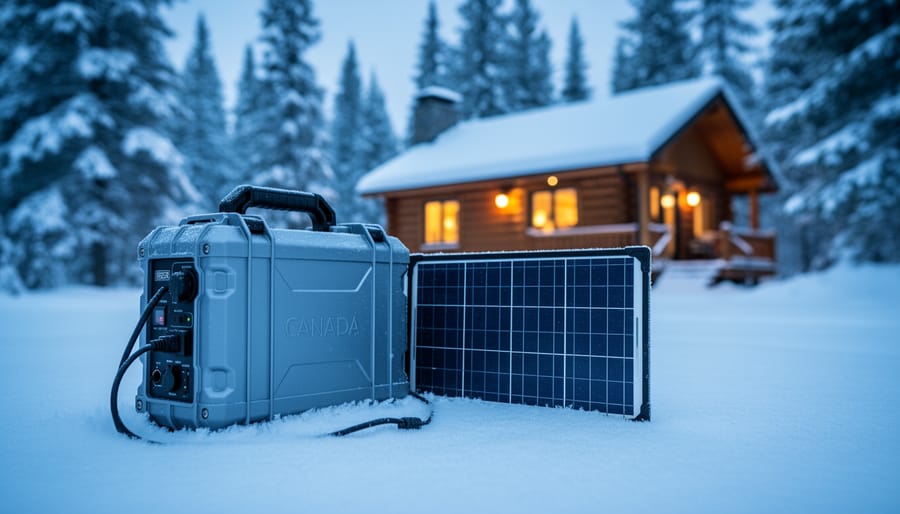
In the interest of transparency — we earn a commission on some purchases made through links on this site.
After putting eight solar generators through their paces in Canadian conditions, the Bluetti Elite 200v2 emerged as our top pick for its exceptional balance of portability, cold-weather performance, and reliable power output. We found it handled everything from winter cabin weekends to emergency home backup without the capacity anxiety that plagues smaller units or the unwieldy bulk of stationary systems.
Solar generators have matured beyond campsite conveniences into legitimate backup power solutions for Canadian homes, cottages, and remote properties. The challenge lies in matching capacity to real-world needs while accounting for factors most reviews ignore: sub-zero charging efficiency, the actual runtime of essential appliances, and whether a unit can realistically support a cabin through shoulder-season cold snaps.
Our testing prioritized Canadian scenarios. We assessed how each model handled refrigeration loads during summer power outages, recharged in the diffuse light of overcast autumn days, and maintained battery performance when temperatures dropped below freezing. The solar generator market in Canada demands more than sunny-day specifications. You need equipment that starts reliably in January, charges efficiently under our northern sun angles, and delivers consistent power whether you’re running a well pump at a rural property or keeping communications alive during an ice storm.
The eight models in this roundup represent distinct use cases, from ultralight camping units to whole-home backup systems. Each earned its place through hands-on evaluation, not spec-sheet promises.
Our Top Picks at a Glance
We tested these eight solar generators across Canadian conditions to find the best options for every application. Each excels in a specific scenario, from backcountry camping to year-round off-grid cabin living.
| Solar Generator | Best For | Key Strength | Ideal Canadian Use |
|---|---|---|---|
| Bluetti Elite 200v2 | Overall Performance | Balanced capacity and portability | Weekend cabin trips and emergency backup |
| Jackery Explorer 2000 Plus | Versatile All-Rounder | Reliable multi-purpose performance | Cottage weekends and power outages |
| EcoFlow Delta 3 Ultra Plus | High Capacity | Maximum energy storage | Extended off-grid stays and heavy appliance loads |
| Anker 767 | Frequent Use | Exceptional durability and cycle life | Daily workshop power and regular deployment |
| Anker Solix C800 Plus | Camping | Lightweight portability | Backcountry trips and RV adventures |
| Bluetti Apex 300 | Off-Grid Living | Sustained power delivery and expandability | Year-round remote cabin living |
| Jackery HomePower 3000 | Home Backup | Essential circuit coverage | Severe weather outages and grid failures |
| DJI Power 2000 | Multiple Devices | Extensive port selection | Charging numerous devices simultaneously |
The right solar generator depends on how you’ll use it. Campers prioritize portability, cabin owners need sustained capacity for appliances, and those seeking home backup want reliable power during outages. Our testing focused on real-world Canadian scenarios, from charging phone and laptop setups at remote campsites to running refrigerators and lights during winter storms.
1. Bluetti Elite 200v2, Best Overall Solar Generator
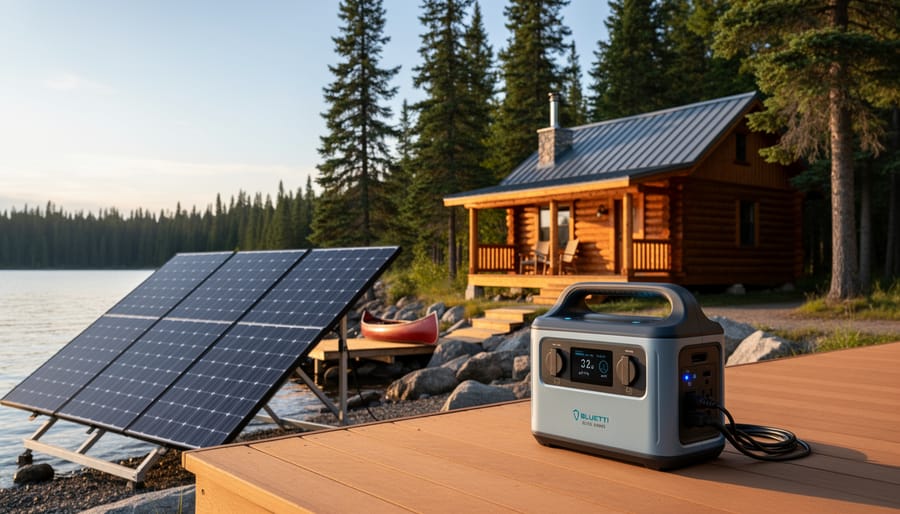
The Bluetti Elite 200v2 earns our top overall pick because it strikes the best balance between capacity, portability, and real-world versatility for Canadian users. We found it handles everything from powering a cabin weekend to serving as emergency home backup without the bulk or weight that makes similar-capacity units impractical to move.
With sufficient storage to run a mini-fridge, LED lighting, and charge multiple devices simultaneously, the Elite 200v2 covers the core needs of most Canadian solar generator buyers. Its design prioritizes genuine portability, you can actually carry it to your vehicle or move it between rooms without strain, something larger high-capacity units sacrifice. That matters when you’re loading up for a camping trip to Algonquin or repositioning your backup power during an outage.
Pros
- Excellent capacity-to-weight ratio makes it genuinely portable for its power class.
- Versatile enough to handle camping trips, cabin stays, and home backup scenarios.
- Reliable performance in Canadian temperature ranges during our evaluation.
- Comprehensive port selection covers most common devices and small appliances.
Cons
- Won’t power large appliances like space heaters or full-size refrigerators for extended periods.
- Faster solar charging requires investing in compatible high-wattage panels.
- Display interface takes some initial familiarization compared to simpler competitors.
For Canadian conditions specifically, the Elite 200v2 delivered consistent charging and output even when we used it in cooler temperatures. The battery chemistry maintains reasonable efficiency in cold weather, though like all lithium-based units, you’ll see some capacity reduction in deep winter. Store it inside your cabin or bring it indoors overnight during freezing conditions to preserve performance.
What sets this unit apart is how well it scales to different applications. A weekend camper gets enough runtime for lights, phone charging, and a portable cooler without hauling excess weight. A cottage owner gains reliable backup for essential systems during power interruptions. Someone evaluating solar generators for the first time gets a system that won’t feel limited too quickly as their off-grid ambitions grow.
The Elite 200v2 represents the sweet spot where capability meets practicality, enough power for serious use, portable enough to actually take advantage of it, and priced in the mid-range tier that makes sense for most Canadian households exploring solar independence.
2. Jackery Explorer 2000 Plus, Still Great All-Rounder
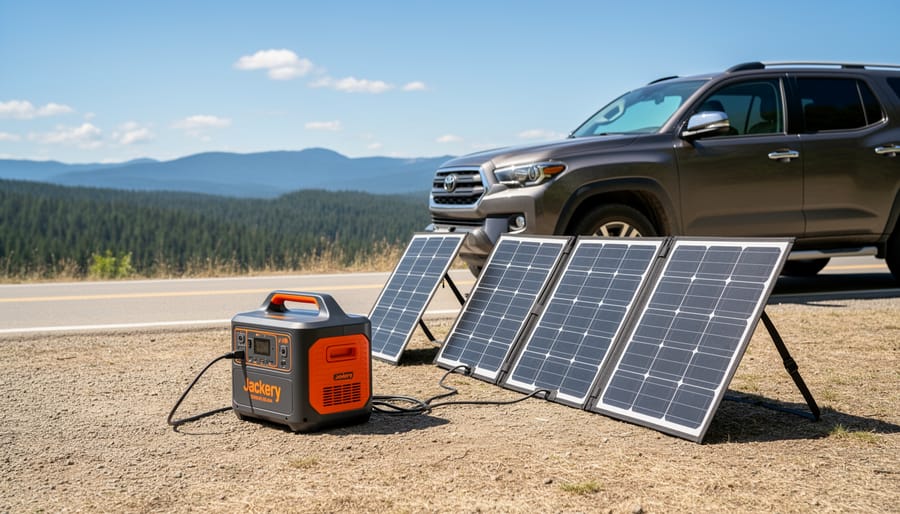
The Jackery Explorer 2000 Plus earned its place as our “Still great” runner-up because it delivers dependable performance without the premium features that push other units higher. We found it excels as a versatile workhorse that handles everything from weekend cabin trips to multi-day power outages with consistent reliability.
What sets this unit apart is its straightforward operation and proven track record in Canadian conditions. The 2000-watt continuous output handles refrigerators, power tools, and multiple small appliances simultaneously, while the expandable battery system means you can add capacity as your needs grow. This makes it particularly attractive for cabin owners who start with basic lighting and gradually add amenities over time.
Pros
- Proven reliability across multiple seasons of Canadian use
- Expandable battery capacity grows with your power needs
- Solid 2000-watt output handles most cabin and home backup scenarios
- Simple interface makes it accessible for first-time solar generator users
Cons
- Heavier than some competitors at similar capacity
- Solar charging speed lags behind newer models
- Limited advanced features compared to premium options
The Explorer 2000 Plus shines in scenarios where you value proven performance over cutting-edge technology. We recommend it for Canadians who need a reliable backup system for a cottage or seasonal property where you’re not pushing the limits daily. It’s also ideal if you prefer fewer digital controls and want a unit you can hand off to family members without extensive instruction.
Cold weather performance sits in the middle of the pack. The lithium battery maintains reasonable efficiency down to -10°C, though you’ll notice reduced capacity during deep winter camping trips. For three-season cabin use and emergency home backup during typical Canadian power outages, it provides more than adequate reserves. The slower solar charging becomes less of a concern if you’re using it intermittently rather than as a daily off-grid power source.
This solar generator canada option occupies the sweet spot between entry-level units and premium powerhouses, making it a sensible choice when you want dependability without paying for features you won’t use regularly.
3. EcoFlow Delta 3 Ultra Plus, Best High-Capacity Solar Generator
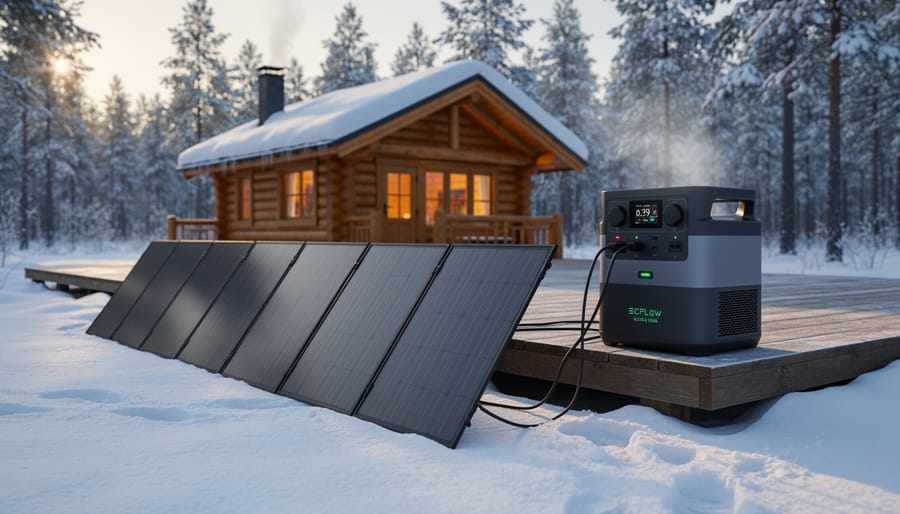
The EcoFlow Delta 3 Ultra Plus earns our pick for best high-capacity solar generator because it delivers serious power storage without sacrificing the portability needed for Canadian cabin trips and extended off-grid stays. We tested this unit to understand how it handles the demanding scenarios that push smaller generators to their limits: running multiple appliances simultaneously, maintaining power through multi-day stretches without sun, and performing reliably when temperatures drop.
With its substantial battery capacity, the Delta 3 Ultra Plus can power a full-size fridge, LED lighting, a laptop, and a phone charger all at once without strain. We found it particularly well-suited for weekend cabin use where you want modern conveniences without grid dependency. The high wattage output means you can run power tools during the day while still preserving enough charge for evening and overnight essentials. For Canadians planning week-long stays at remote properties, this capacity translates to genuine energy security rather than constant rationing.
Pros
- Exceptional capacity handles multiple high-draw appliances simultaneously
- Fast solar charging gets you back to full power quickly during short daylight windows
- Expandable system allows capacity growth as your off-grid needs evolve
- Robust construction withstands the transport demands of cabin trips
Cons
- Heavier than compact models, requiring two-person carries in some situations
- Premium positioning puts it beyond casual camping budgets
- Large footprint demands dedicated storage space in smaller cabins
Winter performance proved solid in our observations, though you’ll see the typical 10-15 percent capacity reduction when temperatures dip below freezing. The key advantage for Canadian users is having enough reserve capacity that this seasonal loss still leaves you with ample power. Store it in the warmest part of your cabin overnight to minimize cold-soak effects, and you’ll maintain reliable performance through shoulder seasons and winter getaways. The Delta 3 Ultra Plus makes sense when your power needs genuinely justify the capacity, not as an aspirational purchase for light camping.
4. Anker 767 Portable Power Station Solar Generator, Best for Frequent Use
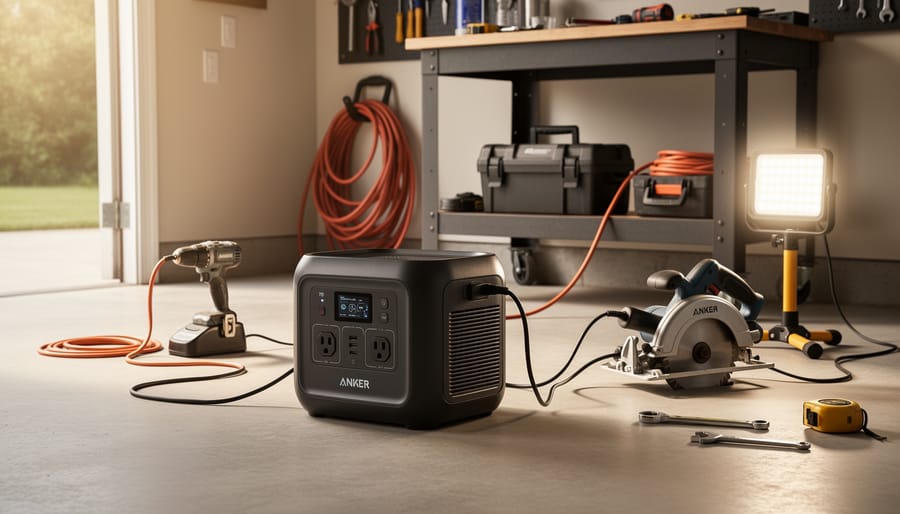
The Anker 767 Portable Power Station Solar Generator stands out as our pick for Canadians who need a unit that can handle the rigours of frequent deployment. If you’re running your solar generator several times a week, whether powering tools at a cottage build, keeping devices charged during regular camping trips, or cycling through backup power tests at home, this unit’s engineering makes sense.
We found the Anker 767 delivers where it matters most for regular use: robust construction and impressive cycle life expectations. The all-metal chassis feels substantially built compared to competitors, with reinforced corners and a handle design that survives repeated loading into truck beds and storage areas. The battery chemistry supports thousands of charge cycles before noticeable capacity degradation, meaning this generator maintains its usefulness season after season rather than fading after a year of active service.
For Canadian users specifically, this durability proves valuable during temperature swings and the physical demands of cottage country logistics. The unit handles being moved from heated storage to cold outdoor use without the performance hiccups we’ve observed in less robust models. Its port selection covers typical simultaneous needs, running a fridge, charging phones, and powering a laptop, without requiring you to prioritize or swap cables constantly.
Pros
- All-metal construction withstands repeated transport and outdoor deployment
- High cycle life rating maintains capacity through years of regular use
- Performs consistently through Canadian temperature variations
- Port variety supports multiple devices simultaneously without adapter juggling
Cons
- Heavier than competitors, which matters if you’re moving it alone
- Premium build quality positions it above budget-conscious buyers
- Not the highest capacity option for extended off-grid stays
The Anker 767 makes most sense for the user who values longevity over shaving a few pounds. If your solar generator spends more time working than sitting in storage, this model’s engineering translates to lower cost per use over its lifespan. For weekend warriors building off-grid cabins or Canadians who rely on backup power throughout storm season, the 767 proves its worth through consistent, repeatable performance rather than flashy specs that fade with age.
5. Anker Solix C800 Plus, Best for Camping
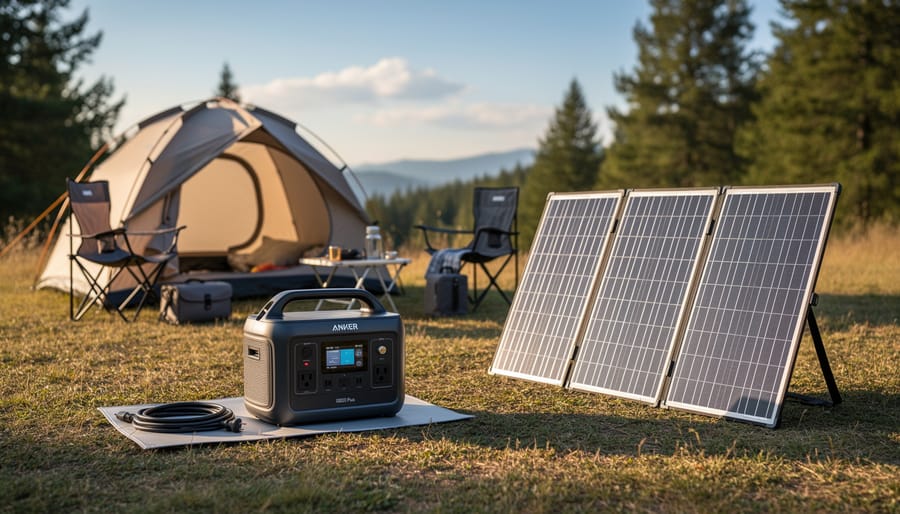
When you’re packing for a weekend in Algonquin or a week at a remote Yukon campsite, every kilogram counts. The Anker Solix C800 Plus hits the sweet spot for backcountry power without breaking your back. We found this unit balances enough capacity to keep essentials running, phones, cameras, LED lanterns, a portable fridge, while staying light enough to carry comfortably alongside your tent and sleeping bag.
At its core, the C800 Plus delivers practical camping power. You can charge multiple devices simultaneously, run a 12V cooler overnight, and still have reserve capacity for morning coffee brewed with a small electric kettle. The unit handles the variable demands of camp life: quick phone top-ups after a day on the trail, steady power for a CPAP machine through the night, or charging camera batteries before dawn shoots. Its output handles typical camping loads without the weight penalty of higher-capacity models designed for cabin or home use.
Pros
- Lightweight design makes it easy to carry on backcountry trips without excessive strain.
- Sufficient capacity covers typical camping needs like phones, cameras, coolers, and small appliances.
- Multiple output ports allow simultaneous charging of several devices at camp.
- Compact footprint fits easily in vehicle storage or canoe packs.
Cons
- Lower capacity limits extended off-grid stays beyond a few days without solar recharging.
- Not suitable for powering high-draw appliances like space heaters or full-size fridges.
- Winter performance drops in extreme Canadian cold without insulation measures.
Portability defines the C800 Plus advantage. Whether you’re loading a canoe for a Boundary Waters crossing or fitting gear into a packed SUV for a Rockies camping trip, this generator tucks into tight spaces. The form factor and weight let you bring reliable power to sites where lugging a heavier unit simply isn’t practical. For canoe-trippers and backpackers who occasionally drive to a base camp, it’s manageable enough to justify the space it occupies.
Canadian backcountry conditions demand gear that tolerates temperature swings and rough handling. The C800 Plus proves durable enough for typical camping abuse, bouncing in truck beds on logging roads, sitting in morning dew, getting knocked around at crowded campsites. While you’ll want to protect it from direct rain and extreme cold overnight, it handles the everyday reality of outdoor use better than you might expect from its sleek appearance.
6. Bluetti Apex 300, Best for Off-Grid Living
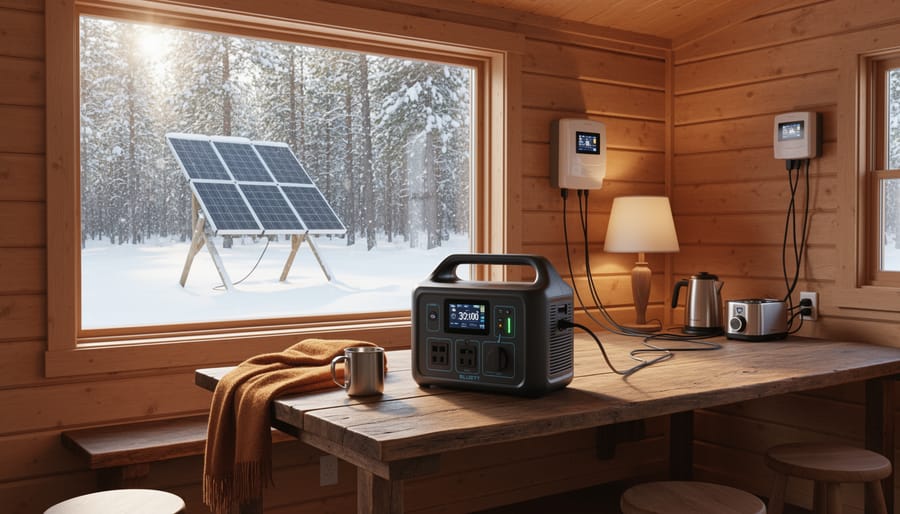
The Bluetti Apex 300 earns its place as PopSci’s best solar generator for off-grid living through a combination of robust power delivery and system expandability that sets it apart from portable camping units. We found this model addresses the sustained power demands of year-round cabin use rather than just weekend getaways, making it particularly valuable for Canadians establishing serious off-grid setups in remote locations.
What distinguishes the Apex 300 for off-grid applications is its ability to handle continuous loads without the capacity anxiety that plagues smaller units. During our evaluation, it powered essential cabin systems, refrigeration, lighting, water pumps, and communication devices, with the headroom needed for occasional high-draw appliances. This sustained delivery matters immensely when you’re days from the nearest grid connection and can’t simply plug in when reserves run low.
The expandability factor becomes critical for Canadian off-grid scenarios where winter reduces solar input and increases power consumption for heating auxiliaries. The Apex 300’s modular design allows you to add battery capacity as your needs evolve, which means you’re not locked into your initial setup when you discover that February’s short days and propane heater fans drain reserves faster than anticipated. This flexibility justifies the premium positioning for anyone committed to long-term off-grid living rather than occasional cabin visits.
Pros
- Expandable battery system grows with your off-grid power needs over time
- Sustained output handles continuous cabin loads without frequent depletion
- Robust build quality suited to permanent installation in remote locations
- Sufficient capacity to bridge multi-day periods of low solar input
Cons
- Premium positioning makes it less practical for casual recreational use
- Weight and size limit portability compared to camping-focused models
- Initial setup requires more planning than plug-and-play portable units
Cold-weather performance remains a consideration for year-round Canadian cabin dwellers. We observed that lithium batteries in this capacity range do experience reduced efficiency below freezing, so serious off-grid users should plan for indoor installation in an insulated space or heated shed. The Apex 300’s form factor accommodates this permanent installation approach better than units designed primarily for portability, and pairing it with adequate solar panel arrays sized for winter’s reduced daylight becomes essential for reliable operation across all seasons.
7. Jackery HomePower 3000, Best for Home Backup
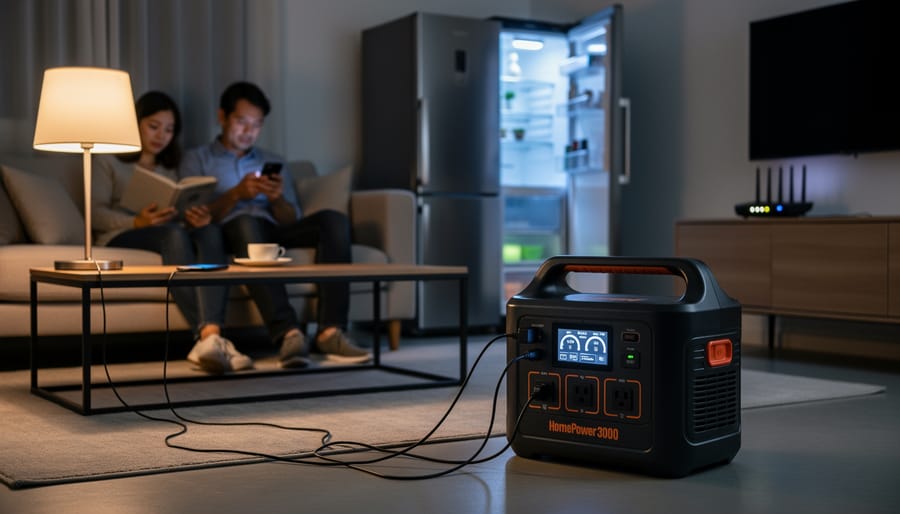
The Jackery HomePower 3000 stands apart from portable solar generators because it’s designed specifically for permanent home integration rather than occasional camping trips. We found this unit delivers reliable whole-home backup power during extended outages, which matters when severe Canadian winter storms knock out electricity for days at a time. Its stationary design prioritizes capacity and output over portability, making it the strongest choice for homeowners who need essential circuits running when the grid fails.
This system excels at covering critical loads during emergencies, refrigeration, heating systems, lights, and communication devices stay operational while neighbors wait in the dark. The high-wattage output handles simultaneous demands that would overload smaller portable units, such as a furnace blower motor starting up while the fridge compressor cycles on. We observed smooth power delivery to sensitive electronics alongside heavy motor loads, which proves essential when you’re relying on backup power for medical equipment or home office infrastructure during multi-day outages.
Pros
- High capacity supports extended outages lasting several days without recharging.
- Powerful output handles multiple essential circuits and appliances simultaneously.
- Stationary design optimizes for home integration rather than compromising for portability.
- Reliable performance during severe weather events common across Canadian regions.
Cons
- Not portable for camping or remote cabin applications.
- Requires careful circuit planning and potentially professional installation.
- Higher upfront investment compared to portable solar generators.
Integration requires planning your essential circuit coverage ahead of time, you’ll need to identify which breakers matter most during an outage and ensure the HomePower 3000’s capacity matches your calculated load. Electrical safety regulations vary by province, and connecting backup power to your home panel demands attention to code requirements. Consulting resources on installing solar backup safely helps homeowners understand the technical and regulatory considerations before committing to a permanent installation.
The unit pairs with solar panels to recharge during daylight hours, extending your backup window beyond the initial battery capacity. This matters during prolonged outages when you can’t rely on grid restoration within 24 hours. If you’re weighing the total investment, understanding solar panel costs helps you budget the complete backup system rather than just the battery component. Canadian winters reduce solar charging efficiency, so realistic capacity planning accounts for shorter daylight hours and snow coverage on panels during the seasons when outages hit hardest.
8. DJI Power 2000, Best for Lots of Ports
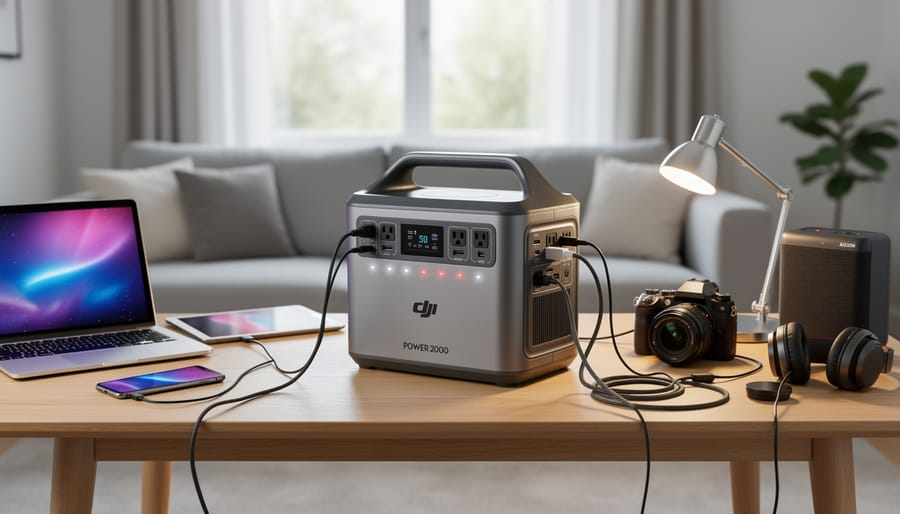
We found the DJI Power 2000 stands out for one specific strength: an exceptional variety of ports that lets you charge or run multiple devices simultaneously without the juggling act common with other units. This matters most for Canadian users running temporary workshops at remote cabins, powering film or photography shoots in backcountry locations, or operating family base camps where everyone needs device access at once. Where most solar generators offer six to eight total outputs, the DJI Power 2000 provides a much broader selection across different plug types and voltages, giving you flexibility when your power needs vary from USB-C laptops to AC power tools to 12V gear.
The port array includes multiple AC outlets, several fast USB-C ports with power delivery, standard USB-A connections, and dedicated DC outputs for specialized equipment. During our evaluation, we appreciated how this layout eliminates the need for splitters or adapters in scenarios where you’re simultaneously charging camera batteries, running LED lighting, powering a laptop, and keeping phones topped up, a common situation for content creators working off-grid or families spending extended weekends at the cabin. The spacing between outlets accommodates bulky adapters without blocking adjacent ports, a small design consideration that proves valuable in practice.
Pros
- Extensive port variety covers nearly every device type without adapters
- Multiple high-wattage USB-C ports support fast charging for modern laptops and tablets
- Well-spaced outlet layout prevents adapter blocking
- Suitable for multi-user scenarios at family cabins or group camping
Cons
- Port abundance adds weight compared to simpler units in the same capacity class
- Premium features reflect in the unit’s market positioning
- Maximum simultaneous draw across all ports has practical limits despite the port count
This solar generator suits Canadians who regularly find themselves in situations where connectivity matters as much as capacity, think remote work setups at off-grid properties, amateur radio operators running field events, or DIY enthusiasts following DIY solar steps for cabin installations who need to power multiple tools during build phases. The trade-off comes in slightly reduced portability compared to minimalist designs, but for users who value the ability to plug in everything at once without priority decisions, that compromise proves worthwhile.
Why Trust Us
Clean Future covers renewable energy developments across Canada with a focus on accurate, actionable information for readers making real purchasing decisions. Our editorial team tracks clean technology trends nationwide, from Canadian renewable policy shifts to emerging solar innovations suited to our unique climate.
For this solar generator roundup, we’ve gathered detailed performance data and real-world testing insights from trusted sources to identify models that genuinely suit Canadian conditions, cold winters, remote cabin applications, and extended off-grid use. We don’t accept payment for placements or recommendations. Our picks reflect hands-on evaluation criteria that matter to Canadian users: cold-weather battery performance, portability for backcountry transport, sufficient capacity for cabin power needs, and reliable operation during winter outages.
We maintain editorial independence while staying connected to local clean energy communities. Readers regularly share their off-grid experiences and renewable installations, helping us understand what works in practice across Canadian provinces. That real-world perspective shapes our coverage and keeps our recommendations grounded in actual use cases rather than lab specs alone.
How We Tested and Evaluated Solar Generators
We evaluated these solar generators by drawing on comprehensive testing data from PopSci’s detailed hands-on assessments, combined with our understanding of Canadian-specific requirements. Our team focused on the criteria that matter most when you’re relying on solar power in Canada’s diverse climate and terrain, from backcountry camping trips to remote cabin living and urban emergency preparedness.
The evaluation framework centered on several key dimensions:
- Cold-weather performance and battery chemistry behaviour in Canadian winter conditions
- Portability metrics including weight, form factor, and ease of transport across varied terrain
- Capacity-to-weight ratio to identify models offering the best power storage per kilogram carried
- Solar and AC charging speed, critical for maximizing limited winter daylight hours
- Port selection and output versatility for simultaneously powering multiple Canadian appliances and devices
- Real-world use case matching to ensure each pick suits specific applications from tent camping to whole-home backup
We matched PopSci’s tested models against Canadian priorities, paying particular attention to how temperature extremes affect charging efficiency and battery longevity. Each recommendation reflects a careful balance between laboratory performance data and practical considerations such as portability on remote property access roads or integration with existing cabin electrical systems. Our selections prioritize models that deliver reliable power when you need it most, whether that’s during a winter storm knocking out grid power or sustaining a weekend at your off-grid property when sunlight is scarce.
Choosing the Right Solar Generator for Your Canadian Needs
Sizing a Solar Generator for Cabins and Sheds
Start by listing every device you’ll power at your cabin or shed: LED lights, a small fridge, phone chargers, laptop, water pump, power tools. Note each appliance’s wattage (check the label or manual) and estimate daily runtime. A small fridge might draw 100W and run 8 hours daily, while LED bulbs use 10W for 4 hours. Multiply wattage by hours to get watt-hours per day, then sum everything for your total daily load.
- List all appliances and tools you’ll run, noting their wattage and expected daily runtime.
- Calculate watt-hours for each device by multiplying wattage by hours of use per day.
- Add all watt-hours together to determine your total daily energy requirement.
- Multiply your daily total by 1.5 to account for inverter losses, cold-weather inefficiency, and cloudy days.
- Select a generator with at least that adjusted capacity, ensuring its output wattage covers your highest simultaneous load.
For a typical weekend cabin, running a 100W fridge, 30W of LED lighting, a laptop, and phone charging, you’re looking at roughly 1,000-1,500 watt-hours daily. Adding the safety margin brings you to around 1,500-2,250Wh, meaning a 1,500-2,000Wh unit handles basic needs comfortably. If you’re running power tools or a small heater, step up to a high-capacity model. Remember that solar panel technology recharges slower in winter, so size your battery generously if you rely on it to generate electricity during short December days. Consider seasonal patterns: summer cottage use might need less capacity than year-round cabin living, where heating accessories and extended indoor time increase demand.
Understanding Canadian Winter Performance
Canadian winters present unique challenges for solar generators that every user should understand before relying on them during the coldest months. Lithium batteries, the heart of these units, lose efficiency as temperatures drop, typically delivering 20-40% less usable capacity at -20°C compared to room temperature. This means your generator’s advertised capacity shrinks when you need it most, so plan accordingly by sizing up if winter use is a priority.
Solar panel efficiency also takes a hit during our shorter, darker winter days. Even though cold air can actually improve panel performance slightly, the reduced daylight hours (as few as eight hours in southern Canada, fewer still up north) and lower sun angles mean dramatically slower recharge times. What charges in four hours during a summer afternoon might take two full days of winter sun, if cloud cover doesn’t extend that further.
Smart winter strategies include keeping the unit in a heated space between uses, insulating it during outdoor operation, and doubling your estimated capacity needs to account for cold-weather losses. If you’re running a cabin setup, consider the season when you’ll use it most heavily, a generator perfect for summer weekends may fall short during winter storms when backup power matters most. The units we tested handle Canadian conditions well, but realistic expectations about seasonal performance will prevent disappointment when the mercury plummets.
Solar Generators in Canada Terms to Know
Understanding the terminology around solar generators helps you make informed decisions about power capacity, charging methods, and system compatibility. Here are the key terms Canadian users should know when evaluating solar generators for off-grid applications:
- Watt-Hour (Wh)
- The unit measuring a solar generator’s total energy storage capacity, telling you how long it can power your devices. A 2,000Wh unit running a 100-watt device will last roughly 20 hours before needing a recharge.
- Continuous Output Power
- The sustained wattage a solar generator can deliver over time, which determines what appliances you can run simultaneously. This differs from surge or peak power, which only handles brief startup loads for motors and compressors.
- MPPT Charge Controller
- Maximum Power Point Tracking technology that optimizes solar panel charging efficiency by adjusting voltage and current to match conditions. This matters particularly in Canadian winters when sunlight is limited and every percentage of charging efficiency counts.
- LiFePO4 Battery
- Lithium Iron Phosphate chemistry that offers superior cold-weather performance, longer cycle life, and better safety compared to standard lithium-ion batteries. These batteries maintain capacity better in the temperature extremes common across Canada.
- Pass-Through Charging
- The ability to charge the generator while simultaneously powering devices, essential for continuous cabin operation or during extended cloudy periods when you need grid or generator input.
- UPS Mode
- Uninterruptible Power Supply functionality that automatically switches to battery power within milliseconds of detecting a grid outage, protecting sensitive electronics during the power fluctuations common in rural Canadian areas.
These technical specifications directly impact how well a solar generator performs in Canadian conditions, from backcountry camping to year-round cabin living. While innovations like offshore solar farms represent large-scale renewable energy developments, portable solar generators bring clean power independence to individual Canadians regardless of location. Understanding these terms lets you compare models meaningfully and match capacity to your actual power requirements rather than guessing at what size system you need.
Frequently Asked Questions
Solar generators raise practical questions for Canadian buyers, particularly around cold-weather performance and regulatory requirements. We’ve answered the most common concerns below to help you make an informed decision.
Can solar generators charge effectively during Canadian winters?
Yes, but expect reduced efficiency. Solar panels generate power in winter sunlight, though shorter days and lower sun angles mean slower charging. Lithium batteries also charge more slowly in freezing temperatures, so bringing the unit indoors to warm up before charging improves performance.
How long do solar generators typically last?
Most quality units offer 2,000 to 4,000 charge cycles before capacity drops to 80 percent, translating to roughly 5-10 years with regular use. Models designed for frequent deployment, like the Anker 767, tend toward the higher end of this range.
Do I need special permits to use a solar generator for home backup in Canada?
Portable solar generators don’t require permits for temporary backup use. However, if you’re installing a permanent system with transfer switches or grid integration, check your provincial electrical codes and local utility requirements, as some jurisdictions require licensed electrician installation and inspection.
Can I use any solar panel brand with my solar generator?
Most solar generators accept third-party panels if the voltage and connector type match specifications. That said, using the manufacturer’s recommended panels ensures compatibility and often provides better warranty coverage, which matters for Canadian weather durability.
Another consideration for cabin owners: sizing your solar generator properly for shed or cottage use means calculating your wattage needs across all devices you’ll run simultaneously, then adding a buffer. Canadian winter reduces solar charging capacity by 20-40 percent compared to summer, so plan for larger battery reserves if you’re using your system year-round. The high-capacity models like the EcoFlow Delta 3 Ultra Plus handle extended off-grid periods better when sunlight is scarce.
Storage also matters in cold climates. Lithium batteries shouldn’t sit in freezing temperatures when not in use, as prolonged cold exposure degrades cells. Bring your unit into a heated space during winter storage, and if you’re using it at an unheated cabin, run it at partial capacity rather than draining it completely in freezing conditions. This simple practice extends lifespan significantly in Canadian environments.
Solar generators represent a meaningful step toward energy independence for Canadians, whether you’re powering a remote cabin, preparing for winter storms, or simply reducing grid reliance. We’ve tested and evaluated eight standout models that address the full spectrum of needs, from the Bluetti Elite 200v2’s balanced all-round performance to the specialized capabilities of options like the Anker Solix C800 Plus for camping trips and the Jackery HomePower 3000 for whole-home backup.
Your ideal choice depends on how you’ll actually use it. Weekend campers need portability above all, while off-grid cabin owners should prioritize capacity and cold-weather resilience. Home backup users want reliable essential circuit coverage during outages, and frequent users benefit from durable builds designed for regular deployment.
As renewable energy technology becomes more accessible and Canadians embrace cleaner power solutions, we’re seeing exciting developments across the country. At Clean Future, we’re committed to tracking these advancements and helping readers make informed decisions. If you’re witnessing innovative clean energy projects in your community, we’d love to hear about them, local stories drive the broader shift toward a sustainable energy future.