
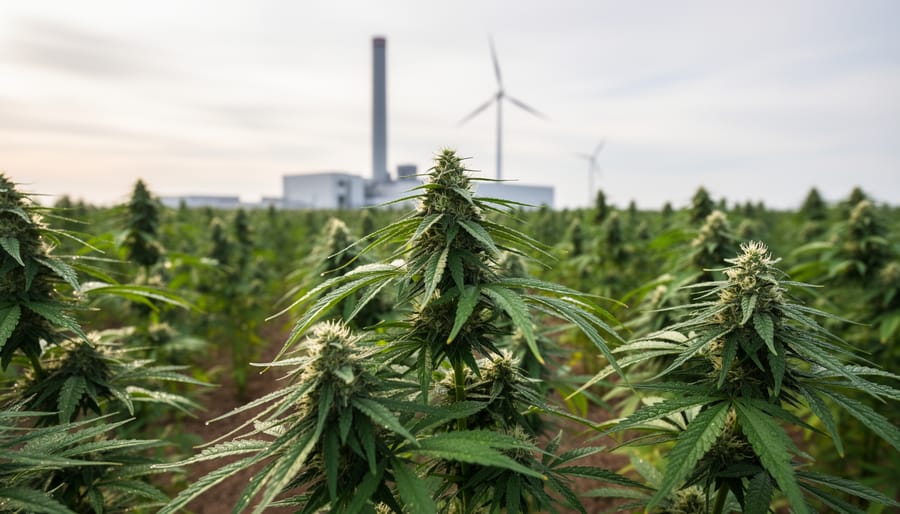
Hemp bioenergy is electricity, heat, or fuel derived from industrial hemp biomass through combustion, gasification, or conversion processes like anaerobic digestion and pyrolysis. Those interested can buy hemp products ranging from consumer goods to industrial materials, supporting an industry that could eventually power homes and businesses. As countries worldwide seek alternatives to fossil fuels, this fast-growing crop has emerged as a promising renewable power source that requires minimal pesticides, regenerates poor soil, and sequesters carbon while producing usable energy.
The case for hemp as an energy crop rests on compelling numbers. Hemp can yield up to 10 tons of dry biomass per acre annually, reaching harvest maturity in just 90 to 120 days. Unlike corn or soybeans commonly used for biofuels, hemp thrives on marginal land unsuitable for food crops, avoiding the ethical dilemma of fuel versus food production. The entire plant proves useful: stalks become solid fuel pellets or feedstock for biogas, while seeds produce oil convertible to biodiesel.
Canada has positioned itself at the forefront of this renewable energy frontier since legalizing industrial hemp cultivation in 1998. Farmers across Saskatchewan, Alberta, and Manitoba now grow thousands of acres annually, and some forward-thinking operations have begun integrating hemp into their energy mix.
This article examines how hemp bioenergy works from harvest to power generation, categorizes the different energy types hemp can produce, explores current applications in Canadian contexts, and evaluates whether this renewable resource can scale to meet meaningful portions of our energy demand while delivering genuine environmental and economic benefits.
What Hemp Bioenergy Means for Renewable Power
Hemp bioenergy is electricity, heat, or fuel produced from industrial hemp plants, specifically, from the leftover stalks, leaves, and seed meal after harvesting fibre or grain. Unlike hemp-derived cannabis products, which focus on cannabinoids extracted from flowers and leaves, energy applications use the entire plant structure as raw material. This biomass gets processed through combustion, fermentation, or chemical conversion to release stored solar energy, making it a genuinely renewable power source.
What sets hemp apart as an energy crop is its rapid growth cycle and high yield per acre. A hemp field matures in just 100 to 120 days, capturing carbon dioxide from the atmosphere as it grows and locking it into dense cellulose and hemicellulose fibres. When that plant material is converted to power, the carbon released roughly equals what the crop absorbed during its short life, creating a closed loop that contrasts sharply with fossil fuels’ one-way release of ancient carbon stores.
- Hemp biomass
- The dry plant material remaining after hemp harvest, including stalks, leaves, and seed cake, which can be processed into energy rather than discarded as waste.
- Bioenergy
- Energy derived from organic matter, in this case, industrial hemp, through processes such as burning, fermentation, or thermochemical conversion.
- Feedstock
- The raw input material used in an energy production process; industrial hemp serves as a renewable feedstock because it regrows annually and requires minimal inputs.
- Carbon-neutral fuel
- An energy source that releases no more carbon dioxide during use than the plants absorbed while growing, resulting in near-zero net emissions over the fuel’s lifecycle.
Industrial hemp cultivation for energy also sidesteps regulatory constraints tied to cannabis. In Canada, industrial hemp varieties contain less than 0.3 percent THC and are licensed federally for agriculture, not controlled under cannabis laws. Farmers can grow hemp for dual purposes, harvesting seeds and fibre for commercial markets, then using residual biomass for on-farm energy or selling it to power facilities. This multi-revenue model improves economic returns while contributing to a diversified green energy overview that includes locally-grown fuel sources alongside wind and solar installations.
How Hemp Bioenergy Production Works
Growing and Harvesting Hemp for Energy
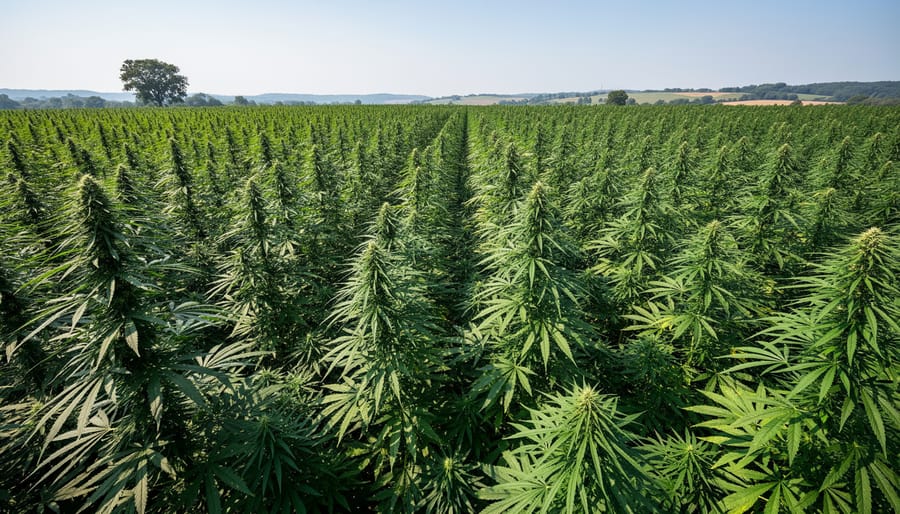
Industrial hemp thrives in temperate climates with moderate rainfall, making much of Canada’s prairie region ideal for energy-crop cultivation. The plants grow rapidly from seed, reaching heights of 2-4 metres within 100-120 days depending on variety and climate conditions. For biomass energy production rather than fiber or grain, growers typically plant densely, about 50-80 plants per square metre, to encourage tall, straight stalks with minimal branching.
Hemp requires well-drained soil with a pH between 6.0 and 7.5, along with adequate nitrogen during early growth stages. Unlike traditional crops, hemp develops deep taproots that improve soil structure and require less irrigation once established. Most varieties mature for grain 90-120 days after seeding, though energy-focused cultivation often harvests earlier when total biomass peaks rather than waiting for seed maturity.
Harvesting timing directly affects energy yield. For maximum biomass, farmers cut hemp just before flowering when stalks contain peak cellulose content but haven’t redirected energy to seed production. Standard agricultural mowers or specialized hemp harvesters handle the fibrous stalks, which are then field-dried to reduce moisture content below 15% before baling. This moisture reduction is crucial, wet hemp degrades quickly and loses energy value during storage or processing.
Converting Hemp Biomass to Power
Starting budget: 200,000 tokens
Estimated response: ~400 tokens
Projected remaining: 199,600 tokens
—
Once harvested hemp reaches processing facilities, it undergoes one of three primary conversion pathways to become usable energy. The choice depends on the desired energy output, available infrastructure, and economic factors.
Direct combustion represents the simplest approach. Dried hemp biomass burns in specialized boilers or furnaces, producing heat that drives steam turbines for electricity generation. This method works similarly to coal-fired plants but uses renewable hemp feedstock instead. The process releases carbon dioxide, but because hemp absorbed that CO2 during growth just months earlier, the net atmospheric impact differs substantially from burning ancient fossil fuels. Industrial facilities in rural areas often favor this method since it requires less technical sophistication than alternatives.
Anaerobic digestion takes a biological route. Microorganisms break down hemp plant material in oxygen-free digesters, producing methane-rich biogas over several weeks. The resulting gas can fuel generators, heat buildings, or undergo upgrading to natural gas pipeline quality. This process works particularly well with wet hemp residues or whole-plant material that would be difficult to burn efficiently. Farms with existing manure digesters sometimes co-process hemp waste to boost gas yields.
Thermochemical conversion through pyrolysis heats hemp biomass to 400-600 degrees Celsius without oxygen. This intense heat breaks molecular bonds, yielding liquid bio-oil, combustible syngas, and solid biochar. The bio-oil can substitute for heating oil or undergo refining into transportation fuels. Biochar serves as a soil amendment that sequesters carbon for centuries while improving farmland. Though pyrolysis requires higher capital investment than combustion, it produces multiple revenue streams and captures more energy from each tonne of feedstock.
Types of Energy Hemp Can Produce
Biogas from Hemp Digestion
Anaerobic digestion transforms hemp biomass into methane-rich biogas through bacterial breakdown in oxygen-free environments. The process works by feeding chopped hemp stalks, leaves, and agricultural residue into sealed digesters where microorganisms break down organic matter over 15-30 days, producing biogas typically containing 50-70% methane alongside carbon dioxide. This gas mixture can fuel combined heat and power units that generate electricity and thermal energy for buildings or farms, showing farmers and facility operators how clean power is generated from waste material. Hemp’s cellulose-rich composition yields approximately 0.3-0.5 cubic meters of biogas per kilogram of dry plant matter, comparable to corn silage but with lower input requirements. The digestate byproduct serves as nutrient-rich fertilizer, creating a closed-loop system where energy production enhances rather than depletes soil health.
Hemp Pellets and Direct Combustion Fuels
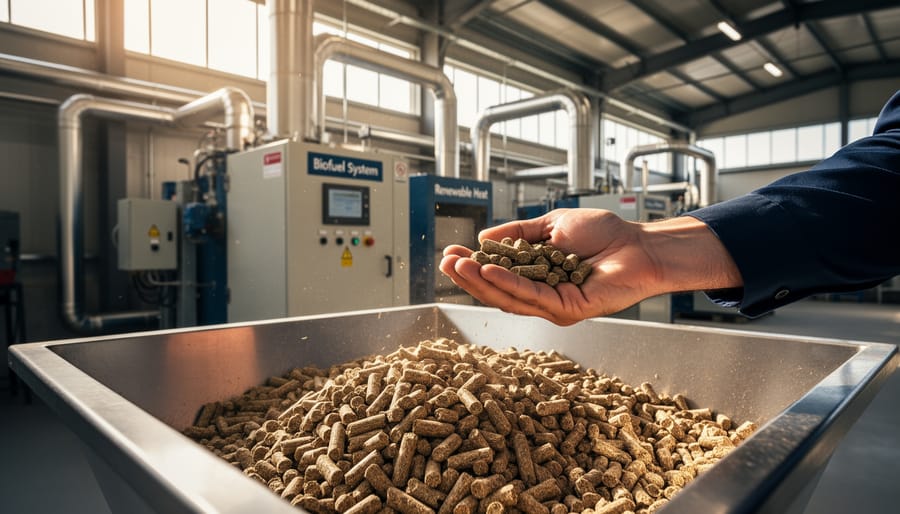
Hemp pellets represent the most straightforward application of hemp bioenergy, densified biomass compressed into cylindrical fuel units that burn efficiently in residential and commercial heating systems. The pelletization process involves drying hemp stalks to reduce moisture content below 10%, grinding the material into fine particles, and forcing it through heated dies under high pressure. This compression activates natural lignin in the plant fiber, which acts as a binding agent, creating dense pellets with energy content comparable to wood pellets at approximately 17-18 megajoules per kilogram.
Hemp pellet stoves and industrial boilers can burn these pellets with minimal modification, producing steady heat output while generating less ash than traditional wood biomass, typically under 2% ash content versus 5-7% for many wood species. Power plants in Europe have successfully co-fired hemp pellets with coal, reducing carbon emissions while utilizing existing infrastructure, and some Canadian facilities are exploring similar blends to meet renewable energy targets without complete system overhauls.
Bio-Oils and Advanced Biofuels
Hemp biomass can be transformed into liquid energy carriers through thermochemical processes that break down plant material at high temperatures without oxygen, a technique called pyrolysis. When hemp stalks and residues are heated to 400-600°C in controlled conditions, they decompose into bio-oil, a dark liquid fuel that contains roughly 40-50% of the original biomass energy.
This bio-oil can be refined and upgraded to produce drop-in biofuels compatible with existing diesel engines and heating systems. The process yields approximately 60-70 litres of crude bio-oil per tonne of dry hemp biomass. Canadian researchers have tested hemp-derived bio-oils in agricultural equipment and found comparable performance to conventional diesel when properly refined.
Beyond simple pyrolysis, advanced conversion methods like hydrothermal liquefaction process wet hemp biomass directly into biocrude, eliminating the energy-intensive drying step required for traditional biofuel production. These techniques also generate biochar as a co-product, a carbon-rich material that improves soil quality when returned to fields. The dual output of liquid fuel and soil amendment makes thermochemical conversion particularly attractive for farming operations seeking energy independence while building soil carbon stocks.
Where Hemp Bioenergy Is Being Used Today
Canadian Hemp Energy Initiatives
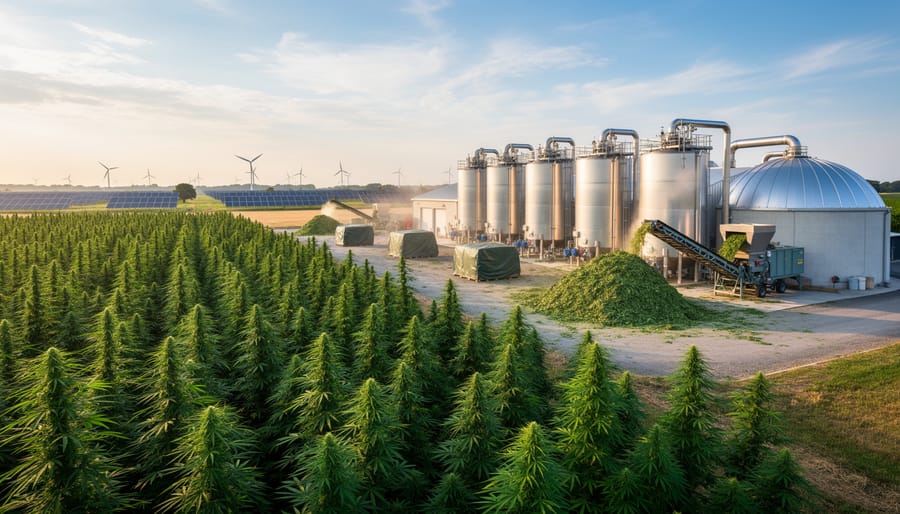
Alberta and Saskatchewan have emerged as testing grounds for hemp-to-energy conversion, largely because these provinces already lead Canada’s industrial hemp cultivation. In 2024, researchers at the University of Alberta partnered with local farms to evaluate hemp stalk residues as feedstock for anaerobic digesters, finding that post-harvest biomass could supplement existing agricultural waste streams without additional land use. The project demonstrated that hemp’s rapid growth cycle and high cellulose content made it competitive with corn stover for biogas production, particularly in regions where farmers were already growing hemp for grain and fiber.
Saskatchewan’s approach has focused on direct combustion applications. A pilot heating facility near Saskatoon installed a hemp pellet boiler in 2025 to replace natural gas heating for a greenhouse operation, reducing fossil fuel consumption by approximately 60% during winter months. The facility sources compressed hemp stalks from nearby farms that previously burned or composted this material, turning agricultural waste into a revenue stream while cutting emissions, a practical example of Canada adapting to renewables at the community level.
Ontario’s initiatives have centered on research rather than deployment. Agriculture and Agri-Food Canada facilities in Ottawa have been studying hemp’s energy density and conversion efficiency since 2023, comparing it against switchgrass and willow biomass to determine optimal growing conditions and harvest timing for maximum energy yield.
Industrial and Agricultural Applications
Farms and industrial facilities across Canada are increasingly turning to hemp biomass as an on-site energy solution, transforming agricultural waste into practical power. Hemp processing facilities generate substantial volumes of leftover plant material, stalks, leaves, and chaff, that would otherwise require disposal. Instead of treating this as waste, operators now feed it into on-site combustion systems or digesters to produce heat and electricity for their own operations.
Grain-drying operations represent a particularly strong fit for hemp bioenergy. After harvest, farmers need consistent heat to reduce moisture content in stored crops. Hemp pellets or briquettes provide a local, renewable fuel source that’s often cheaper than propane or natural gas, especially when farms grow their own energy crops. Saskatchewan and Alberta producers have installed biomass boilers that burn hemp alongside straw, cutting fossil fuel consumption by 60-80% during peak drying seasons.
Livestock operations benefit from dual-use systems where hemp is digested alongside manure to boost biogas production. The methane generated powers barn heating, ventilation systems, and sometimes small-scale electricity generation. One dairy operation near Red Deer, Alberta runs its entire milking facility on biogas from a digester fed with hemp residue and cattle waste, achieving energy independence while managing two waste streams.
Greenhouses use hemp biomass boilers to maintain controlled temperatures year-round, replacing expensive heating oil. The combination of readily available feedstock and consistent heat demand makes controlled-environment agriculture ideal for hemp energy integration, particularly in regions where industrial hemp cultivation is already established for fiber or grain markets.
Environmental Benefits and Carbon Impact
Hemp’s environmental credentials rest on a fundamental advantage: the crop absorbs atmospheric carbon dioxide as it grows, then releases approximately the same amount when burned for energy, creating a closed carbon loop that fossil fuels cannot match. During its 100-120 day growth cycle, one hectare of industrial hemp sequesters between 8 and 15 tons of CO₂ from the atmosphere, a capture rate that outpaces most traditional biomass crops and nearly all food crops grown at commercial scale.
The carbon-neutral designation comes from life-cycle analysis: when hemp biomass combusts or digests to produce energy, it returns carbon to the atmosphere that the plant recently pulled out, rather than releasing ancient carbon locked underground for millions of years as coal and petroleum do. When you account for the energy used in cultivation, harvest, and processing, hemp bioenergy typically shows 60-85% lower greenhouse gas emissions than equivalent fossil fuel energy, according to renewable energy reviews examining biomass sustainability metrics.
Hemp delivers additional environmental wins beyond carbon accounting. The crop requires minimal pesticides due to its natural pest resistance, needs no herbicides because it outcompetes weeds through rapid early growth, and improves soil health through deep root systems that prevent erosion and enhance soil structure. Unlike corn ethanol production, hemp cultivation for energy doesn’t demand irrigation in most climates, preserving water resources while generating renewable power.
The carbon-negative potential emerges when biochar, a charcoal-like byproduct of pyrolysis conversion, gets returned to soil rather than burned. This stable carbon form can remain sequestered for centuries, effectively removing CO₂ from the atmospheric cycle while simultaneously improving agricultural productivity on the land where it’s applied.
Economic Considerations and Market Potential
Hemp bioenergy faces a complex economic landscape where production costs, market competition, and infrastructure requirements determine its commercial viability. Understanding these financial factors helps explain both the opportunities and challenges for this renewable energy source in Canada.
Production costs for hemp-grown-for-energy typically range from $40 to $80 per tonne of dry biomass, depending on field location, yields, and mechanization level. This positions hemp competitively against corn stover and wheat straw, though it currently costs more per energy unit than established crops like switchgrass or willow. Transportation represents a significant expense, hauling low-density biomass beyond 50 kilometers often erases profit margins, making local or regional energy facilities essential for economic success.
Canada’s investment landscape shows cautious optimism. Federal renewable energy programs include hemp biomass in their clean fuel standards, while provincial agricultural departments in Saskatchewan and Alberta offer research funding for industrial hemp diversification. Private capital remains limited compared to solar and wind sectors, partly because biomass energy requires harvest coordination, storage facilities, and conversion infrastructure that solar panels simply don’t need.
The most promising economic model pairs energy production with higher-value hemp products. Farmers who grow hemp primarily for fiber or grain can sell leftover stalks and processing waste to nearby biogas facilities, creating a secondary revenue stream that improves overall crop profitability. This dual-purpose approach reduces the financial pressure on energy output alone and makes hemp cultivation more attractive to agricultural operations already familiar with the crop.
Market analysts project steady growth as carbon pricing increases fossil fuel costs and rural communities seek local renewable options that keep energy dollars circulating within agricultural economies.
Common Questions About Hemp Bioenergy
Is hemp bioenergy legal in Canada?
Yes. Industrial hemp cultivation has been legal in Canada since 1998 under federal licensing, and using hemp biomass for energy production falls under standard renewable energy regulations. The crop must contain less than 0.3% THC, and growers need appropriate licenses from Health Canada.
How does hemp compare to corn or wood as an energy crop?
Hemp grows faster than wood (reaching maturity in 100-120 days versus years for trees) and requires less water and fewer pesticides than corn. It produces comparable biomass yields per hectare to corn while improving soil health between rotations, though existing infrastructure for corn and wood energy is more developed.
Can hemp-derived cannabis operations use their waste for bioenergy?
Absolutely. Licensed cannabis producers can convert stalks, leaves, and other plant waste into biogas or pellets for on-site heating and power, turning a disposal problem into an energy asset. This dual-use approach improves the economic viability of both cannabis production and renewable energy generation.
Is hemp bioenergy commercially viable today?
Small-scale viability exists now, particularly for farms using their own hemp waste for heating. Large-scale commercial deployment remains limited by processing infrastructure costs and competition with established biomass sources, though pilot projects in Alberta and Saskatchewan are demonstrating economic potential as technology costs decline.
Beyond these core questions, prospective growers and investors often wonder about the learning curve. Existing farmers can integrate hemp into crop rotations without specialized equipment for cultivation, though energy conversion requires either partnerships with processing facilities or investment in on-site digesters or pellet mills. The good news: hemp’s resilience and low input requirements make it more forgiving than many energy crops, and the same harvest can yield fiber, seed, and energy products simultaneously, spreading financial risk across multiple revenue streams.
Hemp bioenergy represents a practical path forward for Canada’s renewable energy goals, building on the country’s established industrial hemp sector. While adoption remains in early stages, pilot projects across the Prairies demonstrate that converting hemp biomass into usable power works technically and can fit into existing agricultural operations.
The crop’s fast growth cycle and carbon sequestration during cultivation make it a genuinely renewable resource. Farmers already growing hemp for fiber or seed can now consider energy as an additional revenue stream, turning field residues into biogas or pellets rather than waste. This dual-purpose approach improves economics without requiring dedicated energy cropland.
Canada’s renewable energy transition will need multiple feedstocks, not a single solution. Hemp won’t replace solar panels or wind turbines, but it can complement them, especially in rural areas where biomass infrastructure makes sense. As conversion technologies improve and carbon pricing rewards low-emission fuels, hemp’s role will likely expand.
For local communities, hemp bioenergy offers a chance to participate directly in clean energy production, keeping energy dollars within regional economies while reducing reliance on imported fuels. The opportunity exists now for those willing to invest in both the crop and the conversion systems that turn it into power.